What and how we inspect Archives - Estyn

Inspection Guidance Type: What and how we inspect

Inspection Guidance Type: What and how we inspect


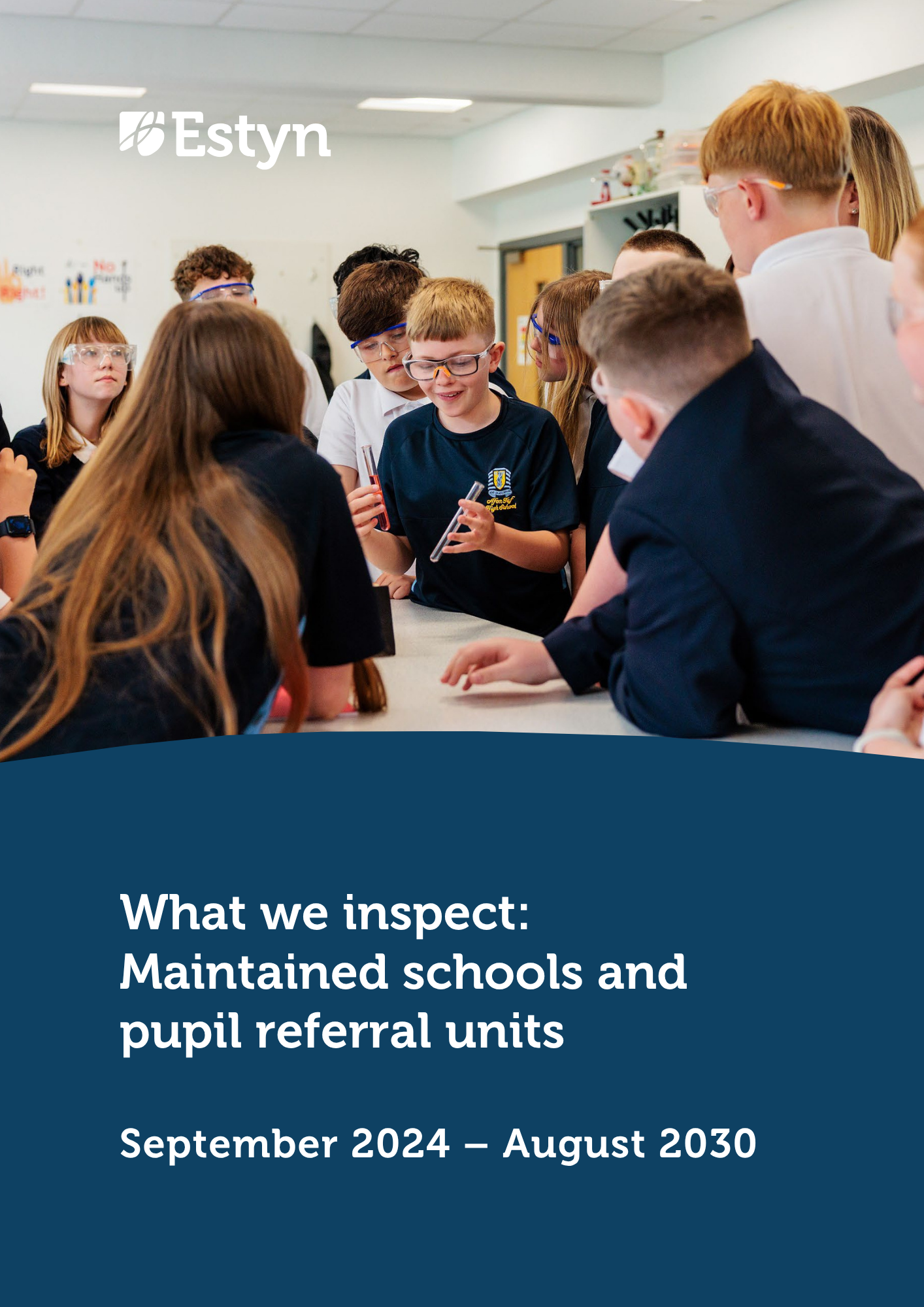
Pupils taking part in a science experiment during a classroom lesson.

This handbook sets out what inspectors need to consider when evaluating the three inspection areas in maintained schools (primary, secondary, all-age and special schools) and pupil referral units (PRUs). It explains ‘What we inspect’. The guidance is essential reading for reporting inspectors and all other members of the inspection team, including the nominee. It may also be useful for providers to support their understanding of the inspection guidance. There is a separate handbook that explains the inspection process and methodology, ‘How we inspect’.

 The three inspection areas are set out below:

IA1: Teaching and learning

IA2: Well-being, care, support and guidance

IA3: Leading and improving

 There is further information about inspections on our website www.estyn.gov.wales
Inspection Guidance Type: What and how we inspect


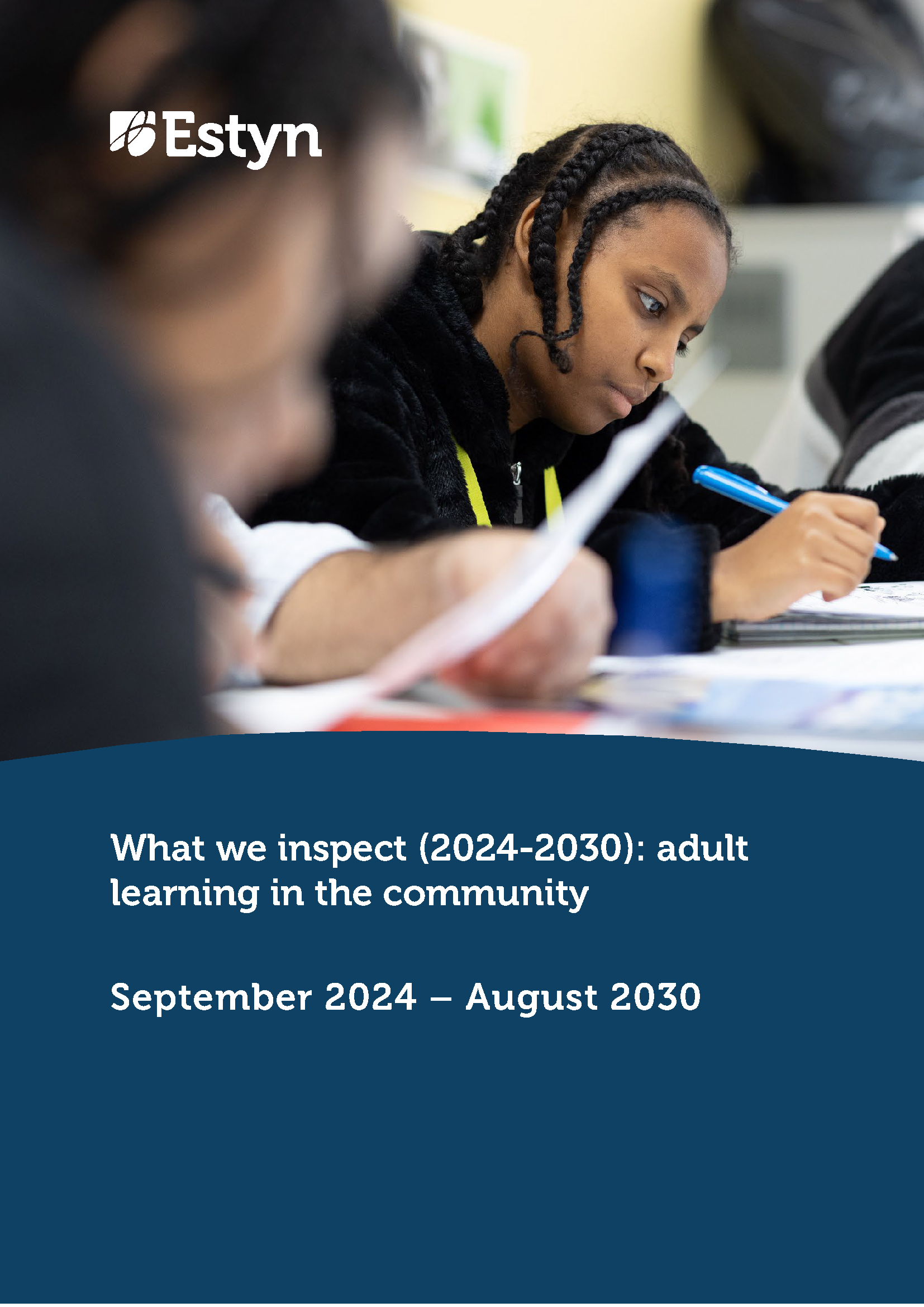
A learner concentrating on a written task in a classroom, making notes during a lesson while other learners work nearby.

This handbook sets out what inspectors need to consider when evaluating the three inspection areas in adult learning in the community partnerships. It explains ‘What we inspect’.  The guidance is essential reading for reporting inspectors and all other members of the inspection team, including the nominee. It may also be useful for providers to support their understanding of the inspection guidance. There is a separate handbook that explains the inspection process and methodology, ‘How we inspect in adult learning in the community partnerships’.

The three inspection areas are set out below:

IA1    Teaching and learning

IA2    Well-being, care, support and guidance

IA3    Leading and improving

There is further information about inspections on our website www.estyn.gov.wales
Inspection Guidance Type: What and how we inspect


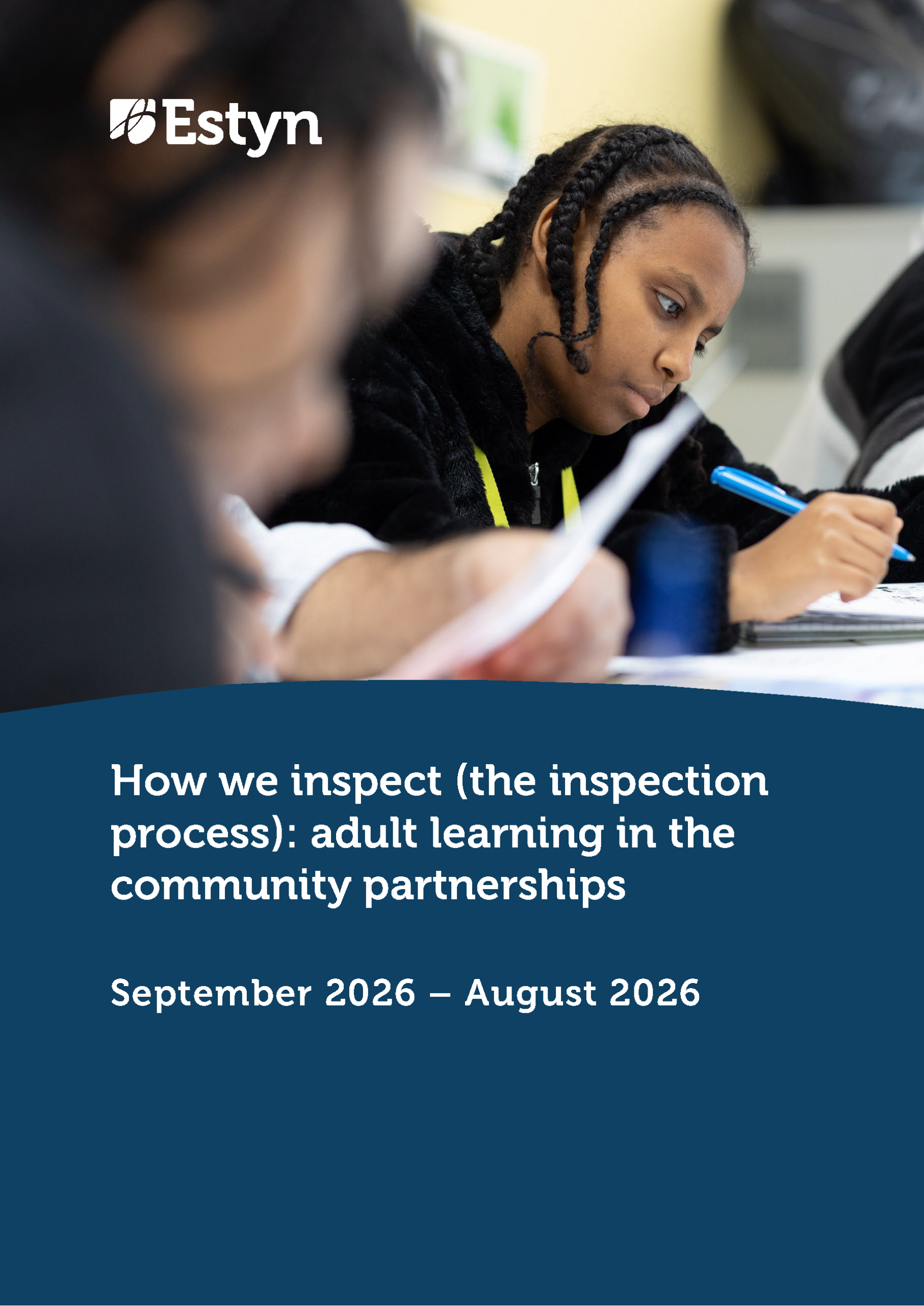
A learner concentrating on a written task in a classroom, making notes during a lesson while other learners work nearby.

This handbook sets out our approach to inspecting adult learning in the community partnerships from 2024. It explains how we inspect. The guidance is essential reading for reporting inspectors and all other members of the inspection team. It may also be useful for partnerships to support their understanding of the inspection mind-set and methodologies.

The guidance should be read alongside ‘What we inspect’ guidance for adult learning in the community partnerships, which outlines the inspection framework. Partnerships can use this guidance to see how inspections work and to help them in strengthening their own self-evaluation and improvement processes.

Where the inspection identifies practice worth sharing, inspectors will include a spotlight on this practice as part of the inspection report. Where the inspection identifies important concerns in relation to standards, quality of education and training or leadership and management, we will arrange follow-up activity to support improvement. Guidance on follow‑up activity is presented at the end of this document.

There is further information about inspections on our website www.estyn.gov.wales

Inspection Guidance Type: What and how we inspect


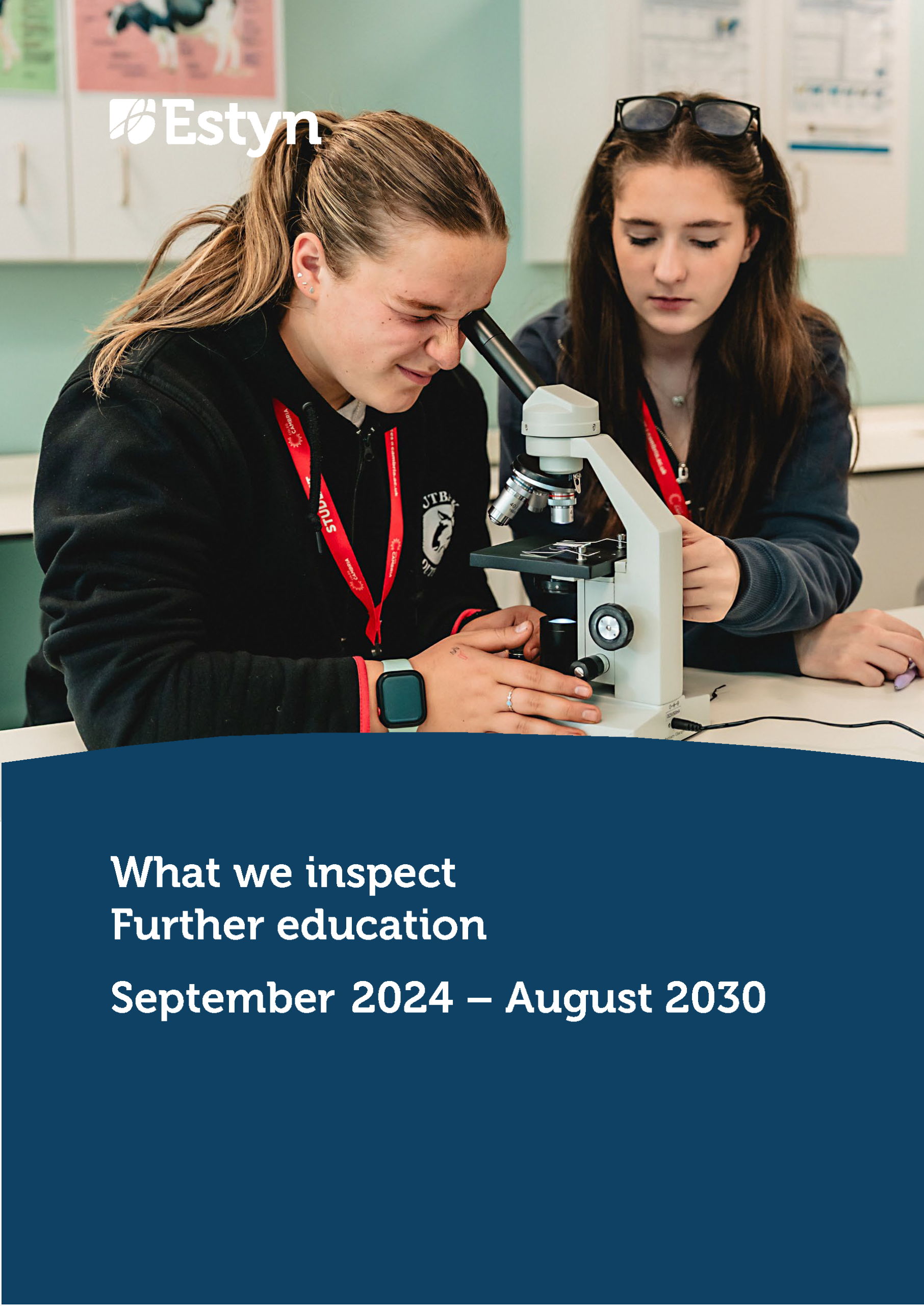
Two learners using a microscope during a science lesson, examining a specimen and working together in a laboratory classroom.

This handbook sets out what inspectors need to consider when evaluating the three inspection areas in Further Education (FE). It explains ‘What we inspect’. The guidance is essential reading for reporting inspectors and all other members of the inspection team, including the nominee. It may also be helpful for anyone who wants to better understand our approach to inspection. There is a separate handbook entitled ‘How we inspect’ that explains the inspection process and methodology.

The three inspection areas are set out below:

IA1 – Teaching and learning

IA2 – Well-being, care, support and guidance

IA3 – Leading and improving

There is further information about inspections on our website www.estyn.gov.wales
Inspection Guidance Type: What and how we inspect


Two learners using a microscope during a science lesson, examining a specimen and working together in a laboratory classroom.

This handbook sets out our approach to inspecting further education colleges from  2024. It explains how we inspect. The term ‘provider’ is used throughout this document to refer to the college or any group of colleges that operate under a single group structure. The guidance is essential reading for reporting inspectors and all other members of the inspection team. It may also be useful for providers to support their understanding of the inspection mind-set and methodologies.

The guidance should be read alongside ‘What we inspect’ guidance in further education, which outlines the inspection framework. Providers can use this guidance to see how inspections work and to help them in strengthening their own self-evaluation and improvement processes.

Where the inspection identifies practice worth sharing, inspectors will include a spotlight on this practice as part of the inspections report. Where the inspection identifies important concerns in relation to standards, quality of education and training or leadership and management, we will arrange follow-up activity to support improvement. Guidance on follow-‑up activity is presented at the end of this document.

There is further information about inspections on our website www.estyn.gov.wales
Inspection Guidance Type: What and how we inspect


Close-up of a person using a ruler during an art activity.

To ensure that prisons are held accountable to the same standard of performance as similar providers, we have chosen explicitly to adopt, to a large extent, our inspection framework for further education colleges. A series of supplementary guidance documents are available on our website that provide further information about our approaches to inspecting various aspects of this framework.

Where adaptations have been made, these have been made to take into account feedback from our stakeholders and the context and aims of education, skills and work activities within the secure estate in Wales.

Estyn inspectors will evaluate the education, skills and work activities within men’s prisons against the following expectations.

Inspection Guidance Type: What and how we inspect


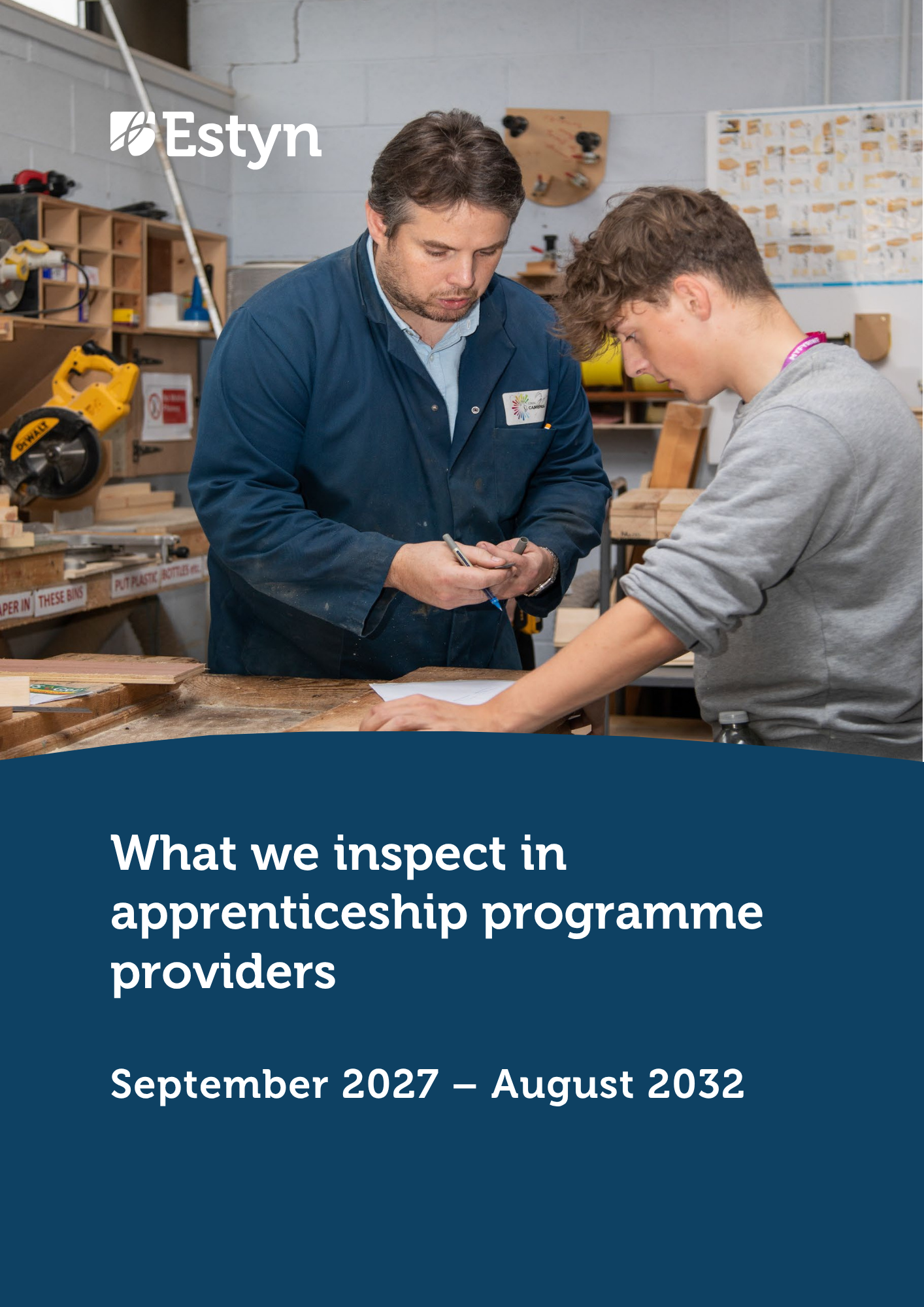
An instructor and a learner working together in a workshop, reviewing measurements and plans at a woodworking bench surrounded by tools and materials.

This handbook sets out what inspectors need to consider when evaluating the four inspection areas in work-based learning apprenticeship providers. It explains ‘What we inspect’. It should be read in conjunction with the document ‘How we inspect’, which sets out our approach to inspection. There is a separate handbook entitled ‘How we inspect’ that explains the inspection process and methodology.

The guidance is essential reading for reporting inspectors and all other members of the inspection team, including the nominee. It may also be useful for providers to support their understanding of the inspection guidance. There is a separate handbook that explains the inspection process and methodology, ‘How we inspect’.

The four inspection areas are set out below:

Inspection areas

IA1 – Learning

1.1  Standards and progress in learning and skills

1.2 Attitudes to learning

IA2 – Well-being, support and guidance

2.1 Personal development and impact on well-being

2.2 Safeguarding

IA3 – Teaching, training, assessment and learning experiences

3.1 The breadth, balance and appropriateness of the provision

3.2 Quality of teaching, training and assessment

IA4 – Leadership and management

4.1 Quality and effectiveness of leaders and managers, including governance

4.2 Self-evaluation processes and improvement planning

4.3 Professional learning

Inspection Guidance Type: What and how we inspect


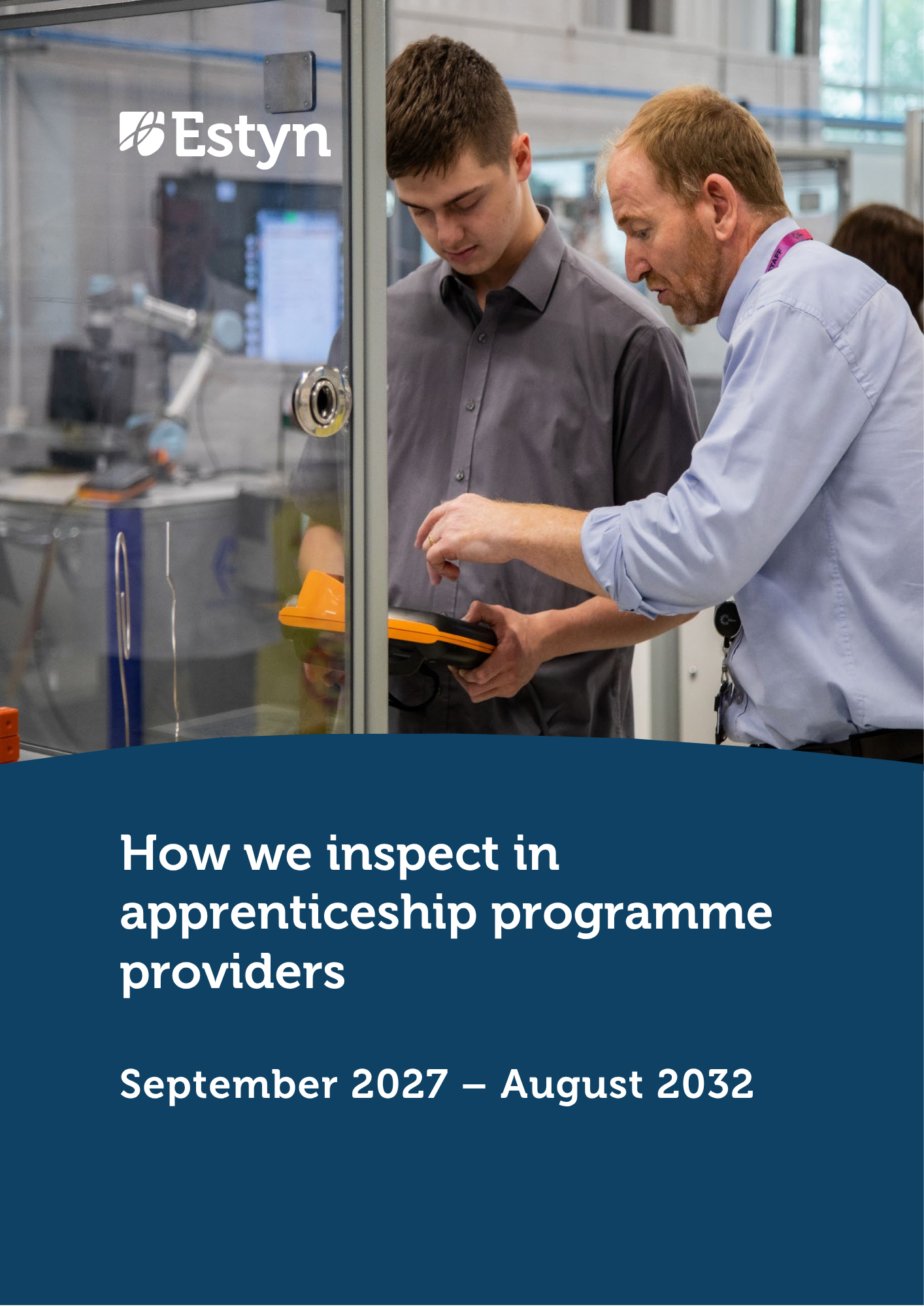
A learner receives guidance from an instructor while using equipment in a training workshop, standing beside a machine enclosed by a safety screen.

This handbook sets out our approach to inspecting apprenticeship programme providers from 2024 onwards. It explains how we inspect. The guidance is essential reading for reporting inspectors and all other members of the inspection team. It may also be useful for providers to support their understanding of the inspection mind-set and methodologies.

The guidance should be read alongside ‘What we inspect’ guidance in work-based learning apprenticeship programme providers, which outlines the inspection framework. Providers can use this guidance to see how inspections work and to help them in strengthening their own self-assessment and improvement processes.

Where the inspection identifies practice worth sharing, inspectors will invite the provider to write a case study that we will publish on our website. Where the inspection identifies important concerns in relation to standards, quality of education and training or leadership and management, we will arrange follow-up activity to support improvement. Guidance on follow-‑up activity is presented at the end of this document.

There is further information about inspections on our website www.estyn.gov.wales
Inspection Guidance Type: What and how we inspect


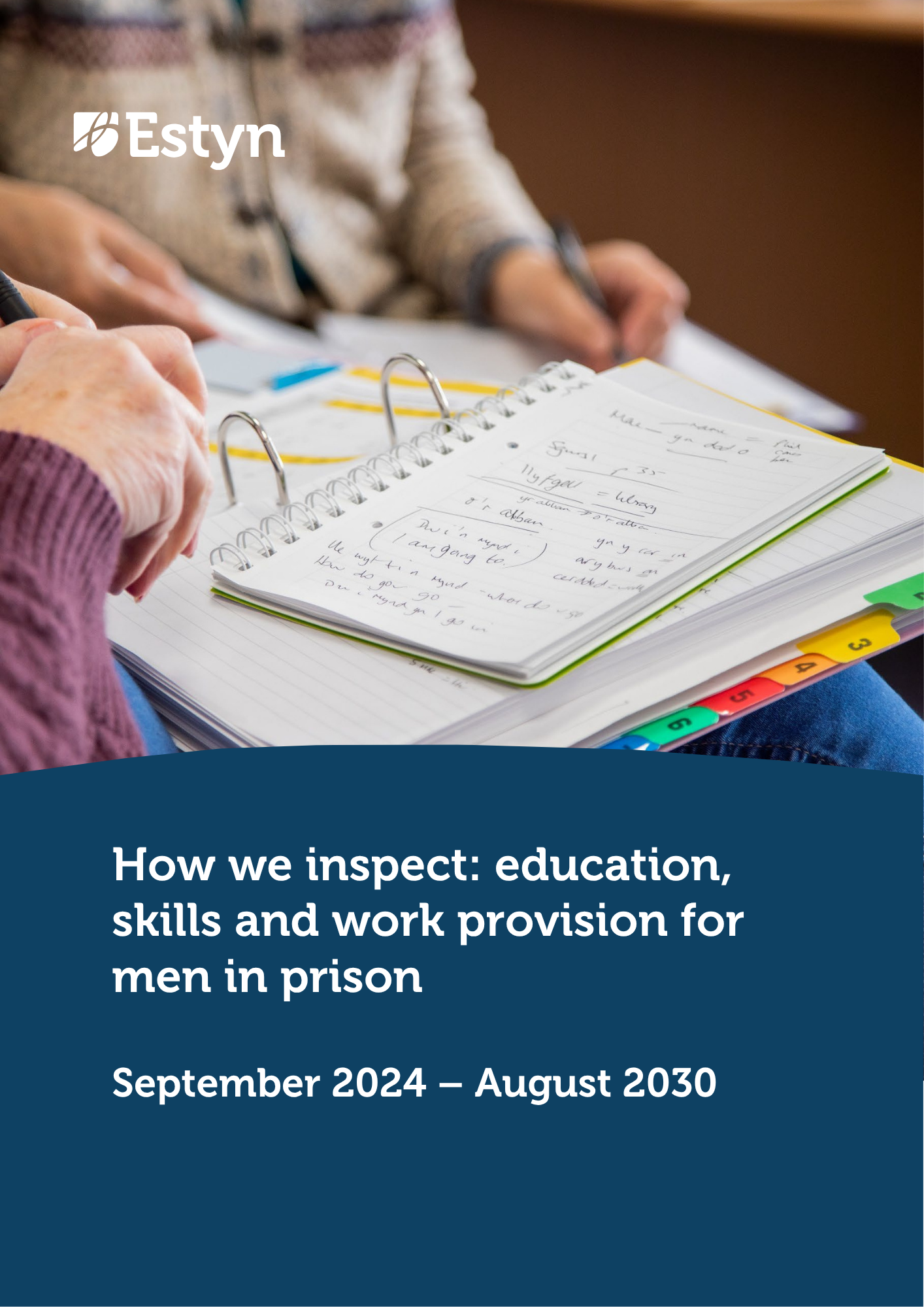
People taking notes during a group discussion.

This section sets out our approach to inspecting education, skills and work provision in men’s prisons from 2025. It explains how we inspect. The guidance is essential reading for reporting inspectors and all other members of the inspection team. It may also be useful for providers to support their understanding of the inspection mind-set and methodologies. The term ‘provider’ is used throughout this document to refer to the prison’s education, skills and work activities.

The guidance should be read alongside ‘What we inspect’ guidance for education, skills and work provision in men’s prisons, which outlines the inspection framework. Providers and partners can use this guidance to see how inspections work and to help them in strengthening their own self-evaluation and improvement processes.

Inspection Guidance Type: What and how we inspect


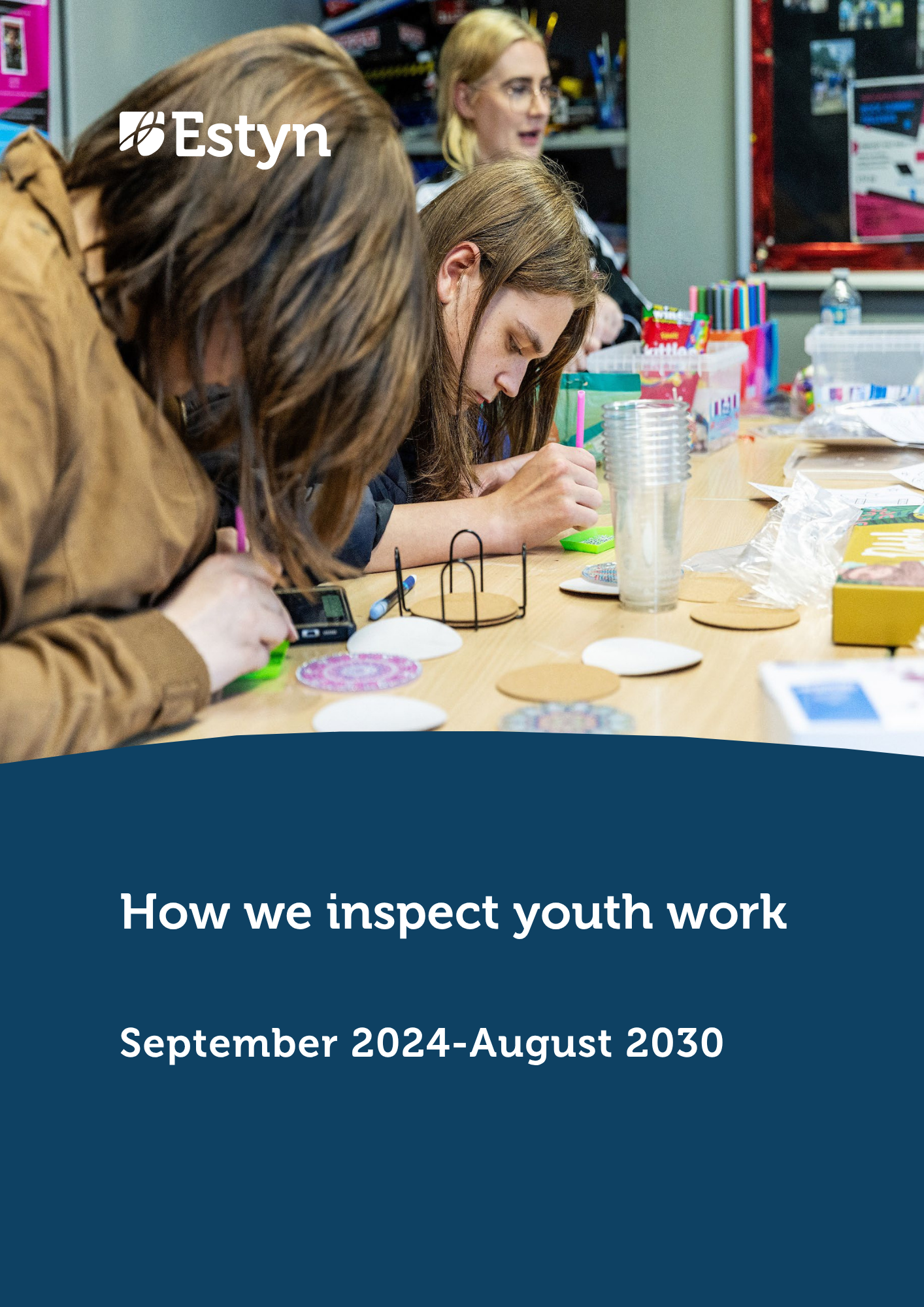
People taking part in a creative arts and crafts activity, concentrating on decorating small circular items at a table covered with craft materials and pens.

This handbook sets out our approach to inspecting youth work. It explains how we inspect. The guidance is essential reading for reporting inspectors and all other members of the inspection team. It may also be useful for providers to support their understanding of the inspection mind-set and methodologies.

The guidance should be read alongside ‘What we inspect’ guidance for youth work, which outlines the inspection framework. Providers can use this guidance to see how inspections work and to help them inform their own self-assessment and improvement processes.

Where the inspection identifies practice that other providers might find useful, inspectors will invite the provider to write a case study that we will publish on our website. Where the inspection identifies important concerns in relation to outcomes, quality of provision and training or leadership and management, we will arrange follow-up activity to support improvement.

There is further information about inspections on our website www.estyn.gov.wales