Making effective use of grant funding to support learning and build strong relationships with families
Quick links:
Information about the setting
Berriew pre-school is in the village of Berriew on the grounds of Berriew CP school. It is a committee managed early years setting offering education, childcare and Flying Start provision. The pre-school is registered to care for up to 24 children per session, aged between two and four years and operates Monday to Friday between 9.00-3.00 term time only.
The setting is known for its exciting and enticing outdoor environments. These have been thoughtfully developed over time with children’s interests and developmental needs being the main driver for change. The setting provides an environment where children feel their voices are heard and have the freedom to explore, make choices and become confident, creative independent learners.
Practitioners work together to realise this ambition. Every practitioner encourages children to make choices and take charge of their learning through following a child’s lead and adding teachable moments to their play. The setting is led by a dedicated and reflective setting manager, experienced leaders, enthusiastic practitioners and a committed responsible individual supported by a voluntary committee. Together, they bring a wealth of knowledge care and passion to create a warm and welcoming environment for children to freely explore.
Context and background to the effective or innovative practice
Practitioners understand there are children who would benefit from additional hours, but their families can’t fund extra hours at the setting. In response, the setting now offers extra hours to provide all children with the same opportunities. This is to make sure that identified children are not disadvantaged and receive the same opportunities as their peers.
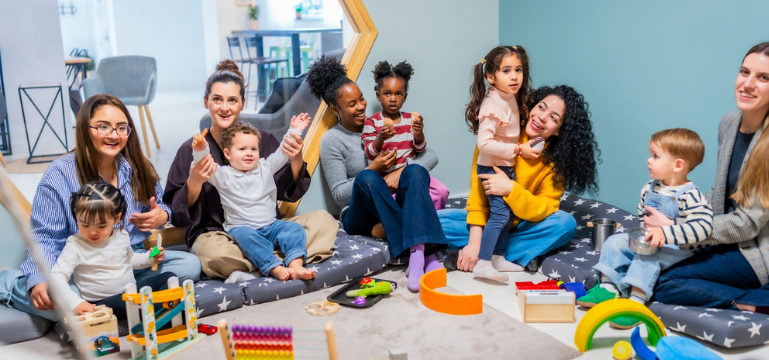
The Early Years Development Grant (EYDG) provides the setting with the resources to meet this need and provides a chance for identified children to make greater progress and narrow the disadvantage gap. Practitioners provide stay and play sessions to promote relationships with families, supporting parents and carers to develop a better understanding of how their child learns. In turn this approach builds confidence and supports the children as they transition into pre-school. The aim is to support disadvantaged families to feel empowered to help their child’s learning at home. The setting considers the best way to reach families and uses a variety of strategies to enable this.
Description of nature of strategy or activity
Leaders and practitioners use the Early Years Development Grant to target identified families. The grant is used in several ways to ensure they support families most in need. They ensure identified children have access to additional hours each week. These children do not qualify for childcare hours and are disadvantaged when compared with families who qualify for the hours or are able to fund the hours themselves. The setting also ensures an additional member of staff is employed to support identified children to model language and support their well-being.
The setting places great importance on promoting a love of books and recognises not all families have access to the library or may not be able to afford story books at home. They provide a lending library, with families encouraged to take books to share with their child at home. This now also includes books for parents and carers to enjoy.
Practitioners realise that supporting parents is crucial in supporting children to learn to enjoy books and reading. They work alongside parents during stay and play sessions, which provide valuable opportunities to model learning and language development. Families are provided with resources to enjoy with their children at home, developing the child’s confidence and supporting their skills.
Invitations are sent to identified families with practitioners contacting them individually to chat about the sessions. Posters and related information are displayed on the notice board and shared within the weekly newsletter. All this information is shared with families via digital media.
Further opportunities are provided for families to enjoy visits within the locality, such as a Santa train ride. There are a range of opportunities for all children to enjoy enriching experiences and develop language. This is provided free of charge for identified families with costs kept low to ensure that it’s inclusive for all. The trips provide opportunities to meet families outside the setting and promote parents’ confidence to meet practitioners, other families and build positive relationships. The setting evaluates these strategies as they assess the impact of their approaches on children’s confidence and well-being.
What impact has this work had on provision and children’s standards?
This approach has a highly significant impact on provision and children’s standards. Families are confident to come along to the setting, meet with practitioners and ask questions about their child’s learning and development. They are confident to support their child at home, and this support continues when their child transitions into school. As a result, all children make very good progress right from the very start of their learning journey, and leave the setting independent, excited and confident to learn. In turn, this helps the setting to meet their vision of creating confident, creative, independent learners.
How have you shared your good practice?
The local authority has shared this good practice via Early Years Development Plan guidance. As a result, other settings have utilised the grant in the same way.