Effective Practice Archives - Page 19 of 66 - Estyn

Improvement Resource Type: Effective Practice


Improvement Resource Type: Effective Practice


Information about the provider

Cardiff and Vale Community Learning Partnership was established in 2013 from the former Cardiff and Vale of Glamorgan adult learning partnerships. There are four main delivery partners: Cardiff and Vale College, Cardiff Council, Vale of Glamorgan Council, Adult Learning Wales. The partnership serves Wales’ capital city, Cardiff, and the adjacent, largely rural, local authority of the Vale of Glamorgan, and offers provision at a range of venues including community centres, libraries and the college’s campuses. 

The partnership employs approximately 193 part-time and 43 full-time teaching staff. Approximately 5,814 learners are enrolled on courses, of whom 2,209 are English for speakers of other languages (ESOL) learners. The majority of its learners are at entry level and level 1 or short course provision. Across the partnership 39% of learners live in the most disadvantaged areas. Sixty-three per cent of the partnership’s enrolments are from ethnic minority backgrounds. Sixty-five per cent of the partnership’s enrolments are female.   

The vision for ALC in Cardiff and the Vale of Glamorgan is one where there is: 

  • increased participation by those who have benefited least from education in the past or who are most at risk of not benefiting in the future 

  • improved quality in the learning experience including increased progression to other learning opportunities or work 

  • greater coherence in the nature and patterns of provision across the providers. 

Context and background

Cardiff and Vale Community Learning Partnership was formed in 2013 after both legacy partners were identified as unsatisfactory by Estyn. There was clear identification that neither partnerships were working together to provide an effective solution to adult learners and that provision was not sufficiently focused on a responsive and comprehensive curriculum offer which delivered a range of learning experiences that were responsive to local, regional and national priorities. 

Since this time, it has transformed into a well-established and mature body with strong and impactful leadership, working collaboratively to successfully meet the needs of its diverse communities. 

Description

Central to this transformation has been shared ownership of the partnership’s strategic direction and the widespread adoption of equitable and open working arrangements. All partners committed to this over-arching vision through collaboration in a revised operational working structure and through the contribution of resources to support transformation. This included the appointment of a Partnership Co-ordinator. 

Four working groups were set up – a Strategic Group, a Quality and Data Group, a Teaching and Learning Group and a Learner Involvement Group; these involved staff from every partner.  These groups took shared responsibility to develop the first quality development plan (QDP) driving forward and providing direction for positive change. Senior leaders from all partners meet regularly to coordinate the work of the partnership. The Strategic Group developed strong links with external stakeholders, including the Welsh Government, employers and community groups facilitating wider partnership work that has been innovative and agile, providing effective solutions to the challenges faced by the region. The three operational groups made significant changes to the curriculum, teaching and learning practice and quality systems, including, shared observations, joint learner involvement activities and partnership professional learning. This has resulted in clear structures and communication. 

To further enhance communication termly partnership newsletters were devised for staff and learners, sharing the work of the partnership and raising awareness of of its developments and achievements. 

Impact of this work

There are many examples of how strong collaborative working has positively impacted on the partnership and its learners. There are shared visions, aims and values, with openness and trust, putting learners at the heart of decision-making. The curriculum is focused on employability and skills, with some well-planned leisure courses. Through planning as a partnership, curriculum is directed at the point of need, with no unnecessary duplication, working to the strengths of each partner. Working at a strategic level, the partnership shared the creation and led the REACH project with the Welsh Government, providing immediate assessment for ESOL and placement with an available learning provider. This significantly reduced the ESOL waiting list across the region. The partnership has provided coherence of ESOL, Family Learning and other courses to ensure that it attracts and supports those furthest away from education and training. It has created strong links with industry to provide employer ready courses tailored to fill gaps in employment and to generate opportunities for those from diverse and deprived areas of South Wales. 

Learners make good progress with performance across the partnership continuing to improve. They make a positive contribution to society and there are many examples of how the lives of learners have been transformed. Teaching and Learning has been identified as highly effective with strong support and wellbeing for learners and effective use of technology, the latter supporting the continuation of work during the pandemic.   

How has the practice been shared?

The partnership has supported other partnerships across Wales in rolling out their own provision, such as REACH and sector priorities academies. Partnership members attend adult learning conferences and Welsh Government workshops on best practice and have chaired Adult Learning Partnerships Wales. The partnership shares its working practices openly, leading on partnership improvement. 

Improvement Resource Type: Effective Practice


Information about the provider

Cardiff and Vale Community Learning Partnership was established in 2013 from the former Cardiff and Vale of Glamorgan adult learning partnerships. There are four main delivery partners: Cardiff and Vale College, Cardiff Council, Vale of Glamorgan Council, Adult Learning Wales. The partnership serves Wales’ capital city, Cardiff, and the adjacent, largely rural, local authority of the Vale of Glamorgan, and offers provision at a range of venues including community centres, libraries and the college’s campuses. 

The partnership employs approximately 193 part-time and 43 full-time teaching staff. Approximately 5814 learners are enrolled on courses, of whom 2209 are English for speakers of other language (ESOL) learners. The majority of its learners are at entry level and level 1 or short course provision. Across the partnership 39% of learners live in the most disadvantaged areas. Sixty-three per cent of the partnership’s enrolments are from ethnic minority backgrounds.  Sixty-five per cent of the partnership’s enrolments are female.   

The vision for ALC in Cardiff and the Vale of Glamorgan is one where there is: 

  • increased participation by those who have benefited least from education in the past or who are most at risk of not benefiting in the future 

  • improved quality in the learning experience including increased progression to other learning opportunities or work 

  • greater coherence in the nature and patterns of provision across the providers. 

Context and background

A key driver for the partnership is where it perceives learners have a particular need and there is a gap in the provision, it often works strategically with other partners to address the issue.  An excellent example of this is the ESOL Cancer Awareness Project in Partnership with Public Heath Wales and Velindre Cancer Centre (Charitable Trust).  The Welsh Government and NHS were working to engage with communities and improve education about cancer and cancer prevention. Research has identified that people from ethnic minority communities were less likely to participate in national breast, cervical and bowel screening programmes and reported lower awareness levels of cancer signs and symptoms. Lifestyle risk factors, such as diet, smoking and exercise, may also be poor. The reasons for this are multi-faceted but lack of awareness and understanding were identified as fundamental barriers. 

The purpose of this project was to address this health inequity by working in partnership with ESOL specialists to develop a health education resource that could be embedded within the ESOL curriculum and delivered through ESOL classes. ESOL courses are recognised to deliver more than just English language development. These programmes are also an effective means of communicating important information to learners with limited English language skills in a supportive and sympathetic environment.  

Description

ESOL Cancer Awareness was a successful partnership between Cardiff and Vale Community Learning Partnership and Velindre Charitable Trust to develop contextualised ESOL Health and Cancer Awareness resources for use in entry level ESOL classes across Wales. The partnership produced materials including student resources, teacher notes and an online interactive resource. These raised ESOL learners’ awareness and understanding of the signs and symptoms of cancer, as well as providing them with the vocabulary that would enable and empower them to have effective conversations with English-speaking NHS health professionals, to vocalise their symptoms.  There were specific modules on both female and male cancers.  Through the course learners became more aware of free national screening programmes, and engaged with preventative health promotion messages (such as the benefits of quitting smoking or doing more physical activity) that are so key to a healthy life.  The project was piloted across the partnership during its development stage. 

Impact of the provision

Feedback from the learners has been incredibly positive.  As a result of undertaking this programme, learners have gained in confidence to seek medical services in a timely manner. Learners showed more awareness of NHS services and they were more aware of lifestyle changes they could make to live a healthy life. Learners fed back that in many cases this was the first time they had been able to talk about their health concerns. 

How has the practice been shared?

The resources are now part of the learning experience of all learners within the partnership.  Further modules were developed over the pandemic to support COVID- and vaccination-awareness.  This project has been rolled out across Wales. The project has been shared more widely via the Association of Colleges Equality network and through the National Centre for Diversity where it won an award for innovation. 

Improvement Resource Type: Effective Practice


Information about the provider

Cardiff and Vale Community Learning Partnership was established in 2013 from the former Cardiff and Vale of Glamorgan adult learning partnerships. There are four main delivery partners: Cardiff and Vale College, Cardiff Council, Vale of Glamorgan Council, Adult Learning Wales. The partnership serves Wales’ capital city, Cardiff, and the adjacent, largely rural, local authority of the Vale of Glamorgan, and offers provision at a range of venues including community centres, libraries and the college’s campuses. 

The partnership employs approximately 193 part-time and 43 full-time teaching staff. Approximately 5814 learners are enrolled on courses, of whom 2209 are English for speakers of other languages (ESOL) learners. The majority of its learners are at entry level and level 1 or short course provision. Across the partnership 39% of learners live in the most disadvantaged areas. Sixty-three per cent of the partnership’s enrolments are from ethnic minority backgrounds. Sixty-five per cent of the partnership’s enrolments are female.   


The vision for ALC in Cardiff and the Vale of Glamorgan is one where there is: 

  • increased participation by those who have benefited least from education in the past or who are most at risk of not benefiting in the future 

  • improved quality in the learning experience including increased progression to other learning opportunities or work 

  • greater coherence in the nature and patterns of provision across the providers. 

Context and background

A key purpose of adult community learning is to support people in the region to access employment.  The partnership has created strong links with employers to provide industry-led courses tailored to address regional skills gaps and to generate employment opportunities for those from diverse and deprived areas of South Wales. The goal has been to offer increased progression opportunities and develop a solution for hard-to-fill job vacancies across sectors experiencing skills shortages. The partnership has developed ‘academy’ models which provide intensive skills development and employability support to individuals seeking to develop skills and secure employment in priority sectors. This is made possible by working closely with employers to collaboratively design, develop and deliver relevant provision.  

Description

The partnership has developed a community-focussed delivery approach to support sectors struggling with recruitment including social care, hospitality, creative and financial technology (FinTech). The partnership has developed strong relationships with employers, who co-design the delivery models and training packages, so that they meet their needs. Programmes typically include rigorous application and assessment processes, induction, pairing with an ‘employment mentor’, intensive delivery tailored to support timely development and progression, opportunities for accredited training (qualification and vendor based) and ‘match making’ with potential employers, who provide a guaranteed interview on completion. Learners are helped by funding to remove some of the financial barriers they may face. For example, some intensive 10-week academies include a weekly training allowance, which allows individuals to engage with the programme. The employment mentors regularly attend adult learning courses to work with their learner-mentees and signpost additional support if needed.  

Impact of the provision

The priority sector skills academies have helped citizens aged from 21-62 years across diverse backgrounds and from economically disadvantaged areas to gain employment in priority sectors.

How has the practice been shared?

The partnership has engaged with other regional local authorities, for example, Adult Services sector in Bridgend to create similar provision. Priority sector skills academies have been further shared and rolled out across the further education sector in Wales and supported through Welsh Government funding. 

Improvement Resource Type: Effective Practice


Information about the school

Coedcae School is an English-medium 11-16 school maintained by Carmarthenshire local authority and is based in the centre of Llanelli. There are 815 pupils on roll. Around 35.4% of pupils are eligible for free school meals. Around 6% of pupils are learning English as an additional language.  

The percentage of pupils with additional learning needs (ALN) is around 42.1% of the overall school population. The proportion of pupils who have a statutory plan of additional learning needs (Statement / EHCP / IDP) is 3.9% (including the SRB).  

The senior leadership team (SLT) consists of the headteacher, deputy headteacher and three assistant headteachers.  

Context and background to the effective or innovative practice

The school’s approach to self-evaluation is clear, well planned and effective. Leaders at all levels have a detailed understanding of effective evaluation and improvement processes and have successfully secured improvements across the school, particularly in the quality of teaching and learning. Leaders consciously moved from regarding evaluation as a ‘one-off’ event in the form of the annual self-evaluation report (SER) towards regular and meaningful processes that support the school well to continually identify and secure improvement. All stakeholders are involved in this important improvement work and are clear as to how it supports the school’s core purpose, vision and values. 

Description of nature of strategy or activity

The school adopts a systematic and authentic approach to self-evaluation. All self-evaluation activity is purposeful, consciously designed, and intrinsically linked to effecting improvement planning. At its centre is a clear and genuine desire from all staff to provide the best possible learning experiences and outcomes for pupils. No self-evaluation work is undertaken to satisfy external audiences but serves the sole purpose of providing the school with the information it needs to effect continuous improvement, whilst maintaining a thoughtful balance with the interests of staff workload and well-being.

The school has a clear annual ‘quality cycle’, which sets out how and when leaders will evaluate their work throughout the year. As part of this work, roles and expectations of leaders and their teams are clear and leaders set beneficial success criteria from the outset of this work. The school calendar, drawn up in consulation with a staff focus group, comprises dates for quality assurance activity, so that staff are equipped to contribute productively. For example, there is a systematic approach to learning walks and pupil work scrutiny, calendared a year in advance, and undertaken at departmental level in the first half of the term followed by a whole-school focus in the subsequent half term. Leaders produce clear and concise summary evaluation reports, which focus closely on pupil progress and learning and the impact of teaching and curriculum on pupils’ learning. These findings are reviewed and shared with all staff to identify clear and precise aspects for improvement. A critical part of this work focuses on gathering information on pupils’ progress in literacy, numeracy and digital competence. In addition, the reports clearly indicate the progress that has been made in relation to areas for development identified during the previous evaluation cycle. This helps the school to plan precisely and effectively for improvement. These reports are initially discussed during senior leadership team meetings and senior leaders then review findings in link meetings with their allocated middle leaders. The school calendar is planned so that there are departmental meetings scheduled at the earliest opportunity after pupil work scrutiny weeks so that analysis of quality assurance findings may be considered and responsive actions planned.   

There is a coherent approach to using information gathered during self-evaluation. Each member of the senior leadership team is linked carefully with a member of the middle leadership team. Leaders meet regularly (approximately once per fortnight) in these allocated pairs to support and evaluate the work of the relevant team. All evaluation reports emanating from activity such as learning walks and pupil work scrutiny are discussed in these line management meetings and then in departmental meetings where the results are shared with the relevant staff. This helps to ensure continuity of messaging and expectation across the school. Further, the reports are presented and discussed at the relevant governing body sub-committee meetings and the relevant senior and/or middle leader attends the meeting to present their evaluations to, and respond to follow-up questions from, governors. 

The school has developed a strong approach to ensuring pupil voice informs evaluation and improvement processes well. Its Senedd structure for pupil leadership groups ensures that pupils are able to formally provide quality assurance feedback from a range of contexts, including the school council, the Eco club and the LGBTQ+ group and this feedback is discussed in senior leadership team and governing body meetings. This feedback is analysed and shared with staff during morning briefings; middle leaders discuss responsive actions with their pupil support teams in Friday morning briefings. For example, in response to pupil feedback during quality assurance of the school’s PSE provision, the school introduced Wellbeing Weeks once per half term. The senior leadership team reviews the findings and plans and implements responsive actions, subsequently collating a You said, we did outcome report for pupils. This You said, we did report is shared and discussed with pupils in assembly and in registration time, and is also shared with parents and carers via the school’s Parent/Carer Forum.   


What impact has this work had on provision and learners’ standards?

This work ensures that the school has a secure understanding of what is working well and what needs adjustment and improvement. It shines a light on good practice so that it can be shared across the school and allows for early intervention where there may be risks of a decline in standards or provision. For example, regular evaluation of standards of literacy identified reading skills as a key area for improvement. As a result, the school implemented a successful three tiered intervention programme, including the establishment of a cross-phase working party within the cluster. Similarly, the school’s focus week approach to departmental review indicated some inconsistency in teaching, particuarly around questioning and this is being addressed through its professional learning focus on the work of Barak Rosenshine. 

How have you shared your good practice?

The school has shared this practice through a range of professional both within and outside of the local authority. 

Improvement Resource Type: Effective Practice


Information about the school

Coedcae School is an English-medium 11-16 school maintained by Carmarthenshire local authority and is based in the centre of Llanelli. There are 815 pupils on roll. Around 35.4% of pupils are eligible for free school meals. Around 6% of pupils are learning English as an additional language.  

The percentage of pupils with additional learning needs (ALN) is around 42.1% of the overall school population. The proportion of pupils who have a statutory plan of additional learning needs (Statement / EHCP / IDP) is 3.9% (including the SRB).  

The senior leadership team (SLT) consists of the headteacher, deputy headteacher and three assistant headteachers.  

Context and background to the effective or innovative practice

Coedcae School has experienced a notable increase in the number of pupils who are eligible for free school meals. In addition to this, around a half of pupils live in the 20% most deprived areas in Wales, and around a third are living in the 10% most deprived areas, according to the Welsh Index of Multiple Deprivation. The school’s data also indicates that around 15% of pupils are estimated to live in low income households. As a result, tackling the impact of poverty on pupil attainment has long been a priority for the school. Maintaining good attendance, improving positive attitudes to learning and ensuring that eFSM pupils make effective progress are all key priorities for the school. The school receives around £350k of Pupil Development Grant (PDG) funding each year. 


Description of nature of strategy or activity

Leaders plan carefully to use their PDG funding in a precise and targeted way. They align this planning closely to their priorities for improvement and ensure that these approaches are informed by research and best practice, including within other education systems. 

The school employs five Pupil and Family Support Assistants (PFSA), who are each attached to a year group and who work closely with vulnerable pupils and their families. Their main focus is to identify and help remove barriers to pupil well-being and learning. The PFSAs develop strong relationships with targeted pupils. They have a comprehensive understanding of the importance of a multi-layered approach to pupil support, and work well in line with the school’s vision and values, forging strong links with a wide range of external partners and parents and carers. In addition to regular meetings at school and daily telephone contact to share important information and progress updates, PfSAs undertake home visits and meetings conducted over Teams, as this approach better meets the needs of some families. Where appropriate, and particularly where school attendance is a concern, the PFSA will meet with pupils and their parents in more ‘neutral’ settings, such as a local park or coffee shop, in order to build trust and elicit engagement.   

The PFSA works closely with pupils and parents to identify barriers to learning and, with the senior leadership team, develops a clear and focused individual pupil action plan. The plan is reviewed regularly, alongside the pupil and their parent or carer. Support strategies implemented are wide-ranging, and bespoke to the individual pupil and can involve the provision of material support, funded by the PDG, to enable the pupil to engage effectively with school life. For example, the school regularly purchases uniform items, including PE kit, to support pupils at the point of a particular growth spurt and when the PDG Access grant has already been used by parents at the start of the school year. Additionally, the pupil may be supported by the School-based Youth Worker, either by one-to-one mentoring or through group engagement programmes. The Behaviour and Wellbeing Officer also plays a key role in working with vulnerable pupils to break down barriers to participation and progress in school, delivering self-reflection and anger management programmes. 

The school uses PDG funding to employ a Literacy Intervention Officer and a Numeracy Intervention Officer. These highly-skilled individuals provide a range of academic interventions for vulnerable pupils, working with them to improve their basic skills and to refine their examination technique. This support takes a number of forms, including small group and one-to-one tuition. A high priority is placed on early intervention, with the majority of the work focusing on pupils in Key Stage 3. Given the deficiencies in reading that a significant minority of pupils face, the school has also employed two additional teaching assistants to work alongside the Literacy Intervention Officer to deliver a reading intervention programme. 

To improve well-being support at point of transition into Year 7, the school has recently established a nurture base, Cyfle. This provision supports pupils who have been identified through strong transition processes as likely to struggle with full-time mainstream education at the start of Year 7.  Using PDG funding, the school has employed a teacher to lead this provision, supported by two specialist teaching assistants. Pupils receive a blended provision, bespoke to individual need, which incorporates a proportion of mainstream lessons with specialist interventions in Cyfle, such as a programme to improve social and emotional skills. The aim of this strategy is to ensure that pupils are better equipped to engage with full-time mainstream education at the earliest point. 

Having identified that a few pupils lack the self-management skills to engage positively with unstructured times during the school day, particularly at lunch time, the school has employed an additional lunchtime supervisor. As a result, pupils are provided with focused activities, such as a games and puzzles club and physical exercise sessions, to engage them purposefully, to support them to develop positive friendships and to better prepare them for the afternoon session of learning.   


What impact has this work had on provision and learners’ standards?

This work has secured a wider range of ‘in-house’ interventions for pupils, allowing the school to better provide for the needs of their pupils before referring to alternative provision outside of the school. Pupil well-being has been bolstered by these developments. Attendance at the school has improved, both as an overall rate and for all vulnerable groups. For example, the attendance of girls eligible for free school meals, a key target group for the school, has improved at a notably faster rate than that of girls who are not eligible.   

Pupil participation in learning has improved, with the rate of fixed-term exclusions reducing suitably. Instances of negative pupil behaviour during lesson 5, after lunch, have decreased. 

The school has raised pupil standards through this work. For example, the PDG-funded reading intervention programme is having a positive impact on pupils’ reading skills. The tables below demonstrate improvements made over the autumn term 2022, with pupils being tested at the start of the autumn term and then again at the start of the spring term 2023: 


In addition, pupils’ attitudes to learning are positive and vulnerable pupils, including those eligible for free school meals, or from low-income households, generally make secure progress in lessons and over time. 


How have you shared your good practice?

The school has shared this practice through a range of professional networks both within and outside of the local authority. 

Improvement Resource Type: Effective Practice


Information about the school

Ysgol Bro Lleu is situated in Penygroes, which is around ten miles from the town of Caernarfon. The school serves a disadvantaged area; however, only around 27% of pupils are eligible for free school meals. The school has 197 pupils on roll and growth in social housing has supported an increase in numbers over the years.

Context and background to the effective or innovative practice

Operating as a self-improving school, identifying strengths and areas for improvement internally, is vital and has a positive effect on standards, provision, leadership and on the professional development of all staff. Historically, the school was overly dependent on the headteacher and the senior management team to evaluate standards and provision and messages only came from them. Responsibilities were not distributed effectively and, as a result, staff did not feel part of the school’s evaluations, nor did they feel confident in challenging each other. Following training, the school’s arrangements were adapted to change the culture and mindset of staff, reduce the workload at all levels and provide appropriate professional development that would improve standards and expand provision further.

Description of the nature of the strategy or activity

After completing a survey, it was noted that ‘working as a team’ was one of the areas that needed to be developed. To improve this, 4 strategies were used to facilitate co-operation:

  • Time: ensuring dedicated time for staff to be together, an opportunity to scrutinise work and hold professional conversations.
  • Technology: using the technology available on Hwb to share scrutiny folders and templates to ensure access for everyone and transparency in the      process.
  • Trust: establishing a non-threatening ethos without prejudice and with a focus on positive aspects.
  • Thinking together: ensuring opportunities during meetings for all staff to meet with each other, share ideas and collaborate on improvements.

By doing so, the element of a high level of accountability was removed from staff, giving them ownership of standards and provision.

The second step was to pair teachers together to scrutinise books and plans on a monthly basis in a positive and safe environment. This worked better than expected, as staff realised that consistency needed to be ensured in some aspects and that others need to be removed to work more effectively. This reduced the burden on staff. As this developed, the headteacher shared training on how to write evaluatively. This was professional development for all members of staff and ensured that evaluations were more incisive and purposeful.

We went on to expand this partnership to departments in order to focus on standards in books, in our plans and in provision. Staff were able to use simple technology to share lesson observations with each other and receive positive feedback, with the occasional comment on where to ‘consider the future’ in order to improve – again reinforcing the non-threatening ethos. The senior management team validated these findings to ensure accuracy and the expected standard. It was also an opportunity to question further some aspects of teaching, for example the use of assessment for learning methods.

Within a very short period, staff became more confident in challenging and questioning each other appropriately on the effect of what we do in terms of pupils’ standards. This led to several improvements, for example shorter presentations of activities and more purposeful questioning.

The final step in the process was to train governors to be more evaluative in their self-improvement processes. Members of the governing body completed a questionnaire of their effectiveness as a ‘critical friend’, for example when challenging the headteacher on a healthy eating and drinking strategy. Governors now use technology simply to record meetings and then self-reflect on whether they are acting as a ‘critical friend’ in the most effective way.

The result of all of this is that every part of the school is improving continuously, without constant input from the senior management team or external agencies. These processes enable staff to make small changes and respond to concerns quickly, for example the need for more evidence of extended writing or improving pupils’ handwriting. The mindset and ethos have changed, where

everyone now sees failure as an opportunity to improve. This has led to an increase in pupils’ standards, particularly their literacy, numeracy and information and communication technology skills.

What impact has this work had on provision and learners’ standards?

This work has deepened staff’s understanding of strengths and areas for development within the school. Staff see the rationale behind the improvements as they have been involved in determining them in the first place. They are more self-evaluative and understand the need to improve continuously. This means that staff take ownership of their improvements and do not depend on members of the senior management team to lead the change. The staff’s confidence to challenge their own performance and that of their peers has improved. As a result, changes can happen quickly within the school; for example, evaluations of teaching have identified consistent improvements in provision which, in turn, has a positive effect on pupils’ progress.

How have you shared your good practice?

We have shared the effective practice with schools in the catchment area. We have now begun to trial a proposal for the catchment area to be part of the validation process of our evaluation processes and findings. We have shared practices with the regional consortium, who have asked us to lead and cascade information in this area with other schools in the near future.

Improvement Resource Type: Effective Practice


Background

Ysgol Gyfun Gymraeg Llangynwyd is a Welsh-medium school in Bridgend local authority. There are around 683 pupils on roll, of which around 118 are in the sixth form. Almost 16% of pupils are eligible for free school meals, which is lower than the national average of 20.2%. Around 30% of pupils come from Welsh-speaking homes.

Context

In embedding the principles of the Curriculum for Wales, the school has focused on ensuring consistency and developing effective pedagogy. In order to realise this, staff professional development systems were refined, along with monitoring and evaluation process, in order to align them and ensure a regular cycle of evaluation and improvement and provide the best learning experiences for pupils.

What the school did

Leaders realised that gaining an accurate and current picture of the standards of the existing provision was vital to be able to design and implement a professional development programme that responded to the needs of staff while realising the objectives in the School Development Plan. Whole-school digital systems were developed to gather the findings of all monitoring activities at all levels in a consistent manner, including learning walks, scrutiny of work, focus groups and opinion questionnaires. A whole-school monitoring calendar is shared so that Senior Area Leaders and Department Leaders can plan timely activities and ensure a balanced overview across areas and groups of pupils. This allows central access to comprehensive and transparent information at any time during the year to examine the impact of whole-school strategies and areas to be developed further which, in turn, feeds into the staff training programme.

Leaders ensure that the school develops and refines systems regularly, making consistent use of feedback from staff and pupils. Through whole-school collaboration, the ‘Gwers Llan’ structure was developed, which is used consistently across the school. An agreed structure such as this promotes positive attitudes to learning among pupils, as consistent expectations reduce the cognitive demands placed on them as they move from one lesson to another. With all teachers using an agreed structure, monitoring systems allow leaders to identify if there is any aspect that needs to be strengthened, ensuring that it, in turn, forms part of the professional development programme. The school has planned appropriate time for training and professional development activities by building an extra lesson at the end of the day on Thursday once in every three-week timetable cycle. During this session, the professional development programme can be achieved without detracting from the time that departments and areas have to discuss pedagogy and act on whole-school requirements.

Leaders recognised the need to develop an ethos of continuous self-reflection among staff to ensure that all teachers are keen to take advantage of opportunities to increase their knowledge, skills and understanding regularly. As a result, performance management arrangements were adapted to focus on the continuous development of the individual while maintaining close alignment with the outcomes of self-evaluation and monitoring processes. Setting objectives is an open and supportive process where staff and leaders are given an opportunity to discuss and refine them in line with the development plan during the autumn term. A recording document is developed, namely the Continuous Professional Development Plan, which is practical for staff to administer. This document is a six-year overview to ensure that the objectives chosen are constructive and support continuous development. A focus is placed on teaching and learning when setting objectives, with an emphasis on progress rather than pupils’ attainment. Staff are expected to co-operate on an annual research activity as part of the process. This has led to more confident and innovative practitioners who are willing to experiment, reflect and disseminate any successes and challenges seen in their work with their colleagues through the ‘Llwyfan Llan’ activity. The importance of the Continuous Professional Development Plan is reflected by providing time every half term for staff to update it.

Effect

As a result of these activities, the school fosters the enthusiasm of all members of staff and encourages them to be curious about learning and to improve their practices continuously to provide the best learning experiences for pupils.

Improvement Resource Type: Effective Practice


Information about the school

Ysgol Gyfun Aberaeron is a bilingual 11-19 comprehensive school that is maintained by Ceredigion

local authority. There are 581 pupils on roll. Around 27% of pupils have additional learning needs

(ALN), which is above the national average (over three years) in secondary schools, of 16.1%.

Around 30.5% of pupils come from Welsh-speaking homes, 50.1% come from non-Welsh-speaking

homes and 19.4% do not speak Welsh. Nearly all pupils come from white British backgrounds. The

senior leadership team includes the headteacher, the deputy headteacher, two assistant

headteachers and one senior teacher.

The school has specialist learning bases for pupils, including:

  • Canolfan y Môr – A specialist centre that caters for pupils with profound speech and communication needs, along with pupils with autism, sensory and medical needs.
  • Canolfan Croeso – A life skills centre that provides individual provision for pupils and supports them (depending on their age and ability) through mainstream provision.

Context and background to the effective or innovative practice

The school’s vision is to ‘ensure that our students are ready to face the challenges of the 21st Century and that we support them to develop their potential academically, physically, socially and emotionally’. In the specialist learning bases, a wide and rich variety of projects and interventions are provided to ensure engagement, well-being and progress in pupils’ personal and social skills and abilities. Art therapy sessions have been introduced to develop pupils’ emotional literacy skills and a ‘clay club’ to develop pupils’ handwriting motor skills, alongside more traditional interventions. ‘Story Massage’ sessions have been established, in addition to yoga and mindfulness sessions. In partnership with a local theatre, performance projects have been planned to promote pupils’ communication skills.

Description of the nature of the strategy or activity

To support pupils with a wide variety of additional learning needs (ALN), interventions are used which include:

  • Clay Club: The Clay Club is a club to develop pupils’ motor skills and handwriting. Groups of pupils take part in the ‘Clay Club’ for up to 3 sessions a week – clay exercises to develop pupils’ motor skills, which includes the use of music, movement and discussion.
  •  Art Therapy: Pupils receive these sessions to develop their personal and social skills and their well-being. In small groups or individually, pupils complete work with the specialist art therapist. There is an exhibition of their work in the therapy room and pupils are very proud of this.
  • Celf ac Enaid / ‘Art and Soul’ – The ALNCo, along with the school’s specialist assistants, run therapeutic art session across the bases and entry groups. The sessions start with an emotional check, the statement of the day and a discussion and then art activities. The activities are differentiated according to pupils’ ability, knowledge and skill level. The aim is to develop emotional literacy skills in a safe and calm environment.
  • Story massage – Story massage sessions have been established, alongside yoga and mindfulness sessions for pupils, as a means of presenting curricular themes and supporting their well-being. Staff have received specific training and use scripts that include a story, pieces of poetry, dialogue or an article, which accompany the movements. It is an effective means of teaching specific aspects of a text to pupils with ALN, particularly those who learn in a sensory manner. This promotes the well-being and learning of the pupils at the bases.
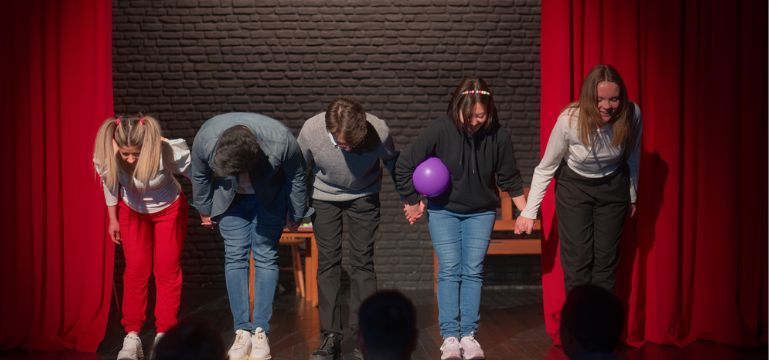
  • Performance project – This programme was developed to develop learners’ personal and social skills, communication skills and independent learning skills. Through weekly theatre experiences: movement, dance, role play, sensory play and filming, pupils develop a range of skills. By working with Theatr Felinfach, performances and workshops have been run to coincide with termly themes e.g., Joseph and the Amazing Technicolour Dreamcoat, The Red Dragon, Space.

Literacy and Numeracy: ·

  • Interventions such as Dyfal Donc and personal dictionaries to develop pupils’ skills
  • Extended reading interventions that are differentiated significantly – see the case study on the school’s programme to develop reading skills
  •  Cyfri Ceredigion and other interventions to develop pupils’ numeracy skills.

What impact has this work had on provision and learners’ standards?

Through the various activities and interventions, the school has seen a high level of engagement and enjoyment in learning from nearly all pupils. Pupils’ self-confidence and willingness to try new activities have developed well. Through the activities, pupils deepen their knowledge of the themes or topics that are studied.

When scrutinising learners’ work, the school recognises step-by-step progress in pupils’ literacy and numeracy skills. Pupils note that they enjoy these interventions and that the support helps them to develop at school.

How have you shared your good practice?

Ysgol Gyfun Aberaeron is currently sharing the good practices in the region through the health and well-being website, the ALN department newsletter and through ALNCo networks. The ALNCo has worked with an art therapist to produce guidance booklets on art activities that promote pupils’ emotional well-being. The success of the theatre performance project has led to the expansion of the project across the authority to other specialist bases.

Improvement Resource Type: Effective Practice


Context and background to the effective or innovative practice

After evaluating pupils’ well-being across the school, it was found that the percentage of pupils who were suffering from low levels of social, emotional and mental well-being had increased over time. These difficulties were having a significant effect on pupils’ ability to concentrate on their learning, in addition to expressing their feelings and maintaining and developing positive relationships with others. It was decided that there was a need to prioritise pupils’ emotional well-being needs and to provide a firm foundation to prepare them to learn and achieve to the best of their ability.

Description of the nature of the strategy or activity

It became clear that the most vulnerable pupils needed more long-term support. As a result, 3 tiers of support were created.

1. Long-term support:

i. ‘Y Nyth’ – early intervention to nurture and develop the social and emotional skills of the most vulnerable pupils. The focus is on delivering a curriculum that is appropriate for their individual development, fostering positive experiences, increasing self-esteem and academic success.

ii. ‘Yr Enfys’ – a room for pupils with sensory problems. Any pupils can access this room during the day to self-regulate.

2. Short-term intervention groups – social and emotional sessions that are held on a 1:1 basis or in small groups. This helps to improve pupils’ concentration skills, fosters resilience and encourages them to engage with their learning. Staff encourage pupils to practise these transferrable skills in the classroom, at school and at home.

3. Well-being areas in each classroom – quiet areas where pupils can go independently to regulate. Staff are active in supporting pupils to acknowledge their emotions, sharing regulation strategies and reflecting on how to respond to situations in positive ways. A comprehensive programme of training was established for staff, including childhood trauma, to support them in dealing with challenging behaviours through restorative practice and maintaining positive relationships. Unique interventions were trialled to satisfy pupils’ well-being; for example, the interest of a group of older boys in physical exercise sessions was used to tackle challenging behavioural problems. An expert from the community was invited to develop resilience and perseverance skills through teamwork.

Leaders have created robust and supportive links with parents by sharing useful information, for example through a weekly newsletter and inviting them to regular coffee morning sessions to discuss any concerns. This project was supported through dedicated funding from the parents’ association.

What impact has this work had on provision and learners’ standards?

This work has contributed to raising standards of well-being among pupils and improved the behaviour of pupils across the school. Our 3-tier system has ensured that interventions have not isolated them. Staff who are experienced and competent in child welfare within the school have given feedback to class teachers to ensure that support in the classroom reflects the support in ‘Y Nyth’ and the short-term intervention sessions. Pupils are more aware of their feelings and emotions and, as a result, they have developed the maturity to be able to recognise when they need to access the well-being areas.

All of these strategies have contributed significantly to improving pupils’ emotional well-being, developing relationships with others, and they are therefore more prepared to be healthy, confident and ambitious individuals.

How have you shared your good practice?

Although this project is in its early days, we have shared good practice with the school’s stakeholders, for example during parents’ evenings and governor meetings.

We have produced pamphlets that explain our vision and the provision that is available to pupils at ‘Y Nyth’, which is shared on our school website and social media channels.

We have shared good practice with teachers and well-being leaders in other schools within the local authority.

Improvement Resource Type: Effective Practice


Context and background to the effective or innovative practice

In 2019, following a period of instability in leadership, a rapid change in the complexity of pupils’ needs and the need to implement the new curriculum for Wales and ALN transformation the governing body mandated the new head teacher to deliver significant change across the school. The Governing Body has been instrumental in promoting, supporting and facilitating change, in partnership with headteacher and the new senior leadership team. 

The governing body and the head teacher ensured that there was clear rationale for change. This was key to ensuring that all staff not only understood the need and were part of the change and understood the rationale for change. As such, staff across school have been instrumental in defining, influencing and leading change in all areas of the schoolwork.  

How did we do it?

Initially, the school leadership team worked closely with a range of partners including the regional consortium and external specialists to establish a baseline and agree key priorities for change over a three-year period. This agreed baseline provided the senior leadership team and governing body with a clear direction of what needed to improve and formed the basis of the school improvement plan. It was important to all involved in the change management process that all partners were fully consulted with throughout the process and all changes were made in consultation with all staff, pupils and parents/carers 

The governing body has been through significant change over the past three years, re-evaluating its role as a critical friend to the school. The introduction of governors as chairs to the sub-committee’s that monitor progress against the strategic priorities means that the Governors now have a thorough understanding of the school’s strengths and areas for development. They have used their areas of specialism well to support senior leaders and staff through this significant period of change.  

A multi-disciplinary team was established of school staff, careers Wales, local authority, governors and further education college, to review the learning offer, accreditation package, care and support and consequently the infrastructure of the school.  

The governing body agreed to expand the senior leadership team and the school developed the role of the assistant headteachers to be head of phases, providing autonomy and support to run their phase. The phase approach was implemented in September 2020, providing structure for staff and pupils. Each phase provides a tailor-made curriculum offer to meet the specific needs of their pupils and work closely together to support transition as they move from one phase to another. 

The school negotiated a management change to the school day. As a result, nearly all support staff now attend the school’s in-service days and are fully included in all areas of school development, including the developments of our approaches to the four purposes, curriculum offer and developing the small steps for pupils learning. 

The school adopted a collaborative model for developing its approach to curriculum for Wales. It focuses on transitional aspirations pupils have and the skills they need to support their transition. The de-construction and unpicking of the four purposes with staff, pupils and parents has led to a clear, progressive curriculum offer in each phase that provides pupils with opportunities to develop in all areas of their learning. 

What impact has this had on provision and standards?

The introduction of the phase approach has enabled and empowered both teaching and support staff. The phase approach and adopting the primary model throughout school has led to staff upskilling in specific areas of interest and specialism. This has led to pupils feeling less anxious with movement and change and making strong progress in all areas of their learning. 

The change to the management of the school day has enabled the school to enhance the professional learning for all staff. As a result, nearly all support staff now attend our in-service days, leading to developing a highly specialised workforce. 

The collaborative developments on the curriculum for Wales and pupils’ learning offer means that pupils are making strong progress in areas that are important to and for them. Pupils now leave school with a broad range of purposeful accreditation that support their transition to further education or training.