Effective Practice Archives - Page 18 of 66 - Estyn

Improvement Resource Type: Effective Practice


Improvement Resource Type: Effective Practice


Information about the school

Rhayader Church in Wales Primary School is an dual stream primary school in Rhayader, Powys, located on the edge of the Elan Valley. The school serves an area which is neither disadvantaged nor advantaged. The school has grown significantly in pupil numbers in the last five years. The school is set in extensive grounds with green spaces and woodland. 

Context and background to the effective or innovative practice

Staff aim to ensure that provision meets the needs of all their pupils to enable them to achieve success and improved well-being. The school is an inclusive school catering for a wide range of additional learning needs. Five years ago, the school was concerned about pupil engagement and attendance and became involved in a Creative Arts project to investigate if a pupil led curriculum could improve learner outcomes. The school is set in extensive grounds that due to health and safety constraints were not being fully utilised. Through the work with the Arts Council for Wales creative practitioner, the staff asked pupils to identify how they preferred to learn. This resulted in a pupil led curriculum and the full use of the outdoor areas. A study of the use of the outdoor environment formed part of the project and staff planned and created spaces for teaching and learning. 

Description of nature of strategy or activity

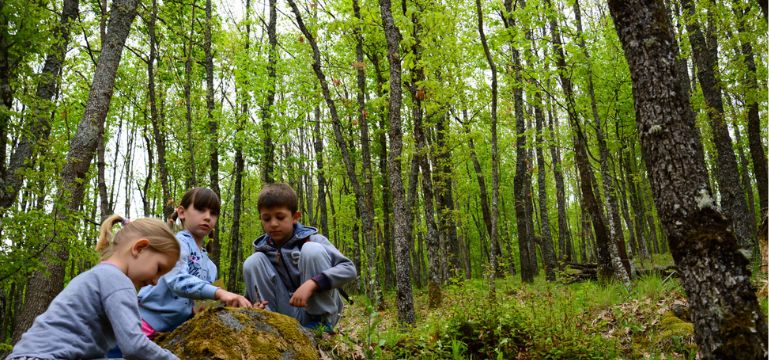
The school has established dedicated forest school areas and outdoor class areas. There was a whole school focus on training staff to plan and deliver outdoor learning in almost all lessons. This has been embedded through the whole school and every class has regular forest school sessions. The use of the outdoors is an integral part of the school day and in all weathers. These outdoor activities encourage the pupils to regularly use tools, light fires, climb trees and build shelters, as well as using the outdoors for more curriculum-based numeracy and literacy sessions. The areas are also used for well-being focus times for pupils to have calm time and grounding techniques are used for any pupils who need them.  

What impact has this work had on provision and learners’ standards?

The activities planned allow the pupils to take risks, build reliance and has a positive impact on their well-being following the COVID-19 pandemic. Through using the outdoors daily in regular lessons, the pupils become more confident and self-aware. Being in nature has shown that it helps to regulate emotions and co-operate with others more effectively. The unstructured outdoor environment promotes adaptability within children and boosts their motivation to succeed. Pre the COVID pandemic, the use of the outdoors had a positive impact on school attendance. Teachers find that concentration and focus in classroom are better following outdoor learning sessions.  

How have you shared your good practice?

The school promotes the use of the outdoors with the pre-school settings on the school site. Working with local organisations, such as Cambium Sustainable, has extended the use of forest school in other local schools. Pre COVID-19, the school shared best practice and training with other cluster schools and held an outdoor learning day for the community and invited diocese schools. The diocese education officer has created an outdoor learning showcase video to share with other diocese schools. 

Improvement Resource Type: Effective Practice


Information about the school

Coed Glas Primary serves the community of Llanishen to the north of Cardiff. The school has 535 pupils on roll. The area surrounding the school has a mixture of social, rented and privately owned property. The school population reflects this rich and diverse catchment area. Approximately 36% of pupils are eligible for free school meals, which has increased significantly over the past several years with the local authority average being 21.5%. The school is within the 20-30% most deprived area in Wales according to the Welsh Index of Multiple Deprivation. The number of children with EAL has risen to 28%. Due to increasing numbers of children requiring a school place in north Cardiff, the school has admitted up to 90 children in each year group over the last 7 years, resulting in 3 classes per year group in many cases.  

There are 18 mainstream classes of single aged groupings, a 48-place nursery and a special resource base (SRB) catering for up to 16 children with hearing impairment from across Cardiff. 


Context and background to the effective or innovative practice

The school sees well-being as at the very heart of everything it does. It aims to provide a safe and inclusive environment where everyone is welcomed, celebrated and can thrive. The school believes in the power of values and aims to empower the children to fulfil their potential as kind and respectful members of the community. The school ensures that the learning environments are places which inspire curiosity and creativity.   

Over the last two years the school has seen more pupils requiring emotional support than ever before. During this period, the school ensured that all members of staff received well-being training and increased the number of well-being practitioners. However, the school also recognised that several pupils needed a different approach. The leadership team started to explore how they could best support these pupils through the creation of a bespoke nurturing provision. This involved: 

  • discussions with specialist education teams 

  • visits to other schools and making professional learning links with their staff 

  • training members of Coed Glas’ own staff 

  • creating a teaching and learning responsibility (TLR) position to give the provision the best chance of succeeding and to ensure longevity 

  • use of the existing budget to staff the provision 

  • making it a priority on the School Development Plan  

Description of nature of strategy or activity

Over the last few years, the school fostered and nurtured supportive and caring relationships with families that were further enhanced during COVID. The school recognised that knowing families in depth was the key to not only developing strong relationships but also to improving outcomes for pupils. 

Leaders and staff invested heavily in getting to know the pupils and meeting their well-being needs effectively. For example, in the well-being sessions at the beginning of every day, pupils choose their own activities to help them settle and prepare for learning. These sessions enable staff to observe pupils and support those they identify as needing emotional, mental and physical support.  To further improve this, the leadership team used some of the school’s delegated budget to fund and train members of staff to deliver nurture provision in ‘The Nest’. Since opening in September 2022 and up until March 2023, the facility supported a fifth of the school’s pupils through carefully planned small groups, individual sessions and a successful self-referral system. This system was established to provide pupils with the opportunity to speak to a trained member of staff about any difficulties they are having or worries they would like to share. The school originally offered this to Year 5 and Year 6 pupils, but because of its success rolled it out to Year 3 and Year 4 pupils as well. Pupils request an individual slot during lunchtime which is booked by their class teacher on a central booking system. These are informal, one-to-one sessions where the pupils play games and take part in creative activities whilst talking through their worries or difficulties. Staff blank out slots for any pupils who they view as needing a more urgent appointment. Staff record details of these sessions and use this to gain a more holistic understanding of the pupil. Where appropriate, the well-being practitioners will share this information with the child’s class teacher and discuss whether they need class-based support. 

Staff provide pupils that access the self-referral system on a regular basis the opportunity to be part of a group attending more intensive emotional well-being support sessions. These sessions take place daily and run over a half term. The focus of the sessions is bespoke to the needs of the pupils who have self-identified through the referral system. This allows staff to spot those pupils who they would not necessarily know required additional emotional support.  

What impact has this work had on provision and learners’ standards?

Since the introduction of the self-referral system, the number of children accessing the provision has increased significantly and children are now more confident in asking for support for their emotional well-being and know how to do this.  

Data from the well-being assessments carried out at the beginning and end of the half term block, show progress in all areas for every child. Pupils and staff questionnaires highlight the positive impact ‘The Nest’ provision has on individual pupils. 

Observations by class teachers show that pupils are beginning to transfer what they have learned into the classroom and wider social situations. For example, one child now shows high levels of self-esteem when completing tasks. 

How have you shared your good practice?

Coed Glas is an initial teacher education (ITE) lead school and provides training for students from other schools. These students have benefitted from visiting ‘The Nest’ to see the provision in action. 

Improvement Resource Type: Effective Practice


Information about the school

Coed Glas Primary serves the community of Llanishen to the north of Cardiff. The school has 535 pupils on roll. The area surrounding the school has a mixture of social, rented and privately owned property. The school population reflects this rich and diverse catchment area. Approximately 36% of pupils are eligible for free school meals, which has increased significantly over the past several years with the local authority average being 21.5%. The school is within the 20-30% most deprived area in Wales according to the Welsh Index of Multiple Deprivation. The number of children with EAL has risen to 28%. Due to increasing numbers of children requiring a school place in north Cardiff, the school has admitted up to 90 children in each year group over the last seven years, resulting in three classes per year group in many cases.  

There are 18 mainstream classes of single aged groupings, a 48-place nursery and a special resource base (SRB) catering for up to 16 children with hearing impairment from across Cardiff. 

Context and background to the effective or innovative practice

The school sought to develop the knowledge and skills of its early years team through collaboration, research and motivating change. They perceive the learning environment as playing the role of the third teacher and worked to create a nursery setting that is inviting, calm and inspires learning.  

The children entering nursery during the current academic year were born during the Covid pandemic. Practitioners noticed that an increasing number of them had speech and language delay and underdeveloped gross and fine motor skills. They recognised a requirement for a new approach to help address this and that the nursery needed to be set up in a way to nurture and develop these skills and encourage independence.  

Description of nature of strategy or activity

In the nursery environment, practitioners provide opportunities for children to use real life resources to make independent choices and to solve problems. Brightly coloured plastic toys have been replaced with real-life, open-ended resources and ‘loose parts’. Practitioners only intervene in the pupils’ play when they feel there is a good opportunity to expand on their learning and understanding.  

Staff have high expectations of all children and celebrate a growth mindset. Practitioners play a key role in modelling and nurturing independent skills. This is evident in the nursery’s daily snack provision. Nearly all pupils pour their own drinks, handle knives, peelers and other tools safely, and wash their own cups and plates. Practitioners also use this time to develop pupils’ use and understanding of Welsh. 

The nursery session follows the ‘rhythm’ of the child, and their learning is not interrupted to stop for focused activities. During the two-and-a-half-hour session, practitioners aim to achieve a balance where children have the opportunity to develop important life skills but also, follow their passions and interests. When a pupil makes a discovery or asks a question, the practitioners follow the their lead and give them time, space and support to investigate and explore their thoughts and ideas further. This approach directs all of the pupils’ learning.  

Where the school identified writing as a whole-school action on the school improvement plan, the nursery practitioners began research into the pre-writing skills needed for children to write. All learning in the nursery aims to build the foundations needed in readiness to write, such as developing the children’s core muscles through outdoor play, and opportunities to develop coordination through large scale painting at different heights and angles. 

What impact has this work had on provision and learners’ standards?

By providing the children with open-ended, real-life resources, which spark curiosity, the children have become more actively involved in their learning. Children are engaged in their play for longer periods of time as they construct, collect, sort and combine resources with other materials.  

Children entering nursery with speech and language delays have shown significant progress. The long periods of meaningful, authentic play supported skilfully by practitioners ensure that these skills are modelled and developed. 

By adapting nursery sessions around the rhythm of the child, we have observed children make deeper connections in their learning and master specific skills.  

The school expects to see the impact of the focus on pre-writing readiness as the children progress further through school, developing a love for writing and pupils’ confidence in their own writing abilities.  

How have you shared your good practice?

The school has hosted visits by newly qualified teachers from other schools to observe the effective practice.  

Improvement Resource Type: Effective Practice


Background

Ysgol Gyfun Gymraeg Llangynwyd is a Welsh-medium school in Bridgend local authority. There are around 683 pupils on roll, of which around 118 are in the sixth form. Almost 16% of pupils are eligible for free school meals, which is lower than the national average of 20.2%. Around 30% of pupils come from Welsh-speaking homes. 

Strategy

In responding to pupils’ pastoral needs and lower levels of attendance following COVID, the school set out to expand its well-being and inclusion provision to reduce the possible barriers to pupils having full access to their education. A dedicated Inclusion and Well-being team was created under the care of members of the senior leadership team. There were discussions with various stakeholders to strengthen the vision of the school and the cluster. In these discussions, the ethos of ‘Tîm Llan’ (‘Team Llan’) and ‘Teulu Llan’ (‘The Llan Family’) was built upon to ensure that all members of the Ysgol Gyfun Gymraeg Llangynwyd community felt comfortable attending. The aspiration was to ensure that everyone understood their roles and responsibilities to confirm the sense of belonging to the school by focusing on well-being. 

What the school did

An Inclusion and Well-being Team was established with specific responsibilities, working together at all levels, such as additional learning needs (ALN), teaching and learning, safeguarding and well-being. Regular meetings and appropriate training were organised for each members of the team to be able to support the specific needs of pupils/groups of pupils and, to ensure consistency, guidelines for a graduated response were agreed. 

The school invested in software to create compatible systems to share relevant information. Rigorous training was organised so that all members of staff have access to a comprehensive overview of each pupil and have up-to-date strategies to respond to their needs.  

When planning, creating and providing pastoral morning sessions (assemblies, ‘Lles Llun’ and ‘Codi Llais’) with their tutors, all pupils were encouraged to reflect on their sense of belonging and discuss their experiences and feelings at the school and within the local community. To respond to the feedback and the growing needs of pupils, it was agreed, with the support of the governors, to create ‘Llannerch’, namely an area that ensures a safe place for pupils to discuss any concerns they have either inside or outside the school with specific members of staff. ‘Llannerch’ allows pupils to receive various interventions (e.g., mentoring, ELSA, an emotional well-being and mental health support programme, literacy and numeracy, and emotional support). The area is also used effectively when re-introducing anxious pupils to the school, providing an adapted curriculum temporarily to settle them back into the full life of the school.   

In response to a national problem of low attendance as a result of COVID, the role of the Assistant Headteacher, Inclusion and Well-being was developed and a Senior Specialist Support Officer was appointed to work with the county’s Education Welfare Officer on a weekly basis. They implement a rigorous tracking system across the school so that any concerns can be identified at an early stage and responded to immediately (for example through face-to-face contact/phone calls with parents; referrals to social services; implementing a temporary alternative curriculum; mentoring and counselling referrals; discussions in services and a long-term alternative curriculum – EOTAS/apprenticeships).   

All members of ‘Team Llan’ are aware of the systems and confident in their use and role in contributing to supporting everyone across the school. This also means that suitable support in lessons and interventions supports each individual to attend school so that they have full access to their education. 

The tracking and regular communication, through individual progress plans and attendance data, ensure that the school is aware immediately of any obstacles or needs, including some pupils from the cluster’s primary schools. As a result of the strategies and with the willingness of pupils and parents to work with the school and the county’s Education Welfare Officer, attendance levels have increased by ensuring that everyone follows the right curriculum for their needs across all key stages. 

Effect

The various strategies for pupils and the focus on supporting the well-being of staff (SLT contact and the input of an incentive company) means that all individuals at the school feels like their voice is heard. This has fostered a sense of belonging to ‘Team Llan’ among pupils, staff, parents, governors, the cluster and external agencies. As a result of all of these strategies, attendance levels have increased significantly, although, in line with many schools in Wales, they are not yet as good as they were before the pandemic. 

Improvement Resource Type: Effective Practice


Background

Ysgol Gyfun Gymraeg Llangynwyd is a Welsh-medium school in Bridgend local authority. There are around 683 pupils on roll, of which around 118 are in the sixth form. Almost 16% of pupils are eligible for free school meals, which is lower than the national average of 20.2%. Around 30% of pupils come from Welsh-speaking homes.

Context

In embedding the principles of the Curriculum for Wales, the school has focused on ensuring consistency and developing effective pedagogy. In order to realise this, staff professional development systems were refined, along with monitoring and evaluation process, in order to align them and ensure a regular cycle of evaluation and improvement and provide the best learning experiences for pupils.

What the school did

Leaders realised that gaining an accurate and current picture of the standards of the existing provision was vital to be able to design and implement a professional development programme that responded to the needs of staff while realising the objectives in the School Development Plan. Whole-school digital systems were developed to gather the findings of all monitoring activities at all levels in a consistent manner, including learning walks, scrutiny of work, focus groups and opinion questionnaires. A whole-school monitoring calendar is shared so that Senior Area Leaders and Department Leaders can plan timely activities and ensure a balanced overview across areas and groups of pupils. This allows central access to comprehensive and transparent information at any time during the year to examine the impact of whole-school strategies and areas to be developed further which, in turn, feeds into the staff training programme.

Leaders ensure that the school develops and refines systems regularly, making consistent use of feedback from staff and pupils. Through whole-school collaboration, the ‘Gwers Llan’ structure was developed, which is used consistently across the school. An agreed structure such as this promotes positive attitudes to learning among pupils, as consistent expectations reduce the cognitive demands placed on them as they move from one lesson to another. With all teachers using an agreed structure, monitoring systems allow leaders to identify if there is any aspect that needs to be strengthened, ensuring that it, in turn, forms part of the professional development programme. The school has planned appropriate time for training and professional development activities by building an extra lesson at the end of the day on Thursday once in every three-week timetable cycle. During this session, the professional development programme can be achieved without detracting from the time that departments and areas have to discuss pedagogy and act on whole-school requirements.

Leaders recognised the need to develop an ethos of continuous self-reflection among staff to ensure that all teachers are keen to take advantage of opportunities to increase their knowledge, skills and understanding regularly. As a result, performance management arrangements were adapted to focus on the continuous development of the individual while maintaining close alignment with the outcomes of self-evaluation and monitoring processes. Setting objectives is an open and supportive process where staff and leaders are given an opportunity to discuss and refine them in line with the development plan during the autumn term. A recording document is developed, namely the Continuous Professional Development Plan, which is practical for staff to administer. This document is a six-year overview to ensure that the objectives chosen are constructive and support continuous development. A focus is placed on teaching and learning when setting objectives, with an emphasis on progress rather than pupils’ attainment. Staff are expected to co-operate on an annual research activity as part of the process. This has led to more confident and innovative practitioners who are willing to experiment, reflect and disseminate any successes and challenges seen in their work with their colleagues through the ‘Llwyfan Llan’ activity. The importance of the Continuous Professional Development Plan is reflected by providing time every half term for staff to update it.

Effect

As a result of these activities, the school fosters the enthusiasm of all members of staff and encourages them to be curious about learning and to improve their practices continuously to provide the best learning experiences for pupils.

Improvement Resource Type: Effective Practice


Information about the school

Ysgol Caer Drewyn and Ysgol Carrog federated in 2012, and the headteacher shares her leadership time between both schools. Ysgol Caer Drewyn is a small county primary located in the rural town of Corwen. It provides education for 99 learners aged from three to eleven, across 4 classes. The rolling 3-year average FSM is 37% but the actual current percentage is 49%. Ysgol Carrog is a small county primary located in the rural village of Carrog. It provides education for 35 learners aged from three to eleven, across 2 classes. The rolling 3-year average FSM 11% but the actual current percentage is 30%.  

On entry to the schools, many pupils’ basic skills are below what is expected for their age. During their time at the schools, nearly all pupils including those with additional learning needs make strong progress. 

The federation has a clear vision, which focuses on ensuring a caring and nurturing environment where pupils have the best opportunities to learn. The strong values including kindness, curiosity and creativity; are clearly visible at both schools and form the basis of the strong and supportive relationships which exist in all classrooms. Developing strong attitudes to learning, respect for others and supporting pupils and staff’s well-being is at the heart of the federation’s vision and values. 

Context and background to the effective or innovative practice

After considering the context in the schools’ work, they decided that the current more traditional style of teaching had not been effective enough and did not always meet the needs of pupils. Collectively the schools decided to adapt their approaches. Prior to Curriculum for Wales, they successfully adopted foundation learning pedagogy across key stage 2 classes and introduced cross-curricular challenges alongside stimulating and purposeful learning environments for all pupils. The introduction of CfW has since allowed them to be more flexible. 

Description of nature of strategy or activity

Effective teaching and learning together with a rich, purposeful, diverse curriculum ensure that learners are interested in their learning and work well independently and with peers to complete their challenges. This helps to foster positive attitudes to learning and effective independent learning skills. Pupils receive purposeful opportunities to practice their literacy, numeracy and digital skills well through rich tasks and learning experiences; such as cooking lessons which are regularly used to practice these skills and promote healthy eating.  

The provision for foundation learning is based on a broad range of rich learning and play activities that develops pupils’ independence and collaborative skills well.  

Teachers plan a wide range of authentic learning experiences to develop their skills across the curriculum including effective use of the outdoor areas. Pupils contribute well to the planning of each term’s topics by suggesting what they want to learn. As a result, the independent learning experiences or ‘missions’ focus well on allowing pupils to apply their skills in engaging and challenging contexts. In addition, pupils select the activity at the level of challenge which they consider to be appropriate for them, which develops their independence successfully. Pupils also have an opportunity to plan and deliver their own lessons in line with the topic and give consideration to the skills to be applied. 

Teachers adapt their teaching extremely well to meet the needs of all learners. They make skilful use of short, sharp and mostly practical activities that ensure that pupils remain active, engaged throughout the sessions and make good progress. Together, all staff set high expectations, making effective use of groupings and questioning to provide pupils with the necessary support to succeed and to challenge themselves effectively.  

What impact has this work had on provision and learners’ standards?

The adaptation of this teaching style and curriculum has resulted in learners enhancing their confidence and independence, improving their attitudes to their learning and their inquiring responses. All staff have high expectations and aspirations for pupils to achieve the best that they can be and this enables them to transfer their skills successfully across the curriculum. Most pupils respond very well to different challenges, which allow them to collaborate with their peers and develop self-confidence. 

Improvement Resource Type: Effective Practice


Information about the school

Ysgol Caer Drewyn and Ysgol Carrog federated in 2012, and the headteacher shares her leadership time between both schools. Ysgol Caer Drewyn is a small county primary located in the rural town of Corwen. It provides education for 99 learners aged from three to eleven, across 4 classes. The rolling 3-year average FSM is 37% but the actual current percentage is 49%. Ysgol Carrog is a small county primary located in the rural village of Carrog. It provides education for 35 learners aged from three to eleven, across 2 classes. The rolling 3-year average FSM 11% but the actual current percentage is 30%.  

On entry to the schools, many pupils’ basic skills are below what is expected for their age. During their time at the schools, nearly all pupils including those with additional learning needs make strong progress. 

The federation has a clear vision, which focuses on ensuring a caring and nurturing environment where pupils have the best opportunities to learn. The strong values including kindness, curiosity and creativity; are clearly visible at both schools and form the basis of the strong and supportive relationships which exist in all classrooms. Developing strong attitudes to learning, respect for others and supporting pupils and staff’s well-being is at the heart of the federation’s vision and values. 

Context and background to the effective or innovative practice

After considering the context in the schools’ work, they decided that the current more traditional style of teaching had not been effective enough and did not always meet the needs of pupils. Collectively the schools decided to adapt their approaches. Prior to Curriculum for Wales, they successfully adopted foundation learning pedagogy across key stage 2 classes and introduced cross-curricular challenges alongside stimulating and purposeful learning environments for all pupils. The introduction of CfW has since allowed them to be more flexible. 

Description of nature of strategy or activity

Effective teaching and learning together with a rich, purposeful, diverse curriculum ensure that learners are interested in their learning and work well independently and with peers to complete their challenges. This helps to foster positive attitudes to learning and effective independent learning skills. Pupils receive purposeful opportunities to practice their literacy, numeracy and digital skills well through rich tasks and learning experiences; such as cooking lessons which are regularly used to practice these skills and promote healthy eating.  

The provision for foundation learning is based on a broad range of rich learning and play activities that develops pupils’ independence and collaborative skills well.  

Teachers plan a wide range of authentic learning experiences to develop their skills across the curriculum including effective use of the outdoor areas. Pupils contribute well to the planning of each term’s topics by suggesting what they want to learn. As a result, the independent learning experiences or ‘missions’ focus well on allowing pupils to apply their skills in engaging and challenging contexts. In addition, pupils select the activity at the level of challenge which they consider to be appropriate for them, which develops their independence successfully. Pupils also have an opportunity to plan and deliver their own lessons in line with the topic and give consideration to the skills to be applied. 

Teachers adapt their teaching extremely well to meet the needs of all learners. They make skilful use of short, sharp and mostly practical activities that ensure that pupils remain active, engaged throughout the sessions and make good progress. Together, all staff set high expectations, making effective use of groupings and questioning to provide pupils with the necessary support to succeed and to challenge themselves effectively.  


What impact has this work had on provision and learners’ standards?

The adaptation of this teaching style and curriculum has resulted in learners enhancing their confidence and independence, improving their attitudes to their learning and their inquiring responses. All staff have high expectations and aspirations for pupils to achieve the best that they can be and this enables them to transfer their skills successfully across the curriculum. Most pupils respond very well to different challenges, which allow them to collaborate with their peers and develop self-confidence. 

Improvement Resource Type: Effective Practice


Information about the provider

Cardiff and Vale Community Learning Partnership was established in 2013 from the former Cardiff and Vale of Glamorgan adult learning partnerships. There are four main delivery partners: Cardiff and Vale College, Cardiff Council, Vale of Glamorgan Council, Adult Learning Wales. The partnership serves Wales’ capital city, Cardiff, and the adjacent, largely rural, local authority of the Vale of Glamorgan, and offers provision at a range of venues including community centres, libraries and the college’s campuses. 

The partnership employs approximately 193 part-time and 43 full-time teaching staff. Approximately 5,814 learners are enrolled on courses, of whom 2,209 are English for speakers of other languages (ESOL) learners. The majority of its learners are at entry level and level 1 or short course provision. Across the partnership 39% of learners live in the most disadvantaged areas. Sixty-three per cent of the partnership’s enrolments are from ethnic minority backgrounds. Sixty-five per cent of the partnership’s enrolments are female.   

The vision for ALC in Cardiff and the Vale of Glamorgan is one where there is: 

  • increased participation by those who have benefited least from education in the past or who are most at risk of not benefiting in the future 

  • improved quality in the learning experience including increased progression to other learning opportunities or work 

  • greater coherence in the nature and patterns of provision across the providers. 

Context and background

Cardiff and Vale Community Learning Partnership was formed in 2013 after both legacy partners were identified as unsatisfactory by Estyn. There was clear identification that neither partnerships were working together to provide an effective solution to adult learners and that provision was not sufficiently focused on a responsive and comprehensive curriculum offer which delivered a range of learning experiences that were responsive to local, regional and national priorities. 

Since this time, it has transformed into a well-established and mature body with strong and impactful leadership, working collaboratively to successfully meet the needs of its diverse communities. 

Description

Central to this transformation has been shared ownership of the partnership’s strategic direction and the widespread adoption of equitable and open working arrangements. All partners committed to this over-arching vision through collaboration in a revised operational working structure and through the contribution of resources to support transformation. This included the appointment of a Partnership Co-ordinator. 

Four working groups were set up – a Strategic Group, a Quality and Data Group, a Teaching and Learning Group and a Learner Involvement Group; these involved staff from every partner.  These groups took shared responsibility to develop the first quality development plan (QDP) driving forward and providing direction for positive change. Senior leaders from all partners meet regularly to coordinate the work of the partnership. The Strategic Group developed strong links with external stakeholders, including the Welsh Government, employers and community groups facilitating wider partnership work that has been innovative and agile, providing effective solutions to the challenges faced by the region. The three operational groups made significant changes to the curriculum, teaching and learning practice and quality systems, including, shared observations, joint learner involvement activities and partnership professional learning. This has resulted in clear structures and communication. 

To further enhance communication termly partnership newsletters were devised for staff and learners, sharing the work of the partnership and raising awareness of of its developments and achievements. 

Impact of this work

There are many examples of how strong collaborative working has positively impacted on the partnership and its learners. There are shared visions, aims and values, with openness and trust, putting learners at the heart of decision-making. The curriculum is focused on employability and skills, with some well-planned leisure courses. Through planning as a partnership, curriculum is directed at the point of need, with no unnecessary duplication, working to the strengths of each partner. Working at a strategic level, the partnership shared the creation and led the REACH project with the Welsh Government, providing immediate assessment for ESOL and placement with an available learning provider. This significantly reduced the ESOL waiting list across the region. The partnership has provided coherence of ESOL, Family Learning and other courses to ensure that it attracts and supports those furthest away from education and training. It has created strong links with industry to provide employer ready courses tailored to fill gaps in employment and to generate opportunities for those from diverse and deprived areas of South Wales. 

Learners make good progress with performance across the partnership continuing to improve. They make a positive contribution to society and there are many examples of how the lives of learners have been transformed. Teaching and Learning has been identified as highly effective with strong support and wellbeing for learners and effective use of technology, the latter supporting the continuation of work during the pandemic.   

How has the practice been shared?

The partnership has supported other partnerships across Wales in rolling out their own provision, such as REACH and sector priorities academies. Partnership members attend adult learning conferences and Welsh Government workshops on best practice and have chaired Adult Learning Partnerships Wales. The partnership shares its working practices openly, leading on partnership improvement. 

Improvement Resource Type: Effective Practice


Information about the provider

Cardiff and Vale Community Learning Partnership was established in 2013 from the former Cardiff and Vale of Glamorgan adult learning partnerships. There are four main delivery partners: Cardiff and Vale College, Cardiff Council, Vale of Glamorgan Council, Adult Learning Wales. The partnership serves Wales’ capital city, Cardiff, and the adjacent, largely rural, local authority of the Vale of Glamorgan, and offers provision at a range of venues including community centres, libraries and the college’s campuses. 

The partnership employs approximately 193 part-time and 43 full-time teaching staff. Approximately 5814 learners are enrolled on courses, of whom 2209 are English for speakers of other language (ESOL) learners. The majority of its learners are at entry level and level 1 or short course provision. Across the partnership 39% of learners live in the most disadvantaged areas. Sixty-three per cent of the partnership’s enrolments are from ethnic minority backgrounds.  Sixty-five per cent of the partnership’s enrolments are female.   

The vision for ALC in Cardiff and the Vale of Glamorgan is one where there is: 

  • increased participation by those who have benefited least from education in the past or who are most at risk of not benefiting in the future 

  • improved quality in the learning experience including increased progression to other learning opportunities or work 

  • greater coherence in the nature and patterns of provision across the providers. 

Context and background

A key driver for the partnership is where it perceives learners have a particular need and there is a gap in the provision, it often works strategically with other partners to address the issue.  An excellent example of this is the ESOL Cancer Awareness Project in Partnership with Public Heath Wales and Velindre Cancer Centre (Charitable Trust).  The Welsh Government and NHS were working to engage with communities and improve education about cancer and cancer prevention. Research has identified that people from ethnic minority communities were less likely to participate in national breast, cervical and bowel screening programmes and reported lower awareness levels of cancer signs and symptoms. Lifestyle risk factors, such as diet, smoking and exercise, may also be poor. The reasons for this are multi-faceted but lack of awareness and understanding were identified as fundamental barriers. 

The purpose of this project was to address this health inequity by working in partnership with ESOL specialists to develop a health education resource that could be embedded within the ESOL curriculum and delivered through ESOL classes. ESOL courses are recognised to deliver more than just English language development. These programmes are also an effective means of communicating important information to learners with limited English language skills in a supportive and sympathetic environment.  

Description

ESOL Cancer Awareness was a successful partnership between Cardiff and Vale Community Learning Partnership and Velindre Charitable Trust to develop contextualised ESOL Health and Cancer Awareness resources for use in entry level ESOL classes across Wales. The partnership produced materials including student resources, teacher notes and an online interactive resource. These raised ESOL learners’ awareness and understanding of the signs and symptoms of cancer, as well as providing them with the vocabulary that would enable and empower them to have effective conversations with English-speaking NHS health professionals, to vocalise their symptoms.  There were specific modules on both female and male cancers.  Through the course learners became more aware of free national screening programmes, and engaged with preventative health promotion messages (such as the benefits of quitting smoking or doing more physical activity) that are so key to a healthy life.  The project was piloted across the partnership during its development stage. 

Impact of the provision

Feedback from the learners has been incredibly positive.  As a result of undertaking this programme, learners have gained in confidence to seek medical services in a timely manner. Learners showed more awareness of NHS services and they were more aware of lifestyle changes they could make to live a healthy life. Learners fed back that in many cases this was the first time they had been able to talk about their health concerns. 

How has the practice been shared?

The resources are now part of the learning experience of all learners within the partnership.  Further modules were developed over the pandemic to support COVID- and vaccination-awareness.  This project has been rolled out across Wales. The project has been shared more widely via the Association of Colleges Equality network and through the National Centre for Diversity where it won an award for innovation. 

Improvement Resource Type: Effective Practice


Information about the provider

Cardiff and Vale Community Learning Partnership was established in 2013 from the former Cardiff and Vale of Glamorgan adult learning partnerships. There are four main delivery partners: Cardiff and Vale College, Cardiff Council, Vale of Glamorgan Council, Adult Learning Wales. The partnership serves Wales’ capital city, Cardiff, and the adjacent, largely rural, local authority of the Vale of Glamorgan, and offers provision at a range of venues including community centres, libraries and the college’s campuses. 

The partnership employs approximately 193 part-time and 43 full-time teaching staff. Approximately 5814 learners are enrolled on courses, of whom 2209 are English for speakers of other languages (ESOL) learners. The majority of its learners are at entry level and level 1 or short course provision. Across the partnership 39% of learners live in the most disadvantaged areas. Sixty-three per cent of the partnership’s enrolments are from ethnic minority backgrounds. Sixty-five per cent of the partnership’s enrolments are female.   


The vision for ALC in Cardiff and the Vale of Glamorgan is one where there is: 

  • increased participation by those who have benefited least from education in the past or who are most at risk of not benefiting in the future 

  • improved quality in the learning experience including increased progression to other learning opportunities or work 

  • greater coherence in the nature and patterns of provision across the providers. 

Context and background

A key purpose of adult community learning is to support people in the region to access employment.  The partnership has created strong links with employers to provide industry-led courses tailored to address regional skills gaps and to generate employment opportunities for those from diverse and deprived areas of South Wales. The goal has been to offer increased progression opportunities and develop a solution for hard-to-fill job vacancies across sectors experiencing skills shortages. The partnership has developed ‘academy’ models which provide intensive skills development and employability support to individuals seeking to develop skills and secure employment in priority sectors. This is made possible by working closely with employers to collaboratively design, develop and deliver relevant provision.  

Description

The partnership has developed a community-focussed delivery approach to support sectors struggling with recruitment including social care, hospitality, creative and financial technology (FinTech). The partnership has developed strong relationships with employers, who co-design the delivery models and training packages, so that they meet their needs. Programmes typically include rigorous application and assessment processes, induction, pairing with an ‘employment mentor’, intensive delivery tailored to support timely development and progression, opportunities for accredited training (qualification and vendor based) and ‘match making’ with potential employers, who provide a guaranteed interview on completion. Learners are helped by funding to remove some of the financial barriers they may face. For example, some intensive 10-week academies include a weekly training allowance, which allows individuals to engage with the programme. The employment mentors regularly attend adult learning courses to work with their learner-mentees and signpost additional support if needed.  

Impact of the provision

The priority sector skills academies have helped citizens aged from 21-62 years across diverse backgrounds and from economically disadvantaged areas to gain employment in priority sectors.

How has the practice been shared?

The partnership has engaged with other regional local authorities, for example, Adult Services sector in Bridgend to create similar provision. Priority sector skills academies have been further shared and rolled out across the further education sector in Wales and supported through Welsh Government funding.