Effective Practice Archives - Page 24 of 66 - Estyn

Improvement Resource Type: Effective Practice


Improvement Resource Type: Effective Practice


Information about the school

Ysgol Gymraeg Gwenllian is a Welsh-medium school for pupils aged 3-11 and is maintained by Carmarthenshire local authority. A minority of pupils come from Welsh speaking homes. There are 137 pupils on roll and 11.3% of the school’s pupils are eligible for free school meals.

Context and background to the effective or innovative practice

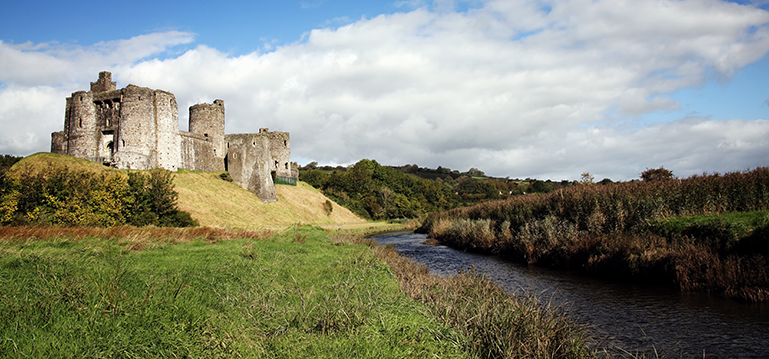
Ysgol Gymraeg Gwenllian is situated in the historic town of Kidwelly, where a number of historic attractions and stories allow rich opportunities to develop pupils’ interest and curiosity. However, leaders realised that pupils’ understanding of the area’s valuable history was not developed enough. In order for the school to have a positive effect on pupils’ understanding of this and, ultimately, to understand Kidwelly’s place in Wales and the wider world, leaders decided to develop a robust vision based on the history of Princess Gwenllian. The journey began by encouraging teachers to teach about the area, developing values based on the princess and developing a motto for the school.

Description of the nature of the strategy or activity

New values were created for the school jointly between pupils, governors and staff, which place an increasing emphasis on the four purposes and the history of Princess Gwenllian. A strong emphasis was also placed on celebrating Welshness and nurturing pupils’ understanding of Kidwelly’s rich history, for example the black cat, the River Gwendraeth, the Little Old Lady of Kidwelly (‘Hen Fenyw Fach Cydweli’) and, of course, the castle. Priority was also placed on making use of the local area for learning activities, for example by holding shows at the castle rather than at school.

Because of the emphasis on the area, pupils re-wrote the story of Princess Gwenllian by weaving history into the school’s values and sharing this through a film for the community. Podcasts were also created about the area with local residents and famous former pupils. History boards were created for a range of ages which included games for younger children, such as find the black cat, and numeracy challenges such as calculation cards for older children. The podcasts, video and history boards succeeded in creating natural links between pupils’ experiences and their learning. This also created opportunities for pupils to embed their understanding further and develop their creating writing and design skills, by creating poems about parts of the area on Celtic knots to be displayed in the area while working with a chief bard. This accompanied a map of the area designed by pupils for visitors to the school and the area. In turn, this succeeded in deepening pupils’ knowledge of the local area.

The school’s leaders also ensured that the community, parents and local businesses had a say in the design of the school’s curriculum by sharing questionnaires that focused on pupils’ direction of learning and their skills for the future. The voice of the community, the school’s values and the Welsh ethos were a key part in preparing staff to plan the Curriculum for Wales. Also, in order to deepen pupils’ understanding of Welsh activities further, activities were planned to promote Welshness, including eisteddfodau, Welsh beatboxing activities, concerts and links with national organisations, such as the Football Association of Wales.

Through this, a firm foundation was ensured to deepen pupils’ understanding of the area’s history and the importance of Welshness, for example by developing their understanding of global issues by forging strong links with a school in Qhobosheaneng, Lesotho and a school in Saint-Jacut-de-la-Mer, France.

What impact has this work had on provision and learners’ standards?

The school takes pride in the fact that its recent inspection noted that its ‘robust vision, which is based on the history of Princess Gwenllian, has been crafted skilfully to foster pupils’ pride in belonging to the local area and Wales. This, in turn, supports pupils to broaden their horizons and apply their skills in a rich range of learning experiences’.

The dedication of staff and pupils in the community has also had a positive effect on teaching and learning, as it provides opportunities to develop an understanding of their own history and local area. As a result, learners have an innate pride towards their ‘cynefin’, their local area and their heritage. They are valuable members of their community and the community is an integral part of the school.

How have you shared your good practice?

The school places an emphasis on celebrating the successes of the pupils and the school as a whole on its website, social media and the local and national press. Good practice is also shared widely through county events and national and international recognition, as the school has won a number of awards. It also plans its vision and curriculum to focus on famous people from the area who emphasise the importance of their culture, heritage and Welshness. For example, pupils created a video to explain the school’s vision, based on Princess Gwenllian. A number of comic boards, Celtic knot boards and a large map were also created on the school grounds, which promote the area’s history successfully.

Improvement Resource Type: Effective Practice


Context and background to the effective or innovative practice

The school’s bespoke curriculum journey began several years ago with the adaptation of the Four Purposes into a school vision, which would meet the demands of the school context and provide equity and inclusion for any 21st Century learner in Wales. From the outset, school leaders recognised the power of co-construction and involved all stakeholders in shaping this vision. The aim at Pendoylan is to ‘Inspire’ through our highly innovative curriculum and pedagogy; to ‘Reflect’ allowing time for pupils to carefully consider their own personal self-improving journey and to ‘Transform’ by providing opportunities to take learning beyond the school gates and encourage active citizenship by engaging with contemporary issues both locally and globally.

In order to realise this ambitious school vision, leaders recognised that staff would require high quality professional development opportunities. Strong partnerships with other schools has always been a bedrock of self-improving practice and this has been particularly effective whilst working collaboratively in the CSC School Improvement Groups (SIG) and developing pedagogy around co-operative learning and creativity. The school has also established strong links with Swansea University and was part of a research study group developing Algebra through using ‘Bar methods’. However, perhaps the most impactful research has been the work undertaken in the NACE hub around cognitive challenge. For example, as part of a ‘spiral of inquiry’, senior leaders used the Webb’s ‘Depth of Knowledge’ tool to improve ‘rich task’ planning and assessment, in the context of studying the effect of wind farms on the local environment. They discovered that children’s breadth of knowledge and independence in learning improved significantly, as a result of this increased cognitive challenge. Certainly, a culture of staff self-reflection and effective pedagogy has formed a strong foundation upon which the school based its current curriculum design.
 

Description of nature of strategy or activity

Two years ago, the school established strong links with the following three schools in the Vale of Glamorgan: St Nicholas C/W Primary, Peterston Super Ely C/W Primary and Llanfair Primary. They refer to themselves as the ‘Orbit’ Cluster because, although they may have different orbit trajectories at times, due to differing school contexts, they all have the same aspirations and vision for pupils around the Four Purposes. 

The collaboration agreed with the conceptual ideas of the New Curriculum for Wales (the why) but they nevertheless found it a daunting task to translate this into a high quality school based curriculum (what to teach and when they were going to teach it). However, from the outset, the schools shared a deep level of understanding as to what they considered to be their non-negotiables in terms of curriculum design :

  • The curriculum needed to be focused and coherent and fulfil the vision of the Four Purposes. 
  • Within it, knowledge and skills had to be sequenced in a logical, progressive order. 
  • They understood that prerequisite knowledge was needed to access new learning and therefore deepening learning was a cyclic process.
  • The curriculum had to reflect the hierarchical and sequential nature of subject disciplines that is required in order to deepen learning.
  • There needed to be equity of access to content across the Collaboration of schools.

With these ideals secured, they set about the journey to engage with all stakeholders to enrich and enhance curriculum design. All four schools held forums and workshops with parents, pupils and governors, and also engaged externally with CSC and Estyn. 

As a result of these consultations, the central approach emerged which is referred to as the ‘Lens Concept’. Just like a lens brings greater clarity and focus, the schools’ ‘Lens Concepts’ brings greater definition to the What Matters statements across the Areas of Learning and Experience (AOLE). The six AOLE’s have been organised into ‘Lenses’.  For example, Expressive Arts has five Lenses:

  1. Notable Artisans, Artists and Genres of Wales and Beyond
  2. Experiment with Materials and Resources
  3. Emotions Moods and Perceptions
  4. Share and Present Ideas
  5. Reflect and Respond as a Participant and as an Audience

Underneath each Lens sits the relevant What Matters statements, the Progression Steps and a ladder of skills, knowledge and suggested experiences, which develop progressively from Nursery to Year 6. The Lens Concept ensures breadth and balance across the curriculum and acknowledges the sequential nature of subject disciplines. By mapping them out across age groups, the schools have ensured that there is continuity, progression and increasing levels of challenge for pupils. However, there is also the flexibility for pupils to access any given point on the ladders according to their stage of learning. 

The Lens approach allowed the schools to have a shared understanding of ‘what’ and ‘when’ elements of the curriculum needed to be taught. In parallel to the Lens Concepts, the schools were also developing a shared understanding of pedagogy and ‘How’ their curriculum was going to be delivered in terms of connecting learning across the curriculum. It was important to avoid becoming overly prescriptive and not to hamper innovation in each school. At the same time, they wanted to align their approach to provide continued opportunities for collaboration and the sharing of good practice amongst practitioners. They therefore decided upon ‘Golden Thread’ themes, which map the lenses (including the what matter statements) across the curriculum. Within each of the four schools, they will all be covering the same ‘Golden Thread ‘per term over a two-year cycle. For example, this term’s thread is ‘Consequences’. At school level, these threads are then translated into different ‘Learning Expeditions’, which begin with inquiry questions, for example ‘What did the Romans ever do for you?’ These are developed into rich tasks, which provide authentic contexts for learning and allow space for pupil voice to take the learning in different directions. The expedition culminates in a celebration of learning, usually a showcase event.
 

What impact has this work had on provision and learners’ standards?

It has been incredibly exciting and rewarding to see the bespoke, collaborative curriculum emerge and as a result begin to fulfil the inspirational vision of the school. Staff are enthused in their delivery of this new provision and as a consequence nearly all learners are highly motivated, consistently engaged and ambitious in their personal goals. This is having a very positive impact on standards and is clearly reflected in the significant gains most pupils are making on the road to recovery post pandemic

How have you shared your good practice?

The ‘Orbit’ Cluster have had the privilege of sharing the Curriculum Design approach at the CSC  Curriculum for Wales Virtual Conference last Summer. The schools have also shared their journey with the wider Rural Vale Cluster within the local authority as part of a showcase event last academic year.

Improvement Resource Type: Effective Practice


Information about the school

Dunvant is on the outskirts of Swansea. It serves an area that is neither prosperous nor economically disadvantaged. Approximately 9.5% of pupils are eligible to receive free school meals. There are 11 mainstream classes, including a nursery and two specialist teaching classes for children with moderate ASD. 

Approximately 93% of pupils come from English-speaking homes and a very few pupils speak Welsh at home. The remaining pupils are from minority ethnic groups (88% white British, 12% other).  Around 12% of mainstream pupils have additional learning needs and a very few have a statements.

A majority of the children are quiet and compliant on entry and very well mannered. Many children achieve at the expected level on entry with around half achieving beyond. 

There are very positive working relationships between the pupils and their teachers and other staff. There is a vibrant and inclusive atmosphere at the school, which strives to ensure that teaching is engaging and well planned, and that lessons are fun and meet pupils’ needs effectively.
 

Context and background to the effective or innovative practice

Within Swansea as a whole, there is sometimes movement between schools in terms of leadership and promotion. The idea was discussed with a member of the senior leadership team and, following discussion with the appropriate HR professionals and Swansea school improvement advisory team, the plan was developed via the Leadership academy Innovation funding route. Expressions of interest were sought and eight schools signed up to the project.

Description of nature of strategy or activity

The idea of the project was to provide a framework whereby teachers from approved schools can apply for a one year secondment in another primary school. 

The secondment would be for one year (to avoid disruption to the class), and would follow the normal secondment protocols as provided by human resource guidelines. As part of the secondment, the participant would be required to:

  1. Look at the approaches to the new curriculum being trialled/investigated in the partner school and share ideas from their own school 
  2. Complete a piece of action research for the partner school on an area in their school development plan
  3. Participate in half termly ‘pit stops’ with local authority challenge advisers and other participants to share their learning and experience; these pit stops will also be opportunities for participants to engage with challenge advisers on key aspects on senior leadership
     

What impact has this work had on provision and learners’ standards?

When evaluated by both the participating headteachers and the secondees, the feedback was overwhelming positive, citing positive development in all areas of leadership, including curriculum, leading teams and developing knowledge of different settings. 

I have been given opportunities that will serve me well in my leadership development. Finance Training, presenting at Core visits with challenge adviser, Lead practitioner Great Teaching Toolkit, honest and insightful conversations with headteachers about what they are looking for in a deputy headteacher.

The secondment experiment has been invaluable. My secondment was to a very different school, this meant I have experienced a school with a much larger staff, in a different catchment with many more pupils. I have had many opportunities through the year to lead whole school self development priorities linking to the new curriculum and universal provision through Key Stage 2.

I have been tasked with a range of opportunities to push my management ambitions which have included leading a new AoL (LLC) and improve the profile of Welsh through gaining the Bronze Siarter Iaith Award.

How have you shared your good practice?

The school has presented to Swansea Schools via headteacher meetings, to the National Middle Leaders conference and more recently, to its Partneriath link.

Improvement Resource Type: Effective Practice


Information about the school

Waun Wen Primary School is an inner city school in Swansea.

  • 202 pupils on roll
  • 93% of pupils from 20% most deprived area in Wales
  • 47.5% free school meals (Wales average 21%)
  • 42.8% have English as an additional language (EAL)
  • 25 home languages in school 
  • 44.1% pupils on ALN register
  • Pupil mobility -19.3% (Y1-6) in 21/22 (5th highest in Swansea)


Context and background to the effective or innovative practice

The school faces many challenges and pupils arrive in nursery with skills well below those expected for their age. There is significant pupil mobility with pupils joining part of the way throughout the school year and their primary education. Staff note significant issues with pupils’ language and vocabulary, with many beginning school unable to communicate effectively and lacking concentration and engagement. Pupils also often come to school with emotional needs that inhibit their ability to maintain focus and learn in their classes.  Leaders recognised these challenges and the need to understand the specific issues that were having a negative impact on pupils’ progress. In order to address these, leaders developed a whole school approach to improve communication and vocabulary skills, along with a programme to improve pupils ability to identify their emotions and self-regulate. 

Staff recognise that if pupils feel safe, supported and able to communicate, and if well-being is placed at the very heart of their learning, then they will be able to focus, to learn and to have a chance to succeed. Estyn recognised the strong progress the pupils make from their starting points.
 

Description of nature of strategy or activity

To improve pupils’ communication skills, training for staff took place to improve their knowledge of tiers in vocabulary acquisition. However, during the training it became apparent that many of the pupils did not have tier 1 basic vocabulary. As a result, the school decided to address this issue with a whole school approach. Staff improved their understanding of the ‘communication chain’ and how to deliver strategies and activities to support language and vocabulary acquisiton. At the start of any new topic in any subject, teachers plan a vocabulary lesson to teach pupils the words they will need to understand the activity. This ensures that all pupils understand exactly what is being taught.

Staff carry out Initial assessments of pupils’ vocabulary in the youngest classes every autumn term to ensure that pupils’ needs are identified and that they provide the correct, sometimes bespoke, support.

The school has many languages and cultures and so new pupils with English as an Additional Language (EAL) are assessed and staff made aware of the pupils’ linguistic, education and cultural background. Basic vocabulary, verbal skills and early literacy skills are prioritised with an emphasis on visual learning. The need for each pupil to develop a sense of belonging within the school is also a priority and this is supported by other pupils who will interpret when needed. Different languages are celebrated each month throughout the school and pupils are encouraged to use their first langage whenever possible. 

Staff also focus on language acquisition in maths lessons. At the start of a new concept, they teach pupils the vocabulary for that objective first. Concrete apparatus and ‘bar modelling’ are used throughout the school in every year group. Staff do not see the use of apparatus as support for pupils who struggle with maths, but as part of the process of developing their understanding of an abstract maths concept and supporting pupils’ ability to explain their work and learning. The use of the concrete apparatus and vocabulary lessons allows all groups of pupils, including those with EAL, to access the lessons fully. 

A  whole school daily check-in system is used to identify feelings and extend pupils’ expressive vocabulary. In addition, each class has an empathy lesson each week to improve pupils’ recognition of emotions, to be able to describe them both for themselves and for others and to develop social action. Creative literacy drama projects further develop the self-esteem and communication of pupils. The school recognises that creativity is a vital part of the curriculum in enabling pupils with communication difficulties to express themselves and feel included.

The school identifies specific members of staff to work with pupils needing additional emotional support. This results in a strong working relationship between staff and pupils and encourages a sense of trust and security. Some pupils receive additional emotional support through personalised programmes.

The school also trained staff to deliver a programme that teaches pupils strategies to be able to self-regulate. They have set up areas in every classroom with resources for pupils to use to help them regulate their emotions throughout the day to support their readiness to learn. Staff taught pupils from Year 3 to Year 6 the full programme in small groups using books to support pupils’ understanding of emotions, such as anger and fear and how these make our bodies feel. The youngest pupils also learned about emotions with staff showing them strategies and providing resources to help them. Pupils have areas in their classrooms with resources and personal cards showing their chosen activities, which support them when they feel dysregulated. All children are able to use these areas independently and can describe their own choice of activities and how they help them feel calm. 
 

What impact has this work had on provision and learners’ standards?

Overall, these approaches have:

  • Improved pupils’ engagement in learning and progress across the curriuculum
  • Improved pupils’ self-esteem and emotional literacy

As a result of the improvements in vocabulary pupils are now more confident in understanding and expressing their needs. Improvement in pupils’ self-regulation has led to them being able to recognise a reaction to an emotion and use a strategy to address their feelings. Pupils use the skills learned in school to support self-regulation at home and in other areas outside of school. Parents have informed the school of their children using the strategies successfully at home.

The focus on empathy has led to pupils understanding better how their actions impact on others. School has observed greater tolerance and empathy towards peers, which has improved playtimes and disputes are now quickly resolved, often by pupils identifying issues without the need for adult intervention.

The pupils have told us about vocabulary lessons:

  • “The words help me understand what I am learning. “
  • “It helps me when I’m talking to someone because I know what word to use.”

On self-regulation, they say:

  • “It really calms you down if you’re really wound up.”
  • “if you are worried, it helps because there are exercises you can do which will help you.”
     

How have you shared your good practice?

Staff from other schools have visited to see the strategies used for self-regulation and how they are organised in the school. The school uses social media and an online parent communication tool to share with parents their empathy work. Classes have made films of the drama projects, which they have shared with parents.

Improvement Resource Type: Effective Practice


Context and background to the effective or innovative practice

As part of its partnership with Oxford University, the Cardiff Partnership for Initial Teacher Education (ITE) drew upon the research-informed clinical practice principles of the Oxford Internship scheme (Burn and Mutton, 2013), including the commitment to work more closely with schools to design together the content, structure and pedagogical strategies of the ITE provision. Clinical practice, a term that derives from the medical profession, relies on the innovative support of Research Champions (RCs) alongside the more traditional arrangements of school-based ITE depending on mentors and senior mentors. RCs have been appointed in all the partnership’s Lead Partnership Schools/Alliances (LPS/As), with a remit to promote and support student teachers’ research engagement within the LPS/A, particularly regarding school-based research assignments. They act as a positive role model and a practical source of support, whilst addressing an acknowledged gap between research and practice in the teaching profession (McIntyre, 2005). A wider ambition of the introduction of RCs is to support greater engagement with research, both within schools and across the partnership. Regular twilight sessions and development meetings for RCs and partnership colleagues encourage greater dialogue and an improved understanding of research between partners.

The introduction of RCs within the Cardiff Partnership is significant in other ways. For example, allocating the choice of the research assignment focus to schools, based on their needs, marks a shift away from university-dominated ITE (Pugh et al., 2020). University staff and systems still approve and assess the assignments, but the dissemination of the findings within school means that the research is immediately pertinent to the specific context and needs of the individual school.

RCs are supported through professional learning in a community of practice facilitated by Cardiff Metropolitan University. This engagement supports the systemic capacity building of research-informed practices and behaviours for schools, partnership staff and students.

The professional learning of RCs draws upon other national initiatives, and research undertaken in projects which promote research and enquiry (R&E). These include the national strategy for Education Research and Enquiry (NSERE) and National Professional Enquiry Project (NPEP) which inform approaches to developing the RC role.
 

What impact has this work had on provision and learners’ standards?

The work of the RCs can be seen both in student outcomes and in the work of the partnership schools. Students’ assignments demonstrate a greater understanding of developing teaching, learning and well-being within a specific context. In partnership schools, the RCs support the development of research skills and practice amongst school staff more widely.

In some schools, strategic decision making has been influenced by the findings from student research. For example, in one primary school, the students’ research on well-being provided evidence to the headteacher for resourcing better provision for outdoor learning. 
 

How have you shared your good practice?

Research Champion Coordinators take the role of building relationships and leading the provision and professional learning for research champions across the partnership. The coordinators build capacity by modelling the use of research in schools. They are pivotal in sharing and supporting research-informed practices across the partnership.

The partnership shares the outcomes of students’ assignments, in particular, the visually enhanced summaries, with stakeholders. These summaries use info-graphics to communicate the outcomes and potential impact of research clearly and succinctly. They explain and encourages the use of research to inform school development.

There are also regular collaborative research and enquiry sharing events, such as the partnership’s research conferences and research seminar series. All stakeholders are invited to attend and contribute to these events by disseminating their own research. The partnership has collaborated with other ITE partnerships to share good practice in supporting student teachers to develop their research skills.

The research assignments supported by the work of the RCs have resulted in the production of 
podcasts, Youtube videos and visually enhanced summaries. These have been particularly effective in disseminating ideas from research-informed practices across and beyond the partnership.

References:

Burn, K. and Mutton, T. (2015) ‘A review of “research-informed clinical practice” in Initial Teacher Education’, Oxford review of education, 41(2), pp. 217–233. Available at: https://doi.org/10.1080/03054985.2015.1020104.

McIntyre, D., 2005. Bridging the gap between research and practice. Cambridge journal of education, 35(3), pp.357-382.

Pugh, C., Thayer, E., Breeze, T., Beauchamp, G., Kneen, J., Watkins, S., & Rowlands, B. (2020). Perceptions of the new role of the research champion in developing a new ITE partnership: Challenges and opportunities for schools and universities. Cylchgrawn Addysg Cymru = Wales Journal of Education, 22(1),  pp. 185– 207. 
 

Improvement Resource Type: Effective Practice


Information about the partnership

The Cardiff Partnership provides three programmes of ITE:

  • PGCE secondary (11-18), with pathways in music, drama, art & design, physical education, history, religious education, geography, Welsh, English, modern foreign languages, mathematics, biology with science, chemistry with science, physics with science, information communications technology and computing and design and technology) 
  • PGCE primary (3-11) 
  • BA (Hons) primary education with QTS (3-11) 

All programmes are full time and all are offered bilingually. The BA (Hons) primary education programme is a three-year course, the PGCE primary and secondary programmes are one-year courses. 

In 2021-2022, there were 315 students following the BA Primary programme, of whom 47 took the course through the medium of Welsh. There were 190 students on the PGCE Primary programme with 43 studying through the medium of Welsh. There were 260 students following the PGCE Secondary programme, of whom 45 undertook the course through the medium of Welsh. 

The Pontio provision consists of two bespoke groups of Welsh speaking student teachers who choose not to train in the Welsh medium sector. A tailored Welsh programme is offered for these students, allowing them to develop their Welsh skills at their own pace, building competence and confidence in their Welsh journey towards improved fluency. These groups are ‘bridging groups’, targeting Welsh speakers in need of further support in their professional and personal language skills.    
 

Context and background to the effective or innovative practice

Welsh Language Development (WLD) is a key feature of all PGCE and BA ITE programmes in the Cardiff Partnership. All PGCE students receive 25 hours of Welsh support, rising to 36 hours contact time in BA Primary. These programmes have been jointly planned with Welsh University tutors and school-based Welsh-speaking staff and Welsh Co-ordinators. Students are placed in differentiated language groups according to levels of Welsh language proficiency, from Beginners to Pontio and Gloywi groups. WLD sessions include cultural awareness, y Cwricwlwm Cymreig, developments of Welsh language skills and use of effective pedagogy to develop thel pupils’ use of Welsh. All students produce a bespoke WLD portfolio, guided by the Welsh tutor, tracking progress, personal Welsh development and use of Welsh in a pedagogical context.   

Links to school-based practice are strengthened by allocation eight hours of Research and Enquiry per Clinical Practice (school experience), where students produce reflective logs, focusing on aspects of Welsh in their individual placement settings. Welsh Co-ordinators support students in developing their knowledge and understanding of Welsh in their school context. 

All students complete a pre-programme self-assessment of Welsh skills, enabling tutors to group students according to competence and ability. Welsh tutors actively target Welsh speakers for Gloywi and Pontio groups, aiming to maximise the numbers of students on Welsh medium pathways. Every year, a small cohort of PGCE students are identified as Welsh speakers who choose English medium pathways, and these students form the Pontio (Bridging) group. Reasons for Welsh speakers to choose an English medium teaching setting are complex and personal, and this bridging group aims to offer personal support to ensure that all students receive the appropriate Welsh language support in addition to personal support in developing confidence and competence as emerging Welsh medium teachers.   
 

Description of nature of strategy or activity

During the academic year 2021-22, nine PGCE Primary and eight PGCE Secondary students chose the Pontio Welsh Language development group. In 2022-23, 13 PGCE Primary and five PGCE Secondary students are following the Pontio Welsh Language development element of their programme, indicating a rising number of Welsh language students wishing to bridge their language skills. 

Pontio students traditionally have a good grasp of the Welsh language but wish to complete their training through the medium of English. Early identification of these students is paramount. Admissions alert Welsh tutors to Welsh speaking students with a Pontio profile before the programme starts, and this enables tutors to target students on an individual basis to discuss their Welsh skills, confidence levels and possible pathways to the Welsh medium pathway. The Pontio group is supported in a bespoke context so that the pathway towards working in the Welsh medium sector is kept open. This intervention is designed to address the shortage in the Welsh medium workforce as identified by Welsh Government, EWC and headteachers in our partner schools.

Welsh Development takes place in a very fluid and informal context in the Pontio setting in university. Students and tutors discuss needs which are identified via oral and written work. Each session, particularly for primary students, focuses on language resources and methodology for the classroom. Each session also includes language work at students’ own level in all skills. The students are taught in small groups to foster a supportive environment where the tutor understands the student teachers’ needs, motivation and language ability well. The focus of the sessions is on promoting confidence and oral fluency through regular opportunities to engage with the tutor and one another through the medium of Welsh. For many student teachers this is an opportunity to reactivate lapsed language skills.

Students track their personal progress in Welsh language skills and pedagogy at three key assessment points each year, allowing them to record standards and set targets. This allows them to focus on core aspects of their language development and play an active role in improving their use of spoken and written Welsh.
 
Invited speakers contribute to the Pontio provision. Following discussions in Welsh medium recruitment meetings with partnership headteachers, it is acknowledged that school-based staff have a key role to play in supporting this bridging group and supporting their journey towards Welsh medium sector. A secondary headteacher is invited to meet the group to discuss the opportunities available in Welsh medium secondary schools. Presentations also include interviews with staff who have learnt Welsh and are now working in the Welsh medium sector. The importance of role models as aspirational figures is vital in building confidence and showing that other teachers have successfully followed the path from English medium Welsh medium teaching.  

Fellow students from the Welsh medium sector are also invited to contribute to the Pontio sessions. This allows students to gain an understanding of the linguistic expectations offered in the Welsh medium sector, and the range of support offered in this sector. 
 
All Pontio students are offered the opportunity to attend a Welsh medium placement but tend to lack confidence in making this leap in their Welsh. However, the PGCE programme includes a three-week enrichment experience at the end of the programme. Pontio students are encouraged to attend a Welsh medium school (primary or secondary) to gain experience of teaching and learning through them medium of Welsh, without the pressure of assessment and formalised planning. These activities offer a scaffold moving towards the Welsh medium sector, allowing students to grow in confidence throughout their Welsh journey. 
 

What impact has this work had on provision and learners’ standards?

With developing confidence and competence, some Pontio students choose to participate in Welsh medium enrichment activities. This is a clear step forward in their confidence and use of Welsh as a teaching medium. 

Students track their standards as part of the Fframwaith system, which shows a developing confidence of the Pontio students in developing their Welsh language skills. This feeds into the pan-Wales Fframwaith Standards, leading to future development of Welsh skills as NQTs. 

The standards for Qualified Teacher Status (QTS) are tracked as part of the Professional Learning Passport (PLP). All Pontio students have produced a full portfolio of evidence of skills (reading / writing / listening / speaking) and evidence of effective strategies to develop pupils’ Welsh skills.

Feedback from Pontio Students notes the following points, emphasising the impact of this group on personal language skills and a sense of belonging: 

‘y cyfle i ddyrchafu fy Nghymraeg a’i defnyddio o fewn fy ystafell ddosbarth i helpu cenhedlaeth y dyfodol’

‘Rydw i wedi mwynhau y sesiwnau gyda’r tiwtor, mae hi’n gwneud y grwp teimlo fel teulu’

‘Rydw i wedi mwynhau’r sesiynau yn fawr iawn. Mae’r tiwtor yn rhoi’r cyfle i ni glowi ein iaith wrth creu awyrgylch gyfforddus a cyfeillgar’.

‘Mae’r tiwtor wedi help fi i datblygu fy sgiliau Cymraeg a codi fy hyder yn siarad Cymraeg’.
‘Dw i’n wedi dysgu llawer o pethau newydd achos dw i’n wedi grwrando i pobl yn siarad cymraeg yn rhugl’.
The above quotations show the value of the personal provision on these developing Welsh speakers, and the importance of this provision in developing confident and competent Welsh speakers and teachers of the future.   
 

How have you shared your good practice?

Through the work of the partnership’s Welsh medium Recruitment and Marketing group, this practice is shared with Welsh medium secondary headteachers, and the regional consortia. 
The partnership’s work with the Central South Consortium is supporting improved links from QTS to Newly Qualified Teacher (NQT) and ongoing WLD professional Development.  

Possible next steps have been identified to further develop the impact of the Pontio provision:

  • Contribution to the partnership’s ‘Tom and Emma’ podcast as part of the Research Bites series to promote the opportunities offered through the Pontio provision.   
  • Further collaboration with schools, possibly taking Pontio students to a Welsh medium school setting during the ITE induction period, so that students are better informed about the sector prior to committing to training through the medium of one language or another.
  • Provide opportunities for Pontio students to engage with some aspects of the provision through the medium of Welsh alongside Welsh medium students, including preparation for applying for teaching posts.

     

Improvement Resource Type: Effective Practice


Information about the school

St Mary’s RC Primary School is an English-medium 4-11 school in Monmouthshire local authority. It serves the areas of the south of Monmouthshire. There are currently 149 pupils on roll.

Around 14% of pupils are eligible for free school meals. Around 20% of pupils have English as an additional language.

The percentage of pupils with special educational needs is around 23%, with 2% having a statement of special educational needs.
 

Context and background to the effective or innovative practice

St Mary’s is situated on the Welsh border in an area where the Welsh language is not spoken widely and, in some cases, is not necessarily viewed as a valuable skill to acquire. The school has always sought to promote the Welsh language and encourage the development of pupils’ skills. However, leaders realised that a key factor in pupils making good progress was the level of confidence and skill possessed by members of staff. For the school to have significant impact, it had to address the fact that many staff had the desire to teach Welsh well, but did not have the confidence to do so. Their journey began by encouraging teachers to think about taking the opportunity to apply for the Welsh sabbatical course – Cymraeg mewn Blwyddyn. This led to two members of staff completing the course and consequently, disseminating good practice and utilising their enhanced skills to develop the language skills of all staff. 

Description of nature of strategy or activity

Welsh sabbatical
The opportunity to apply for the ‘Welsh in a Year’ sabbatical was instrumental in the school’s ability to positively develop use of the Welsh language at the school. Two staff were successful in obtaining a place on the course and have been keen to ensure that the skills and experience they gained are employed, not just in their own classes, but across the entire school. One teacher, who completed the course in 2021, is placed in Year 6, while the other, who is in the final stages of completing the course, has since March, been in school for one day per week to support learning in younger classes. Staff found the sabbatical course highly intense, but thoroughly enjoyed the experience and recommended it to others. The school feels that language teaching of any kind is best done by a specialist. one who can provide an excellent language model to others, and the Welsh Sabbatical course gives teachers the skills to do this. The fact that the school now has two members of staff who have completed the course and teach in different phases means that it can continue to build on the strong language progress it has already made as a school.

Assessment
The school wanted to gather evidence to develop a clear, honest picture of what pupils could and could not do, in terms of spoken Welsh. Staff developed an online tracking tool, which helped them to see easily where the areas of weakness were in each class. They carried out a baseline assessment during the autumn term and noticed that many of the easier language patterns, for example saying your name and where you live, were strong across the school. However, it was clear that, as language patterns got more difficult or demanded the extension of sentences, far fewer pupils were able speak with confidence. It was also noticeable that there was a clear weakness in pupils’ ability to ask questions. Gathering this data enabled the school to clearly see the areas of need within particular cohorts meaning that a plan of bespoke support could be put into place.

Bespoke support within lessons
Through post-sabbatical funding, the school allocated time on a weekly basis to enable staff to assist colleagues within their classrooms and model best practice in a supportive manner. During these sessions, short burst activities are planned, with a focus on speaking. The emphasis is on gaining high level pupil engagement, primarily through language games. The response to these sessions has been positive from both pupils and staff. The pupils engage very well and are keen to work on their class target in time for the following session. Teachers and teaching assistants who attend on a rota basis fully involve themselves in the lessons and use them as an opportunity to practise their own Welsh and to ask questions relating to teaching methods. Resources used within the lessons are readily shared with staff so that they can use them within daily Welsh practice time.

TA Training
Support within classrooms has been supplemented by training sessions for teaching assistants which has been invaluable in ensuring a whole-school approach to the school’s vision. During sessions, teaching assistants are introduced to key phrases and vocabulary which will be useful within the classroom. Training packs are provided and include links to videos and recordings, which aid pronunciation. Teaching assistants are encouraged to view training sessions as opportunities to practise in a ‘safe space’ without judgement, in order to foster confidence. They are asked to set a personal language target and then to evaluate their own progress after a set amount of time. This approach is firmly rooted in the understanding that all learners have different starting points and require targets which are both measurable and achievable. The response to training has been highly positive and staff have embraced the opportunity to develop. With future post-sabbatical funding the school intends to continue this training, recognising that it is important to keep language skills ‘on the boil’, so that it can build on progress.

Fostering an appreciation of Welsh culture and tradition
Alongside the development of spoken Welsh, the school has worked towards ensuring that Welsh language, culture and tradition are embedded in every area of its life. It feels that it is important that Welsh is not viewed as a subject which is simply ‘in a box’, but one that is reflected in all that they do. There is an expectation that Welsh is used within all lessons as well as outside the classroom, for instance when greeting families at the school gates, on the yard, during assemblies and incorporated into all displays. The school also places a high value on events that promote Welsh culture such as ‘Shwmae Day’ and the annual Eisteddfod. A holistic approach to Welsh is something the school feels is strongly upheld in the new curriculum. With this in mind, it held whole school training to plan a Welsh themed topic for the spring term, driven by different areas of learning and what matters statements in each class. For example, in Dosbarth 6, expressive arts and literacy were taught using the text ‘The Quilt’, resulting in high quality artwork. In Dosbarth 5, science was the driver, with pupils investigating erosion of the Welsh coastline. All classes presented a showcase of their work to the whole school community on St. David’s Day, allowing the school to test out a fresh approach to the traditional eisteddfodau of previous years. 
 

What impact has this work had on provision and learners’ standards?

The work carried out has had a significant favourable impact on the provision of Welsh at St. Mary’s and has resulted in a marked increase in learners’ standards. The profile of the Welsh language and culture has been raised in every aspect of school life and there is a palpable sense of positivity towards Welsh as well as pride in what has been achieved,and can continue to be achieved. The difference to attitudes and confidence is marked and is borne out in the evidence from staff and pupil voice activities, as well as language assessment tracking.

How have you shared your good practice?

Post-sabbatical funding has allowed staff to cascade their training effectively and model best practice across the entire school. St. Mary’s has been approached by other schools within the Chepstow cluster to work alongside colleagues in order to share practice more broadly. The school is also working with the the local regional consortia and Welsh Government to develop its provision further and seek ways in which to become a fully bilingual school.

Improvement Resource Type: Effective Practice


Information about the school

Ysgol Trefonnen Church in Wales Community Primary is situated in Llandrindod-Wells, Powys. There are 214 learners on roll who are organised in two language streams, with four English-medium and three Welsh-medium classes. Forty-three per cent of learners are in the Welsh-medium classes but only a very few learners come from homes where Welsh is spoken. Thirty per cent of pupils are eligible for free school meals, which is well above the national three-year average of 21.3%, and 30% are on the register of pupils with additional learning needs, including one with a statement of special educational needs. This is above the national average of 20.6%

Context and background to the effective or innovative practice

Estyn 2022: Partnerships with parents and specialist agencies are highly effective and make a profoundly positive difference to the school community.

The school has been consistently recognised as a caring and nurturing community where learners are supported effectively to thrive, both academically and in terms of their wellbeing. Ysgol Trefonnen has built year-on-year strong working relationships with its learners, parents, carers and support agencies. These impact positively on children’s attitudes to learning and well-being and ensure that Ysgol Trefonnen is an effective community focussed school. 
.

Description of nature of strategy or activity

Estyn 2022: School staff and a team of volunteers involve pupils and their families in many exciting projects to improve pupils’ health and well-being.

In 2020, leaders sought grant opportunities to create and deliver lockdown craft and food boxes to over 30 families a week for a three-month period. This began a cycle of successful school projects, which are now run with learners and their families. The school’s highly effective Family Engagement Officer (FEO) works successfully with local businesses, agencies and national organisations to give learners and their families the support they need. The FEO has put in place a number of supportive approaches. These include:

  • providing learners with essential uniform, shoes, stationary, headlice treatments and period products
  • generating learner well-being bags containing sketching/writing journals, age appropriate games and activities 
  • creating and distributing Christmas food hampers and toy sacks
  • making significant referrals to the local foodbank to help ensure that families do not go hungry 
  • producing ‘grow your own’ vegetable bags to ease the rising cost of family living 
  • operating a community fridge, which alleviates food poverty and lessens local food waste 
  • delivering live cookery demonstrations that accompany learner recipe bags bringing much enjoyment into many households
  • organising popular and exciting school holiday enrichment, through which learners develop friendships, take part in a variety of exercise sessions, learn about nutrition, listen to and play a variety of musical instruments such as Indian drumming and the harp, enjoy trips across Wales and eat a selection of healthy meals together with their family 
  • running an enjoyable Walking Bus that ensures enhanced learner fitness and attendance levels
  • leading a Parent Council group with whom important information is communicated and discussed

Estyn 2022: The school knows its pupils, their backgrounds, and the local community very well. All staff place a high priority on the well-being of pupils. This strong focus on improving pupil well-being is a key aspect of the school’s provision.

Dedicated and highly trained school staff provide further care for the school’s families and learner well-being by:

  • meeting, greeting, checking-in with and being emotionally available for everyone, which ensures that a strong rapport is built with learners and their families
  • delivering well researched interventions that help the school to get to know its children better on an individual basis
  • ensuring that opportunities exist for learners to plant, grow and harvest their own produce in the planters and polytunnel, which fosters a love of nature, nutrition and sustainability
  • offering regular outdoor learning opportunities in an enhanced Forest School area that includes a woodland trial, willow tunnel, bird hide and vibrant pond, within which learners develop greater curiosity, self-confidence and teamwork
  • providing occasions for learners to explore the calming influence of animals through a visiting pop-up farm and off-site alpaca walking
  • running ‘Family Friday’ reading sessions in the outdoors, which give families the opportunity to enjoy a quality reading time together in a peaceful on-site environment
  • taking an identified group of learners on a residential stay that incorporates much fun, challenge and problem-solving activity
  • encouraging learners to adopt a ‘have a go’ attitude, which builds their resilience and perseverance
  • referring families or individuals to on-site agencies, such as the health visitor, therapist teams, Action4Children, Calan DVS or Kooth counsellors who each offer tailored support as required 
     

What impact has this work had on provision and learners’ standards?

Estyn 2022: School leaders place a high priority on supporting pupils and families to thrive.

Through developing positive relationships with families and supporting learner wellbeing effectively, the school is able to intervene early if they identify that there are difficulties with, for example parenting through tough times, mental health, learner attendance or behaviour. In most cases, this means that they are able to support families and learners before things become a bigger issue and this has led to improved attendance and punctuality, higher levels of well-being and good behaviour across the school.

Pupil questionnaires show that most learners enjoy attending Ysgol Trefonnen and would recommend the school to another child. Most learners feel safe and know that there is someone here to help them if need support. Learner well-being assessments conclude that most learners show improving well-being assessment scores.

All parents note, through questionnaires, that they would recommend this school to another parent/carer. They all feel that the school helps all children to settle in well when they start and nearly all believe their child feels safe in school. 
 

How have you shared your good practice

The school is sharing its good practice with parents, governors and the local community through the school newspaper, school website, social media platform, and the headteacher’s termly reports to the governing body.

The headteacher shares good practice via regular school-to-school working within the cluster and through the local authority’s Team Around the Family improvement group.
 

Improvement Resource Type: Effective Practice


Information about the school

Pantysgallog Primary is a medium sized, English medium school with 324 pupils on roll. The school serves the village of Pantysgallog, which is located between the town of Merthyr Tydfil to the south and the Brecon Beacons to the north, and its surrounding area.

Context and background to the effective or innovative practice

Pedagogy, described simply, is the method and the activity of teaching. Good pedagogy is fundamental to raising standards and providing pupils with the opportunity to achieve their potential.

Description of nature of strategy or activity

The strategic approach to the development of pedagogy came in the guise of two main activities. 

The first activity was based around staff working within triads, developing professional relationships and trust with colleagues. Staff looked at the 12 pedagogical principles. Each staff member filmed themselves teaching a lesson. Staff identified two principles that they could evidence as being delivered to a high standard within their teaching. They were also then asked to choose one of the 12 principles that they felt they needed to develop. This information was shared within their triads, who collaborated in supporting the focused teacher with ways forward. 

The second shift in practice at Paantysgallog to develop pedagogy was based around how senior leaders undertook lesson observations as part of the school’s Monitoring, Evaluation and Review (MER) Cycle. The school recognised that monitoring had developed into a mechanism that impacted negatively upon staff well-being as they became overly anxious about the process and this in turn impacted upon how teachers performed under scrutiny. 

Through research the senior leaders were able to broker training from a provider who has developed an observational process based around collegial approach to the process, which is reliant upon trust. Staff are visited more frequently for observations and informed of the week when the process will be undertaken, but the precise time of the visit is unannounced. Visits last for 20 minutes only. Feedback from the observer is delivered in the classroom setting and for the first three round of observations all views shared by the observer focus upon positive aspects of what was witnessed in the session. Staff who are observed have an opportunity to feed their views into the process too. The feedback form is split into different aspects of pedagogy and contained within the form are hyperlinks to research based articles and professional development materials which can be a point of reference for staff. 

During the fourth visit, the observer then requests permission from the class teacher to provide some views on which areas of practice need to be focused upon for development and discuss how this development can be achieved. 

There are key objectives which guided this change in practice:

  • It addressed a collective desire amongst senior leaders and staff to bring about sustained improvement and high standards in teaching and learning. 
  • It would develop a process which would not impact negatively upon staff wellbeing and the process would provide an accurate portrayal of practice within classrooms.


What impact has this work had on provision and learners’ standards?

The school has limited quantitative data to demonstrate impact, but there is clear evidence of a focus upon pedagogy and proven techniques that impact on standards are now being consistently utilised in class teaching across the school.

How have you shared your good practice?

Key aspects of the principles associated with the training have been shared with local authority officers. 

Improvement Resource Type: Effective Practice


Information about the school

Pantysgallog Primary is a medium sized, English medium school with 324 pupils on roll. The school serves the village of Pantysgallog, which is located between the town of Merthyr Tydfil to the south and the Brecon Beacons to the north, and its surrounding area.

Context and background to the effective or innovative practice

The use of class coaches has been developed as a means of raising the confidence of learners and encouraging independence within pupils.

Description of nature of strategy or activity

Upon returning to school after the COVID lockdowns the school noticed a shift in the behaviour of different cohorts of pupils. Younger pupils had become much more reliant upon the support of adults within their respective settings. During lockdown their home based learning had been heavily scaffolded with the support of adults at home, whilst older pupils had become much more independent. During the lockdown period they had been left to work independently, for varying reasons.

As part of its COVID recovery the school wanted to support younger pupils with the development of independence and at the same time wanted to utilise the independent nature of how older pupils were working upon their return to school. 

Staff within each class identified key individuals who have a particular ‘expertise’ in a certain aspect of the curriculum. These aspects were specific to the different year groups and were chosen to be relevant to the pupils within different cohorts. For example, within the nursery setting there is a shoe lace tying class champion. This pupil is someone who others go to for support with tying their shoe laces. The pupil may tie the lace for the pupil, but they will also try and explain the methodology or process. At the other end of the school, in Year 6, they have a maths coach. If a pupil within Year 6 is finding a certain aspect of maths difficult, they can approach the maths coach for support. This coach would go through the mathematical operation of the question causing issues. They use class resources to support this, including class ‘manipulatives’ or the class ‘working wall’. 

Images of the different class coaches are displayed within the classroom. This provides a visual reference point that celebrates the success of coaches and provides a means of raising the self-esteem and well-being of pupils. The roles are changed termly so that different pupils have an opportunity to lead on different areas. 

The process increases the independence of pupils in respect of the adults within the provision. It strengthens pupils’ relationships, builds confidence in the coaches and consolidates the understanding of different aspects of the curriculum in the coaches.   
   

What impact has this work had on provision and learners’ standards?

In listening to learners, as part of the Monitoring Evaluation and Review (MER) cycle within school, it is clear that pupils are more articulate in relation to their learning. Class teachers and support staff report that the levels of independence have increased in pupils, as has the confidence in the class coaches, who thrive within their roles.