Effective Practice Archives - Page 17 of 66 - Estyn

Improvement Resource Type: Effective Practice

Improvement Resource Type: Effective Practice


Information about the setting

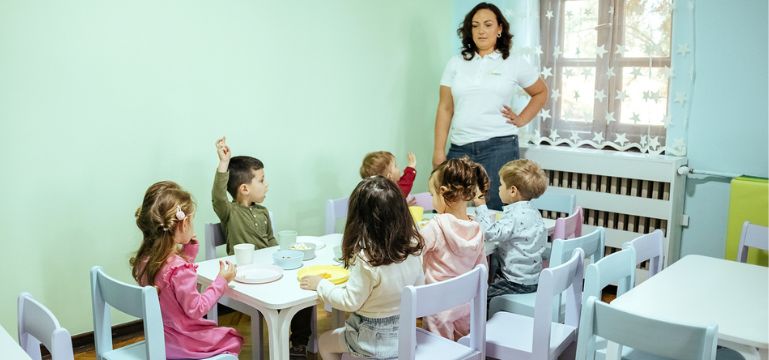
Rachael’s Playhouse Aberdare is a full day care service offering care and education to children aged between 18 months and five years old. The setting is bilingual. It is a registered Flying Start setting and a non-maintained education provider. The setting is child focused and offers continuous free flow that enables children to always access their preferred learning environment. Rachael’s Playhouse places the well-being of children and staff at the centre of its practice. 

Hannah and Rachael, the responsible individuals, started their childcare venture as childminders working from Rachael’s house. Both then went on to complete a degree in Early childcare and Education. They have emphasised the knowledge and understanding they gained from the qualification and how this has influenced their practice. Following the completion of the degree, an opportunity arose to expand the business. Hannah and Rachael opened their first nursery in Aberdare in June 2018. The leaders had a shared passion of children receiving the highest quality care and education, to ensure that strong foundations are laid that inspire future learning and continued development. A shared vision was soon clearly established, one that is fluid and continues to develop in response to recent research and education.

Context and background to the effective or innovative practice

Rachael’s Playhouse is passionate about ensuring that all children’s individual needs are met during every session. It has a strong understanding that every child is different, and that they each learn and develop in different ways and at their own pace. It has created an environment that is unhurried and ensures that each child is supported and nurtured at their current developmental stage. The leaders have fostered an understanding amongst staff that every child is unique, and nurturing strong relationships between children and educators is critical in supporting all children in their care. They place a strong emphasis on partnership working, where parents and carers are encouraged to engage and contribute to their child’s learning opportunities and experiences.  

In recent years, Rachael’s Playhouse has seen an increase in the number of children accessing its provision with emerging needs or potential emerging needs. This has inspired leaders at the setting to ensure that all staff are highly trained, educated and motivated in ensuring that all children are given the right support to reach their full potential and thrive. All staff are passionate about ensuring that every voice is heard, and barriers to access and inclusion are removed, giving all children in their care equal opportunities.

Description of nature of strategy or activity

The setting ensures that all children in its care receive support to meet their individual needs. The children have a strong voice where staff listen and understand intently what each child needs or wants. Staff are continuously enhancing their knowledge and understanding in supporting each child. Staff have had access to a wide and valuable range of training related to child development, well-being and behaviour. The setting now takes a universal approach to ensuring that all staff are competent and confident in supporting children. Staff are placed in areas of the setting and, when a child goes into the area, staff understand how to communicate effectively to promote each child’s development. On staff lanyards, there are personal targets for children who require additional support, usually including strategies from their Individual play plans or development plans. This process ensures that strategies to promote development are being used continuously throughout the session. All staff are aware of the children that need to be challenged, and activities or provocations are planned to suitably support the holistic development of each child. Strong relationships are built between children and staff. This a significant factor to ensure educators are equipped to effectively support each child as all staff know each child extremely well.  

The setting has a transition room, which has proven to be fundamental in ensuring that the well-being of all children is considered. The transition room is not part of the free-flow environment, and therefore is not used as a day care room. 

The room is used for children who are transitioning. Parents are able to come in and do some play sessions in the room with their child’s key worker. The room is particularly beneficial for children who struggle in the free-flow environment as this can be overwhelming for some. Children begin their time in the transition room and are then gradually introduced to the free-flow environment. Staff at the setting have noticed that this supports the child to experience a calm and smooth transition into the setting, whilst also keeping the noise levels down in the free-flow environment as children are not becoming distressed. Some children use the transition room during the session when they are seeking a calm quiet area. Leaders at the setting are very proactive in ensuring that the environment meets the needs of all children. For example, they have recently turned their staff room into a relaxation room for children and a well-being room for staff. The room is used when children have become upset or distressed and to help the children with self-regulation. Effective “all about me” documents are in place for each child, with parents and a range of agencies invited to contribute as appropriate.   

What impact has this work had on provision and children’s standards?

Well-being of all children has improved since adapting to new procedures following the implementation of the Additional Learning Needs act. Adults listen to the views of all children and fully consider their views and interests. their voices. Staff are now more equipped to recognise and validate the children’s feelings and help them to find ways to express themselves, and begin to regulate their emotions. Practitioners are more able to support and respond sensitively to verbal and non-verbal communication and use a range of strategies to support understanding of language. The setting is able to maintain a calm nurturing environment whilst also supporting a number of children with emerging needs. Feedback from parents has suggested that they feel involved in their child’s learning journey. Staff well-being has improved and all staff feel that they are working in a happy, safe environment. 

How have you shared your good practice?

The practice has been shared through presentations to other settings in Rhondda Cynon Taf. 

Improvement Resource Type: Effective Practice


Information about the school:

Ysgol Gyfun Aberaeron is a bilingual 11-19 comprehensive school that is maintained by Ceredigion local authority. There are 581 pupils on roll. Around 27% of pupils have additional learning needs (ALN), which is above the national average (over three years) in secondary schools, of 16.1%.

Around 30.5% of pupils come from Welsh-speaking homes, 50.1% come from non-Welsh-speaking homes and 19.4% do not speak Welsh. Nearly all pupils come from white British backgrounds. The senior leadership team includes the headteacher, the deputy headteacher, two assistant headteachers and one senior teacher.

The school has specialist learning bases for pupils, including:

  • Canolfan y Môr – A specialist centre that caters for pupils with profound speech and communication needs, along with pupils with autism, sensory and medical needs.
  • Canolfan Croeso – A life skills centre that provides individual provision for pupils and supports them (depending on their age and ability) through mainstream provision.

Context and background to the effective or innovative practice

The school’s vision is to ‘ensure that our students are ready to face the challenges of the 21st Century and that we support them to develop their potential academically, physically, socially and emotionally’. Through whole-school evaluation processes, leaders have teachers have sought to develop pupils’ reading skills. In particular, the focus is to develop reading for understanding. To address this, in addition to interventions at departmental level, a whole-school programme has been developed to raise reading standards.

Description of the nature of the strategy or activity

The strategy was developed based on research and then by joint planning and co-creation between the Additional Learning Needs Co-ordinator (ALNCo), the Senior Teacher for Teaching and Learning and the head of the Welsh and English departments.

The reading scheme is based on the principles of ‘shared reading’. The aim is to:

  • promote strong relationships between the teacher and pupil and from pupil to pupil.
  • promote shared learning as pupils learn from each other.  
  • build pupils’ confidence by visiting text more than once.  
  • model quality reading through modelling by the teacher.
  • develop a variety of reading comprehension skills.

To be able to run the sessions, registration groups were reorganised and detailed plans were made to ensure that the provision was able to run for all pupils in Years 7 to 9 at the same time. In a bilingual school with a high proportion of ALN pupils, timetables had to be adapted and detailed plans had to be made.

Training was given by the leaders of the scheme to all teaching and learning support staff. The element of training everyone together was an important feature of developing the scheme as a whole-school strategy. It was explained to staff how to lead the activities and how to model reading effectively. As this was a priority that was produced based on the opinions of staff, most staff committed to the scheme very well.

There are 2 sessions each week. During the first session, there is an initial discussion about the text – ‘what can we see about the piece immediately?’ Then, there is a period of quiet, independent reading. After this, the teacher models reading by paying full attention to expression and intonation, using a ‘pointer’ to connect the words to their voice. To conclude the session, there is an opportunity for pupils to practise reading the passage aloud to the class.

During the second session, the teacher models effective reading again – using the same passage. Pupils are also expected to read aloud. There is an opportunity to check pupils’ understanding of the meaning of words and the piece as a whole. Then, pupils apply the information, which is now familiar to them, by answering questions in the form of ‘Darllen Caredig’ (Crynhoi, Awgrymu, Rhagfynegi, Esbonio, Dilyniant, I gof, Geirfa – Summarise, Suggest, Predict, Explain, Sequence, Memorise, Vocabulary).

While a majority of pupils complete the activities in their registration classes, pupils with less developed reading skills are supported by staff from the ALN department. The structure of the scheme is exactly the same, but pupils are given support in appropriate groups. The ALNCo chooses and/or creates catchy and interesting reading texts, which have been differentiated significantly – up to 5 different levels to ensure an appropriate challenge for everyone.

What impact has this work had on provision and learners’ standards?

This work at Ysgol Gyfun Aberaeron has led to raising the profile of the importance of reading among the school’s pupils and staff. It has led to wider reading opportunities being provided in lessons across the range of subjects. Having sought the opinion of staff, the majority acknowledge that pupils’ reading skills are improving.

It was noted during the Estyn inspection that ‘most pupils read aloud willingly and many do so confidently’ (Estyn, March 2023) and an ‘excellent example of support is the bilingual group reading sessions twice a week, where a number of pupils with poor reading skills make significant progress over time in their reading and processing skills.’ Leaders focus on improving and strengthening pupils’ reading skills and promoting their interest and enjoyment of reading. The school fosters a culture of reading that provides beneficial experiences for pupils across the school. Opportunities such as the guided reading sessions promote enjoyment and encourage pupils to be independent readers.

How have you shared your good practice?

Ysgol Gyfun Aberaeron has shared these good practices with other schools in the local authority during meetings between schools.

Improvement Resource Type: Effective Practice


Information about the school

Woodlands High School is part of the Western Learning Federation working alongside Riverbank and Ty Gwyn school.  It provides day education for pupils from 11 to 19 years old. The majority of pupils are of statutory school age and around 40% are in post compulsory education. The additional learning needs of pupils are varied, and all pupils have a statement of special educational need. Approximately 44% of pupils have severe learning difficulties, a further fifth have physical and medical needs speech and a further fifth have communication and language difficulties. A few pupils are autistic or have a general learning difficulty. A very few pupils have sensory impairments and profound and multiple learning difficulties.  

Context and background to the effective or innovative practice 

Three years ago, Woodlands School embarked on a journey of introducing the new Curriculum for Wales.  As part of the initial stages of curriculum design, pupils voted for themes and opening events were planned to ensure that pupils were enthused and engaged at the beginning of each theme.  As the curriculum has developed, pupils have been increasingly involved in co-constructing the curriculum and now drive each theme through their development of enquiry questions and identification of inquiry projects. We also consulted with parents and sought their views on the curriculum.  Reflection during the design process suggested that opportunities for pupils to showcase and share their learning would provide them with wider opportunities to apply and use their skills in different contexts, and for parents and other members of the community to share in pupil’s learning journeys.   

Description of nature of strategy or activity

  • At the beginning of a new theme, pupils take part in an opening event to engage and enthuse them. 

  • Following initial activities, pupils work with staff to identify their interests and questions about the theme.  All pupils are supported to take part, whether using stimuli and observations of pupils’ responses, or through pupils developing and refining their own questions. 

  • Staff use the questions posed by pupils to inform their planning.  Learning experiences are developed and pupils are supported in exploring them and developing their knowledge and skills 

  • Each class will prepare something to present and showcase their skills, understanding and knowledge of the theme that they have studied.  Each class will prepare something different.  This may include pieces or written work, artwork, vegetables grown, videos or live presentations. 

  • Pupils invite members of the school community to their closing event.  This may include parents, governors, staff from across the federation, school improvement partner and members of the local community. 

  • The whole school community joins in the celebration of pupils learning over the term at the closing event.  Pupils talk about what they have done and the new skills that they have learnt. 

What impact has this work had on provision and learners’ standards?

  • Pupils are particularly proud of the work that they do. They express that they enjoy school and look forward to the activities. 

  • Pupils vote for topics they want to learn about, for example plants versus animals. This has a positive impact on their learning as they are given ownership on the topics. 

  • Pupils speaking and listening skills have improved as they have a purpose to explain to parents what they have been learning that term.  

  • Pupils are now more confident to talk about their learning and progress with their peers through this event.  

  • Pupils are accessing purposeful activities off site and in the local area linked to the topics. 

  • Increased opportunities for pupils to share their learning with parents and members of the wider school community following covid-19. 

  • Many staff rated the curriculum as 4 or 5 out of 5 stars in the most recent staff curriculum survey.  

  • Overall, pupils report that their enjoyment in learning has increased. 

  • Older learners feel that the curriculum better prepares them for when they leave school. 

  • Feedback from staff reported increased levels of engagement from students during opening and closing events.  

How have you shared your good practice?

  • Parents are invited to attend all curriculum events, opening and closing. 

  • Governors are invited and attend these events. 

  • Our events are shared in panel meetings. 

  • Social media showcases the highlights of the events. 

  • The events are discussed during parent café where parents can contribute and comment. 

  • The curriculum events are shared in federation meetings. 

  • Evidence from these events is shared in our federation magazine. 

  • School website is updated with all information. 

Improvement Resource Type: Effective Practice


Information about the School

Ty Gwyn is part of the Western Learning Federation that works alongside Riverbank and Woodlands school.  Ty Gwyn School is a special school in the Cardiff local authority. There are 222 pupils on roll aged 3-19. All pupils are identified as having additional learning needs. The additional learning needs of pupils are varied, around 36% of pupils are autistic and a further 35% have physical and medical difficulties. The remaining pupils have a variety of learning difficulties including profound and multiple learning difficulties, severe learning difficulties, moderate and general learning difficulties. In addition, a few pupils have sensory impairments.  

There are 29 classes at the schools, one of which is a nursery class. 45.8% of pupils are eligible for free school meals.  

32% of pupils have English as an additional language which is considerably above the national average of 6%.  

Context and Background

The aim behind our Expressive Arts Project was to use the arts, in particular drama, to help to reduce anxiety surrounding medical appointments, real life events and develop life skills for the pupils within Ty Gwyn School. 

Many of our pupils have complex learning needs and health needs and they often attend a variety of health-related appointments. This can be a highly anxious time for both pupils and parents alike, as too can appointments such as visiting the hairdressers, dentist and opticians. In addition, everyday activities such as getting dressed and going shopping can also present a challenge for some of our pupils. Supporting pupils to develop life skills is a key priority across the school.  

We provide pupils with opportunities to explore the objects they may encounter during these visits.  We use drama and other creative activities to prepare them for future appointments.  

Description

Our approach was developed in conjunction with psychologists, school nurses and colleagues from the learning and disabilities team.  We discussed the challenges that our pupils and families face in attending appointments and how we could make their experiences less traumatic.   

We created a bank of activities and resources that were used to desensitise pupils for visits to for example, the doctors, dentists, hairdressers and shopping trips.  Activities created included sensory drama scripts, role play ideas, art activities, sensology sessions, sensory circuits, social stories and music activities. The school nursing team also helped to make videos to demonstrate being weighed and measured, taking a temperature and having blood pressure monitored. 

The activities are available for all classes to use in a way to best suit their classes. 

Some of the resources we ordered included specially made dolls that reflected some of the medical conditions our pupils for example, dolls with nasal gastrostomies, stoma bags, diabetes kits.  We also used replicas of some of the equipment used by the school nurses such as height charts and scales, dolls clothes, hairdressers’ clippers, food and shopping resources and much more! The nurses were able to provide out of date, unused equipment such as syringes, feeding tubes and empty medication boxes for pupils to explore during sessions, and we have also had a range of fancy dress clothing kindly donated by staff and parents.  

Impact

The drama room has provided pupils with a space to engage in sensory drama, role play sessions and explore a wide range of resources based on what they may encounter during real-life appointments. They can do this in a safe and predictable environment, and we hope that given time a positive change in the level of anxiety will be seen for pupil’s attending appointments.  

We have strengthened the relationship with our colleagues in health. This in turn has a beneficial impact on the pupils within Ty Gwyn. 

Delivering training workshops gave staff the opportunity to discuss how they may use our approach, activities and resources for pupils within their class and how they too could benefit.  

The project is still evolving and there is a lot of scope for growth and the continuation of new ideas. We look forward to and encourage the continued growth that there is within the project and for the continued positive impact it can have on pupils, their families and Ty Gwyn School. 

Improvement Resource Type: Effective Practice


Information about the school:

Ysgol Gyfun Aberaeron is a bilingual 11-19 comprehensive school that is maintained by Ceredigion local authority. There are 581 pupils on roll. Around 27% of pupils have additional learning needs (ALN), which is above the national average (over three years) in secondary schools, of 16.1%.

Around 30.5% of pupils come from Welsh-speaking homes, 50.1% come from non-Welsh-speaking homes and 19.4% do not speak Welsh. Nearly all pupils come from white British backgrounds. The senior leadership team includes the headteacher, the deputy headteacher, two assistant headteachers and one senior teacher.

The school has specialist learning bases for pupils, including:

  • Canolfan y Môr – A specialist centre that caters for pupils with profound speech and communication needs, along with pupils with autism, sensory and medical needs.
  • Canolfan Croeso – A life skills centre that provides individual provision for pupils and supports them (depending on their age and ability) through mainstream provision.

Context and background to the effective or innovative practice

The school’s vision is to ‘ensure that our students are ready to face the challenges of the 21st Century and that we support them to develop their potential academically, physically, socially and emotionally’. In the specialist learning bases, a wide and rich variety of projects and interventions are provided to ensure engagement, well-being and progress in pupils’ personal and social skills and abilities. Art therapy sessions have been introduced to develop pupils’ emotional literacy skills and a ‘clay club’ to develop pupils’ handwriting motor skills, alongside more traditional interventions. ‘Story Massage’ sessions have been established, in addition to yoga and mindfulness sessions. In partnership with a local theatre, performance projects have been planned to promote pupils’ communication skills.

Description of the nature of the strategy or activity

To support pupils with a wide variety of additional learning needs (ALN), interventions are used which include:

  • Clay Club: The Clay Club is a club to develop pupils’ motor skills and handwriting. Groups of pupils take part in the ‘Clay Club’ for up to 3 sessions a week – clay exercises to develop pupils’ motor skills, which includes the use of music, movement and discussion.
  • Art Therapy: Pupils receive these sessions to develop their personal and social skills and their well-being. In small groups or individually, pupils complete work with the specialist art therapist. There is an exhibition of their work in the therapy room and pupils are very proud of this.
  • Celf ac Enaid / ‘Art and Soul’ – The ALNCo, along with the school’s specialist assistants, run therapeutic art session across the bases and entry groups. The sessions start with an emotional check, the statement of the day and a discussion and then art activities. The activities are differentiated according to pupils’ ability, knowledge and skill level. The aim is to develop emotional literacy skills in a safe and calm environment.
  • Story massage – Story massage sessions have been established, alongside yoga and mindfulness sessions for pupils, as a means of presenting curricular themes and supporting their well-being. Staff have received specific training and use scripts that include a story, pieces of poetry, dialogue or an article, which accompany the movements. It is an effective means of teaching specific aspects of a text to pupils with ALN, particularly those who learn in a sensory manner. This promotes the well-being and learning of the pupils at the bases.
  • Performance project – This programme was developed to develop learners’ personal and social skills, communication skills and independent learning skills. Through weekly theatre experiences: movement, dance, role play, sensory play and filming, pupils develop a range of skills. By working with Theatr Felinfach, performances and workshops have been run to coincide with termly themes e.g., Joseph and the Amazing Technicolour Dreamcoat, The Red Dragon, Space.

          Literacy and Numeracy:

  • Interventions such as Dyfal Donc and personal dictionaries to develop pupils’ skills.
  • Extended reading interventions that are differentiated significantly – see the case study on the school’s programme to develop reading skills.
  • Cyfri Ceredigion and other interventions to develop pupils’ numeracy skills.

What impact has this work had on provision and learners’ standards?

Through the various activities and interventions, the school has seen a high level of engagement and enjoyment in learning from nearly all pupils. Pupils’ self-confidence and willingness to try new activities have developed well. Through the activities, pupils deepen their knowledge of the themes or topics that are studied.

When scrutinising learners’ work, the school recognises step-by-step progress in pupils’ literacy and numeracy skills. Pupils note that they enjoy these interventions and that the support helps them to develop at school.

How have you shared your good practice?

Ysgol Gyfun Aberaeron is currently sharing the good practices in the region through the health and well-being website, the ALN department newsletter and through ALNCo networks. The ALNCo has worked with an art therapist to produce guidance booklets on art activities that promote pupils’ emotional well-being. The success of the theatre performance project has led to the expansion of the project across the authority to other specialist bases.

Improvement Resource Type: Effective Practice


Information about the school

Woodlands High School is part of the Western Learning Federation that works alongside Riverbank and Ty Gwyn School.  It provides day education for pupils from 11 to 19 years old. The majority of pupils are of statutory school age and around 40% are in post compulsory education. The additional learning needs of pupils are varied, and all pupils have a statement of special educational need. Approximately 44% of pupils have severe learning difficulties, a further fifth have physical and medical needs speech and a further fifth have communication and language difficulties. A few pupils are autistic or have a general learning difficulty. A very few pupils have sensory impairments and profound and multiple learning difficulties.  

Context and background to the effective or innovative practice 

Woodlands High School is a special school situated in Ely Cardiff, which is one of the top 10% of deprived areas in Wales. Half of the school’s pupils live in the local area and 56% of pupils access free school meals. Due to these factors many pupils suffer from the impact of poverty. 

Description or nature of strategy or activity

  • The school engages fully with the whole school approach to emotional and mental wellbeing (WSAEMW) which requires schools to develop a continuous process of reflection and improvement.  

  • An ethos of praise has developed where “shout outs” from staff are used to publicly thank and congratulate each other for their work and support at the end of morning meetings and through whole staff emails.  

  • A guardian angel scheme is managed by school staff. Staff are assigned anonymously as a guardian angel for a colleague. Once assigned the guardian angel provides messages of support and encouragement and rewards their colleague with small gifts throughout the school year. 

  • The local authorities’ educational psychology service supports staff through group and individual supervision sessions. Supervision is offered to staff and leaders. The school’s educational psychologist schedules individual, confidential sessions for those staff who are at most risk of trauma through their role in the school. This often includes safeguarding leads and therapeutic practitioners. These seasons provide a safe space where staff can reflect and discuss their complex emotional concepts in a confidential space. 

What impact has this work had on provision and learners’ standards?

  • The WSAEMW survey results were used as a self-evaluation tool and influenced priorities in the school development plan.  As a result, the school has a better understanding the local community, focusing its methods of parental communication and therefore improving them, developing a robust parent’s forum which has now developed into a parents and friends association (PFA), improving post Covid-19 work experience offers, and forging links with local community groups offering a range of enhanced provisions which pupils are now able to access.  

  • In the latest staff well-being surveys most, staff agree that the school is a positive place to work. The ethos of praise amongst staff serves to support this with all staff stating they know who to go to if they need support. 

  • Guardian angels often leave messages at times of difficulty for their colleagues. This has the impact of ensuring staff feel the appreciation of those around them when they are often feeling at their most challenged.  

  • 100% of staff stated that their supervision sessions had benefited their health and wellbeing which in turn improved their resilience and ability to work with children who require complex and intensive support. 100% of staff stated that they would recommend supervision to a colleague.  

How have you shared your good practice?

  • The school have shared their methods of using the WSA as a self-evaluation tool at healthy schools’ events run by Cardiff Council for all schools in the authority.  

  • Social media posts highlight the success of the PFA and the opportunities for all parents to join the parents’ forum.  

  • All information is shared in Western Learning Federation panels and Governing Body committees.  


Improvement Resource Type: Effective Practice


Information about the School

Ty Gwyn is part of the Western Learning Federation that works alongside Riverbank and Woodlands school.  Ty Gwyn School is a special school in the Cardiff local authority. There are 222 pupils on roll aged 3-19. All pupils are identified as having additional learning needs. The additional learning needs of pupils are varied, around 36% of pupils are autistic and a further 35% have physical and medical difficulties. The remaining pupils have a variety of learning difficulties including profound and multiple learning difficulties, severe learning difficulties, moderate and general learning difficulties. In addition, a few pupils have sensory impairments.  

There are 29 classes at the schools, one of which is a nursery class. 45.8% of pupils are eligible for free school meals.  

32% of pupils have English as an additional language which is considerably above the national average of 6%.

Context and background

The Ty Gwyn Family Centre opened in 2007 to provide a place for parents to access support, form relationships with other parents and access specialist play and activities for their children. This service is also available to any family in the Cardiff area with pre-school children with additional learning needs.   

Following feedback, the family centre developed to include parent courses such as ‘The Incredible Years’ and ‘Healthy Eating’ facilitated by the staff.  

Parents’ involvement with the family centre can begin through referrals or word of mouth from the time of their birth, they can then access the centre through their child’s educational journey until they leave Ty Gwyn at 19.   

Description of nature of strategy or activity

  • The family centre offers support to parents to aid them in supporting their children’s learning and wellbeing. What is on offer is flexible and responsive to parent’s needs. 

  • The Family centre is often a first point of contact for the school and has evolved to meet the needs of all families.   

  • We provide a safe and confidential environment where parents can drop-in and receive advice, support and guidance. 

  • We provide opportunities for parents to meet, share experiences.  We have developed and facilitate support networks.   

  • We run themed coffee mornings that focus on topics highlighted by parents such as sleep, finances and managing holidays have been held.  Activities such as these focus on identified targets for pupils. 

  • We have provided courses in English as an additional language.  This led to parents becoming involved in other courses that we run such as sewing and healthy eating. 

  • We demonstrate and run sessions in sensory stories, touch therapy and focused play.  As a result, parents have a better understanding of the approaches used by school staff with their child. 

  • Parents can access an in-house counsellor free of charge. The service is open ended and fully confidential. The school councillor is also available to support and advocate for parents during IDP meetings and medicals.   

  • Following a successful roll out in classes, the family centre is now using online technology to communicate with parents and to provide information about upcoming events.  Parents are able to use the technology to present information in their chose language. 

Impact

  • Parents have reported that accessing groups and courses at the family centre have helped them to develop skills that they are able to use at home which supports them to cope with their day to day lives. Positively impacting on wellbeing, confidence, and engagement.   

  • Supporting parents in meetings with other professionals has helped them to become more confident with sharing their voice and to be more transparent about home circumstances. This has resulted in children and families having more bespoke support.  

  • Counselling has allowed parents to notice and address patterns and behaviours that emerged from childhood experiences, gaining an understanding of themselves and of life in general. Consequently, the wellbeing of the families in general has been positively impacted.     

  • Several parents began attending the family centre prior to their children starting school and have continued to access it throughout their child’s time at school, regularly attending coffee mornings and accessing a range of the classes on offer.   

  • The parents who attended the sewing group have developed strong friendships and have formed a group called the Ty Gwyn Stitchers. They message each other regularly keeping in touch and sharing projects. 

  • Several the parents have now advanced to a sewing group for experienced sewers. Following the success of this group another sewing group has been set up for beginners and there are now two sewing sessions running weekly during term time. Parents reported having increased confidence to carry out their own projects at home.  

  • The parents who attend EAL classes engage in conversation, grammar, reading and writing.  Their English skills continue to improve, and they enjoy coming to the classes. Some parents have gone onto access more advanced English classes in the community, even when they have moved to live in another country. 

  • The family centre organises an annual cultural trip where parents can enjoy time learning about Welsh culture. 

How have you shared your good practice?

  • Information on the family and learning centre, what we do and how to contact us is on our school website 

  • We are involved in steering groups for, community engagement and, an organisation that accredits schools for the work they do with families.   

  • School to school working with other family support workers.   

  • Our school governors are aware of our work and have attended the centre.  

  • We have ensured that our school nurses and other health professionals are aware of the work we do at Ty Gwyn.   

Improvement Resource Type: Effective Practice


Information about the school

Riverbank School is situated in the West of Cardiff and is part of the Western Learning Federation working alongside Ty Gwyn and Woodlands School. It is maintained by Cardiff City Council local authority. The additional learning needs of pupils are varied. Just under half of pupils have speech, communication and language difficulties and a further quarter have autistic spectrum condition (ASC). Just under two fifths of pupils have severe learning difficulties. Fourteen per cent of pupils have a general learning difficulty and and/or physical and medical needs. Nearly all the pupils have a Statement of Special Educational Needs or Individual Development Plan which include physical, sensory, medical, emotional and behavioural difficulties.  

English is the predominant language for many pupils.  Currently no pupils speaking Welsh as a first language. Just under a fifth of pupils come from minority ethnic backgrounds and just over a quarter of pupils and their families speak English as an additional language.  Just over a third of pupils receive free school meals.  

Context and background to the effective or innovative practice

The school became increasingly aware that due to the cost-of-living crisis, some families may be experiencing financial difficulty. 

The school recognised that not all families were aware of information and support that may be of use to them.  The school fully understood that this was, potentially, a very sensitive matter for families. 

Description of nature of strategy or activity

The school decided that it needed to signpost parents to the different types of support that were available. 

The school held a Family Fun Day and invited different agencies to attend.  This informal environment allowed parents to engage with colleagues from different support agencies.  Agency staff were able to share information on funding, including grants with parents.  A communication app was also used the share information. 

The school also hosts the money advice service where families are able to meet advisors over a coffee and a chat.  These confidential, drop-in sessions have been appreciated by those families that have accessed them.   

What impact has this work had on provision and learners’ standards?

Families are more confident and comfortable to approach staff for advice or signposting around finances or any other concerns or worries they may have.  School staff have a greater level of awareness of individual family’s needs and how best to signpost families.  

Improvement Resource Type: Effective Practice


Information about the school

Riverbank School is situated in the West of Cardiff and is part of the Western Learning Federation working alongside Ty Gwyn and Woodlands School. It is maintained by Cardiff City Council local authority. The additional learning needs of pupils are varied. Just under half of pupils have speech, communication and language difficulties and a further quarter have autistic spectrum condition (ASC). Just under two fifths of pupils have severe learning difficulties. Fourteen per cent of pupils have a general learning difficulty and and/or physical and medical needs. Nearly all the pupils have a Statement of Special Educational Needs or Individual Development Plan which include physical, sensory, medical, emotional and behavioural difficulties.  

English is the predominant language for many pupils.  Currently no pupils speaking Welsh as a first language. Just under a fifth of pupils come from minority ethnic backgrounds and just over a quarter of pupils and their families speak English as an additional language.  Just over a third of pupils receive free school meals.  

Context and background to the effective or innovative practice

Riverbank benefits from an extensive outdoor area including spaces for play, a garden, an area dedicated to learning more about the natural environment and a hobbit hut.  Pupils use the hobbit hut to develop skills across the curriculum.  It also provides a welcoming environment for pupils to read. 

In addition, children develop balance and co-ordination skills when using bikes and trikes. 

Description of nature of strategy or activity

Each classroom has its own individual outdoor learning area which is accessed regularly, and pupils are encouraged and supported to learn using the outdoor spaces that are available to them.   

Pupils thoroughly enjoying exploring the garden area.  They plant vegetables and watch with keen interest as their vegetables grow.  Other spaces that have been developed where pupils can explore, experiment, and play in a multi-sensory environment.  For example, pupils under the careful eye of qualified staff, learn how to build fires and roast marshmallows. 

Overall, pupils are encouraged to be creative in these areas using messy play in mud and water, the sand pit, and the ball pit to express themselves and take supported risks.  

What impact has this work had on provision and learners’ standards?

The school understands the importance of providing natural sensory experiences for its pupils.  Such experiences allow pupils to develop a better understanding of the world around them and provides them with learning opportunities that may not otherwise have.  Over time pupils become more confident and independent. 

The school has observed that their pupils are at their happiest when they are immersing themselves in the outdoor environment.  This has a positive impact on pupils’ wellbeing and engagement in learning.  The school has noticed that providing regular planned opportunities for pupils to access the outdoor learning environment has improved pupils’ ability to emotionally regulate.  As a result, there has been a reduction in incidents of challenging behaviour.  

How have you shared your good practice?

Staff at the school regularly reflect on the provision it makes and the impact this has on pupils.  Staff willingly discuss effective practices with one another.  In addition, the school uses an online tool to share the learning experiences of pupils with their parents or carers.  

Improvement Resource Type: Effective Practice


Information about the school

Ysgol Cybi opened in September 2017, following the closure of three schools, as a Voluntary Controlled Church in Wales school. The school is organised into two classes for each school year, except Years 2 and 6 which are organised into three classes. Nurture classes were established for 3 to 7-year-old pupils and 7 to 11-year-old pupils, which focused specifically on developing interpersonal, emotional and behavioural skills, in addition to a post-progress class targeting the basic skills of pupils in key stage 2. The percentage of pupils who are eligible for free school meals (27.5%) and the percentage of pupils with additional learning needs (35%) are significantly higher than the national average. Very few pupils are from ethnic minority backgrounds and very few also come from Welsh-speaking homes.

Context and background to the effective or innovative practice

There is a thorough knowledge and recognition of the challenges that prevent and/or disrupt the educational progress of the school’s pupils. In particular:

  • Low attendance and/or punctuality.
  • Measures of deprivation that are significantly above the national average.
  • A significant number of looked after pupils.
  • A significant number of young carers.
  • A significant number of the school’s families are subject to social services and/or receive support from external welfare agencies.
  • A high percentage of pupils are on the additional learning needs register and there is a significant cohort with needs that are considered to be profound.

There is also recognition of the importance of protecting, supporting and prioritising the well-being of each pupil, ensuring the development of their personal, social and emotional skills so that all pupils are ready to make sound progress in their learning.

Description of the nature of the strategy or activity

There is careful co-operation with the school’s key stakeholders to (i) develop and present a vision that prioritises well-being effectively (ii) establish a robust, reliable infrastructure that supports the well-being of all pupils (iii) encourage and support the aspiration to develop and improve continuously.

(i) A school vision that prioritises well-being

Opportunities are provided annually to consult with children, staff, parents and governors on the content of the school’s vision and the practical steps necessary to realise it.

Ysgol Cybi

Ysgol Cybi as …..

A caring school that prioritises health, well-being and safety.

  • A school infrastructure and arrangements that prioritise the health, well-being and safety of pupils successfully and ensure that they are ready to learn.
  • A school curriculum that integrates the pupils’ voice effectively with statutory expectations and requirements (e.g., ‘Health and Well-being’, ‘Relationship and Sexuality Education’).
  • Rich school provision which successfully takes advantage of outdoor opportunities, local resources and expertise and opportunities beyond the traditional school timetable.
  • A school infrastructure and arrangements that support and maintain the well-being of school staff successfully.
  • A culture of investigation and inquiry resulting in continuous improvements to provision for pupils and staff.

(ii) A robust, reliable infrastructure that supports the well-being of all pupils

Detailed job descriptions with specific assigned responsibilities, including –

  • A Deputy Headteacher responsible for aspects of well-being e.g., pupils, staff, families.
  • A Nurture Group teacher who is mainly responsible for two nurture classes and the whole school ethos of nurturing.
  • An Additional Learning Needs Co-ordinator.

Effective continuity and consistency in the experiences of all pupils on arrival at school ensures that teaching staff have a good grasp of the well-being of individuals and appropriate opportunities to respond to any concerns. In particular – 

  • Welcoming pupils on a daily basis as they set foot on the school grounds.
  • Good opportunities to share feelings at the beginning and end of the school day.  
  • Effective use of quiet areas in each class to promote self-regulation, reflection, sharing feelings. or holding specific interventions.
  • Characteristics of effective nurturing in each class contribute successfully to a whole-school ethos e.g., the use of a visual timetable, strategies to promote positive behaviour, successful use of calming corners and resources.

Nurture classes for pupils aged 3-7 (Y Nyth) and pupils aged 7-11 (Yr Hafan) provide specialist and specific support for the needs of individuals and groups. The structure of provision ensures good opportunities for pupils to develop skills in a smaller group for up to half a day, with further opportunities for pupils to apply and reinforce back in their mainstream classes.

All members of staff have been trained effectively to use a calm, gentle and supportive approach when dealing with all pupils. The school’s staffing structure ensures that everyone is aware of whom to approach for support should the need arise. Specific members of staff have been upskilled to respond effectively to the specific needs of individuals and/or groups of pupils.

Very good opportunities are provided for pupils to contribute to the direction of their learning by supporting and promoting their voice in the thematic plans of classes and frequent opportunities to reflect, review and refine. Every reasonable opportunity is taken to promote children’s ownership of their experiences at school and to emphasise the value of enjoyment as children engage in their learning.

The well-being group for the school’s teaching staff is an important recent development that contributes successfully to spreading the caring ethos and the emphasis on well-being across the school. The group includes representation from the various functions of the school’s staffing structure and consults effectively with the senior management team on staff well-being issues.

(iii) An aspiration to develop and improve continuously

The senior management team makes effective use of the information available and has effective systems in place to access further information. Any significant new knowledge and understanding are used to drive developments in the nature of quality of provision, while still ensuring that it aligns with the school’s context and needs. In summary – 

Step 1: Self-evaluation and reflection – including on any new developing areas.

Step 2: Training and research.

Step 3: Provision and monitoring – with the emphasis on the school’s context and needs.

What impact has this work had on provision and learners’ standards?

Pupil questionnaires and discussions with pupil groups support the view that…

  • most are happy and in a good place to make sound progress in their learning.
  • most feel that teaching staff listen to them and that they have a strong voice in driving the direction of their learning.

Most pupils who attend nurture groups make sound progress against the appropriate yardstick of Boxall assessments and many are able to apply the skills they have developed well in the context of mainstream classes.

The procedures that are in place to support pupils’ attendance and punctuality are inclusive and supportive. The procedures are used to target support for families alongside external agencies and this has fostered a close and productive relationship between the school and families who need support.

Nearly all teaching staff are trained to an appropriate level and fulfil their duties successfully. There is a reasonable balance in the style of most teaching staff between maintaining a sense of progression and consistency on the one hand and the need to respond to the specific needs of pupils and groups on the other.

The school’s staffing structure and the forums provided for teaching staff to participate in discussions about the well-being provision for pupils and themselves are effective. The recent development of the well-being group for teaching staff has grown into a successful advisory body, providing assurance that everyone’s voices are given good attention and has led to important changes.

There is a strong caring, nurturing ethos throughout the school which contributes very successfully to the willingness of nearly all pupils to engage in their learning and make good progress in line with their potential

How have you shared your good practice?

  • Other schools in the county have been welcomed to visit the school.
  • Close co-operation in the catchment area, including members of the county’s Additional Learning Needs Joint Committee.
  • The Additional Learning Needs Co-ordinator has delivered specific training sessions, including a variety of behavioural, emotional and social interventions both inside and outside the county.