Effective Practice Archives - Page 15 of 66 - Estyn

Improvement Resource Type: Effective Practice


Improvement Resource Type: Effective Practice


Information about the school

Pentrepoeth Primary School is situated in the village of Rhiwderin on the outskirts of the City of Newport. It serves the local area, which is largely residential and relatively prosperous. There are pupils on roll from the ages of three to eleven. A nursery was opened in January 2018. Nearly all pupils live relatively close to the school. Pupils have a full range of ability. When they start school in the reception class, children’s skills and experiences are generally in line with those expected for their age. Around 5% of pupils are eligible for free school meals, which is well below the local authority average and the all-Wales average. 

Context and background to the effective or innovative practice

Developing enhanced provision in mathematics to help pupils to apply their skills in authentic, real-life experiences is a key priority on the School Development Plan. Using the forest school area and suitably trained and experienced staff, Pentrepoeth Primary School wanted to extend the use of the forest to enhance the curriculum and provide authentic experiences to build and consolidate numeracy, literacy and digital skills across the primary age range. 

Description of nature of strategy or activity

Once a fortnight, each class from Year 3 to Year 6 has the opportunity to learn in the Forest School with a dedicated Forest School classroom teacher. Through regular discussions with class teachers, and using class teachers’ planning and pupils’ previous work, the Forest School teacher offers each class a lesson that uses authentic experiences to consolidate skills that pupils have already learnt in class. Each authentic experience strengthens pupils’ numeracy and literacy, and pupils use a range of information and communication technology (ICT) equipment to enhance and record their findings.   

Throughout the year, and in all weathers, each class has dedicated time in the forest. Each year group covers mini topics that include the natural world, explorers and a range of fiction and non-fiction books. These topics give a focus for the tasks and provide the Forest School teacher with a way to give meaning to their authentic task. Where possible, these also link to the pupils’ current class topic. 

Within each lesson, the teacher presents a problem or dilemma to the pupils, which they need to solve using skills and knowledge. Pupils learn that the most important approaches to solving any problem are group discussion (in mixed ability groups), trial and error and whole-class communication. Pupils work through the problem and create their own path to solving it, with minimal input from the teacher. Pupils share ideas and possible solutions before moving on to work in mixed ability groups to try and solve the problem during the time in the session. Including multiple plenary or check-in sessions throughout the lesson encourages the pupils to share ideas and evaluate their findings as they go along. This allows them to change and refine their methods with ease.  

What impact has this work had on provision and learners’ standards?

Pupils in Pentrepeoth Primary love the forest and see it as an area where they can have fun and play while they are learning and applying their skills. This means that the forest has become an invaluable tool that enables them to practise and enhance their skills and see them as an integral part of learning. During each lesson, pupils use and apply their creative thinking, communication and team working skills. As a result, Forest School lessons promote self-esteem, confidence and independence. When class teachers speak to learners about their experiences, pupils discuss their learning in forest school with excitement and confidence. It is this ethos and approach that allows pupils to feel free to try new things and experiment with ideas and skills that they may otherwise have been reluctant to explore. Teachers observe pupils repeating these skills naturally in the classroom environment. There is evidence of improved pupil well-being, better planning and organisation of their work, and increased confidence and self esteem. 

By being involved in authentic experiences in the forest, pupils are more engaged and focused and understand that mathematical and literacy skills are an essential and useful part of life. The use of mixed ability grouping means that more able pupils have to communicate their ideas clearly and effectively to others, whilst other pupils are challenged by needing to listen to and question solutions suggested by their peers.   

Allowing all pupils in the school to experience the forest environment enhances their well-being, and consolidates and reinforces their literacy, numeracy and digital skills through hands-on experiences. For instance, by finding leaves and examining them closely, pupils explore and gain a better understanding of symmetry. Making numeracy, literacy and digital skills fun and authentic has helped to create independent, resourceful pupils who are excited to try new things and experiment confidently with what they know. Teachers in all year groups see clear progression in a wide range of skills, knowledge and understanding since they began to work in the outdoors more regularly and purposefully. 

How have you shared your good practice?

Pentrepoeth Primary shares its good practice with other schools within its cluster regularly, as well as through staff discussions. Pupils and staff display images and work completed in the forest in class books that are on display for other teachers, support staff and visitors to view, discuss and signpost as examples of good practice. 

Improvement Resource Type: Effective Practice


Information about the setting

Sychdyn Playgroup is registered to care for 19 children aged 2 ¼ months to 4 years. Playgroup sessions run five days a week from 9.00am-11.30am, and offers wrap around for nursery age children from 11.30am until 3:00pm. Sychdyn Playgroup operated in Sychdyn Village Memorial Hall for many years until September 2023 when it moved to a new build on the grounds of Sychdyn C.P School.  

Context and background to the effective or innovative practice

The setting recognises the importance of children’s well-being on their ability to learn and focuses on supporting this in our setting. Practitioners want all children to be able to fulfil their learning potential and have worked hard to create a safe, warm, and welcoming environment in playgroup where children can make friends and learn successfully through play. Practitioners are consistent in their approach, respecting children and striving to build strong relationships with them. They aim to meet their emotional needs in a calm, kind and supportive way, encouraging children to develop self-regulation skills by guiding them sensitively to deal with their emotions. Practitioners believe that children’s well-being is supported by their ability to be independent as this gives them a feeling of control and develops their self-esteem and confidence.  

Description of nature of strategy or activity

Environment: 

Practitioners provide an environment that supports children’s ability to be independent. All resources are stored at child height and are readily accessible. Resources are well labelled, organised and developmentally appropriate. For most of the session, children are encouraged to choose from a wide range of provision areas and have free-flow access between the indoor and outdoor areas. Children recognise the different types of play they can engage in and use the areas purposefully. 

Children: 

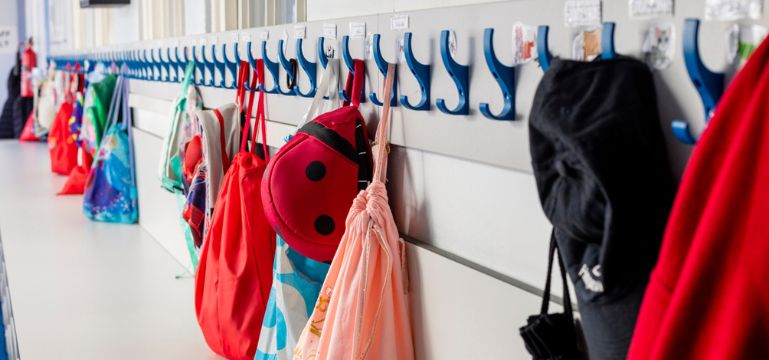
  • are encouraged to develop their independence in taking off their coats and putting them onto their own identifiable pegs 
  • bring their own snack in from home and choose when to access this during the ‘snack period’ window 
  • pour their own drinks and tidy away after themselves including putting rubbish in the recycling bin 
  • choose what to set out and play with in a provision area; for example, tables, floor spaces, sand and water trays are clear with resources being stored nearby 
  • use a wide range of open-ended resources and loose parts confidently and imaginatively in ways that are meaningful to them 
  • self-register on arrival  
  • wipe their own noses by using the ‘Tissue Station’  
  • independently access handwashing facilities within the room 
  • independently access the outdoor ‘wellie station’ where they are encouraged to remove their shoes and put on wellingtons 

Adults: 

Practitioners understand that it is important to encourage independent thinkers and learners and use a variety of strategies to achieve this.  

They: 

  • have an expectation that children will tidy up as they go along and provide consistent reminders and support to enable children to learn to do this independently 
  • understand when to intervene and when to stand back to give children time to make their own independent choices and decisions 
  • support their oracy skills by modelling language and extending vocabulary 
  • make effective use of ‘I wonder’ questions whilst interacting with children to foster curiosity and motivate their independent exploration 
  • plan experiences within the local community such as visiting a shop, which involves children in decision making and accepting individual responsibility for elements of the experience 
  • support children’s ability to learn to assess risk independently, for example, considering whether to approach a particular hen during a visit to the school’s nature garden 

What impact has this work had on provision and children’s standards?

In the setting nearly all children develop independence well above expectations and interact with each other and practitioners exceptionally well. Supporting children’s ability to be independent learners and thinkers has had a positive impact across all areas of development. The children have high levels of well-being. Fostering their independence has improved their self-esteem and confidence and this in turn helps them to develop resilience and perseverance to become lifelong learners. 

How have you shared your good practice?

Staff from other settings have visited playgroup. 

The setting’s good practice will be shared through a cluster group meeting with other funded non maintained nursery settings in the local authority. 

Improvement Resource Type: Effective Practice


Information about the school

Sketty Primary School is situated in Swansea. Currently, the school has 495 pupils on roll between the ages of 3 and 11, taught in 16 classes. The average class size is 30, which is slightly above the Local Authority (LA) average of 27. The LA Pupil Admission Number is 32. Pupil mobility is at 3% which is half the LA average. Seventy-four per cent of pupils living in the catchment area attend the school. Around 4% of the pupils on roll live in areas classed in Welsh Index of Multiple Deprivation (WIMD) as being in the most deprived 30% of all areas. Approximately 8% of pupils are eligible for free school meals, which is significantly below the LA average. There have been no fixed term exclusions or racial incidents recorded in the past three years. The school has almost 29% of pupils receiving extra support and 5% (children with IDP’S) on the Additional Learning Needs (ALN) register and approximately 14% of pupils have English as an additional language (EAL). No pupils speak Welsh at home. There are 23 teachers at the school, including the headteacher, who was appointed in September 2017. The deputy headteacher was appointed in 2022. The school is a modern building on two levels situated on a large site. There are extensive grounds, boasting a developed woodland, fields, yards, adventure playground and pond. The physical environment is well maintained, welcoming and vibrant.

Context and background to the effective or innovative practice

The school has a clear vision for the curriculum. It has been designed stemming from a strong culture of cynefin, creativity and pupil voice. The school strives to ensure that the curriculum is broad and balanced and builds systematically on pupils’ existing knowledge, understanding and skills in all areas of learning and experience. It provides many authentic learning experiences through a range of beneficial themes that engage and motivate. 

Description of nature of strategy or activity

To develop a culture of creativity the school has a number of considerations which are equally weighted and have no order of hierarchy. The school believes that these are the keys to creating a successful culture of creativity. 

The school provided the following set of questions and answers to describe the nature of its work.

  • Who is the school champion? 

The school is fortunate to have several very creative members of staff, teaching and non-teaching, who have experience and skills across the expressive arts curriculum. Utilising and building on in-house expertise is crucial in driving a project forward. Enthusiasm can be contagious and making the process fun and interactive for staff ensures “buy in” and increased commitment levels from all. 

  • Are staff appropriately trained to deliver high quality lessons? 

Even though the school has highly trained staff in areas of creativity, this is not universal across the school. Where staff are lacking the required skills or working outside their comfort zone, training has been sourced and had a huge effect on staff confidence, which translated into the children being enthusiastic, confident and motivated to try new experiences. A very successful example being the pottery skills developed by staff in Year 5. Both teachers lacked experience, so training was provided with a local ceramicist, who spent time going through the process and giving them the opportunity to learn hands on. The quality of work they can now support the children to produce is excellent and is a direct result of giving them the tools they needed to help them believe they could do it. 

  • Do we need an expert to support delivery of lessons? 

Where necessary a range of artists, authors, actors, and musicians have been accessed to enhance the learning experience for the children, continuing to develop the skills of the staff and providing children with role models “planting seeds of inspiration to fuel aspiration.” Over the past year, Year 4 have been involved with a creative project with Arts Council for Wales focused on cynefin through digital media, poetry and story delivered through the Expressive Arts. This involved them visiting the Royal Welsh college of Music and Drama to see a student wearable art show, which inspired them to create their own wearable art and exhibiting these in a show at the Dylan Thomas Theatre. 

  • Are resources adequate to deliver lessons? 

Investment has been key to delivering quality lessons. Within school, there are high quality resources across the creative arts, including a kiln for pottery, a good range of consumables for the visual arts including clay, glazes, printing inks, watercolours, spray paints, textiles, card, paper etc – with a focus of sustainably such as recycled art projects. Experienced local artists from the community are employed to work alongside teachers for specific projects as well as specialist teachers in music and dance to work with cohorts half termly. This has resulted in some very special end of term performances to parents in school and at the Taliesin Theatre, Grand Theatre and Dylan Thomas Theatre. 

  • Does the skills ladder adequately develop skills that can be built upon year on year? 

Skills ladders are used to ensure progression and continuity throughout the progression steps. For example, a simple clay progression ladder outlines the skill to be taught in each year group starting with exploration and marking making in the early years to a culmination of skills by the end of PS3 including slab building, coil pots. These skills ladders are not a scheme of work as it allows teachers scope to incorporate the skills in an authentic learning context, which can be developed and adapted to suit the needs of a cohort and to reflect pupil voice. 

  • Are the activities purposeful, authentic, relevant and reflect cynefin? 

The curriculum overview ensures that learners understand the value of creativity. A range of local and national artists, writers, performers and musicians are explored throughout the curriculum as well those from outside Wales. Many of the learning experiences are incorporated into real life, authentic learning contexts such as enterprise projects. For example, graffiti art designs transferred to merchandise and sold at the Year 5 enterprise sale, and the children have been given fantastic opportunities for performance at local theatre for parents and the local community. Inspiration is often taken from the locality in the form of landscapes, nature, people and stories.  

  • What quality assurance is in place, eg lesson observations, managing in the moment? 

Governors, the headteacher, the deputy head and the senior leadership team are visible across the school and Management by Walkabout is used extensively to impact change and move the school forward. Senior leaders are heavily involved in creative projects, ensuring that what is being produced is a very high quality and, as the school uses in-house expertise, this enhances the work produced further. All staff are involved in creative projects allowing them to utilise their own strengths effectively as well as being supported in areas of development from expertise within the school. Time is allowed for careful planning, implementation and evaluating outcomes. This collaborative approach is evident in the ‘Triad system’, which ensures high quality professional dialogue and collaboration across the whole school. 

What impact has this work had on provision and learners’ standards?

The standard of work achieved is high year on year, with all children producing work to a very high standard. The curriculum has been developed through a skills-based approach, beginning in Nursery and then built upon year on year. By the time the children reach Year 6 they have developed a skill set that produces high quality pieces, which they are very proud of. 

As the approach to creative learning is embedded across the school and pupils have the opportunity to experience a range of creative activities each year, high levels of commitment and enthusiasm are guaranteed from pupils, as evidenced in music, dance and drama projects the older children have been involved in for a number of years, including Primary Partners and the Taliesin Dance Project, whilst also giving Year 6 pupils the opportunity to perform their end of year show at a professional theatre (Dylan Thomas Theatre) to experience first-hand the successes that can be achieved in the future. 

Improvement Resource Type: Effective Practice


Information about the school

  • Undy Primary School is situated in the village of Undy which is south of the M4 between Newport and Caldicot. We are part of the Caldicot Cluster. 

  • There are currently 380 FTE on role within the school. 

  • It is a two form entry school, with a morning and afternoon nursery. 

  • Six per cent of the pupils are eligible for free school meals. 

  • Sixteen per cent of pupils have additional learning needs. 

Context and background to the effective or innovative practice

  • The school was identified as a Lead Network School for Welsh Second Language in 2019. 

  • The school was Awarded the Cymraeg Campus Arian Award in May 2022. 

  • The Welsh Co-ordinator took on role in 2020 following a 12 week sabbatical in 2018. 

  • The headteacher has been in post since January 2020. 

  • The last inspection was in May 2023. 

Description of nature of strategy or activity

Although Welsh was deemed as good, in January 2020 the SMT identified the need to improve Welsh oracy across the school and promote the use of Welsh outside of the classroom. As a result, a range of strategies have been developed to support the consistent promotion of Welsh in everyday activities. Younger pupils are exposed to Welsh daily through the use of Fflic and Fflac with pupils leading their learning using the Helpwr Heddiw model. Pupils ask and answer questions with each other. Staff are integral in introducing incidental Welsh into routines and everyday activities, for example when eating snack, morning and home time routines and at playtimes. Parents are also encouraged to develop their Welsh oracy skills by attending Dewch i Drio events. These events are run by Criw Cymraeg and aim to introduce basic language patterns to parents so they can support their children’s use of Welsh at home.  

As pupils progress through the school, they take on further responsibility for using Welsh language around the school. Criw Cymraeg play with them at break and encourage pupils to use Welsh language outside of the classroom. All staff use incidental Welsh and plan for opportunities to use Welsh across the curriculum. ‘Star of the week’ pupils take a Ddraig Coch (red dragon) home and are encouraged to write about their weekends using familiar Welsh language patterns in a diary which takes the language beyond the school environment.  

The oldest pupils have the opportunity to become members of Criw Cymreag. This group is led by a very enthusiastic HLTA. Criw Cymraeg aim to make speaking Welsh ‘Cwl’ (cool). They use a wide range of approaches such as sharing the ‘phrase of the moment’ on social media, challenging staff to remember to use Welsh, presenting assemblies to the whole school, and sharing good practice with other schools. Their example has influenced many pupils who now encourage both peers and adults to speak Welsh. This has had a significantly positive impact on Welsh language skills across the school. The school also has Welsh Ambassadors who meet and greet visitors. The headteacher uses Welsh in assemblies, when communicating with parents and endeavours to find opportunities to reinforce language patterns introduced via the phrase of the moment.  

An online language app has been instrumental in promoting high levels of engagement when developing pupils’ oracy, reading and writing skills. There are weekly certificates for pupils and staff who engage well. Older pupils have the opportunity to use the app in school but many pupils and staff also choose to use it at home. Through friendly competition pupils are developing a broad vocabulary base.  

Thematic use of Welsh is also a key driver in developing opportunities for pupils to use Welsh in a range of learning contexts, including forest schools and PE sessions. Staff are becoming more adept at planning for Welsh language to be delivered through their themes rather than discrete lessons. Pupils develop vocabulary using games and daily oracy sessions. For example, they have enjoyed using their Welsh language to talk about famous people, write raps and perform as TV presenters. The use of ICT has also promoted and developed the use of Welsh oracy as pupils video themselves or each other and offer valuable feedback through self and peer assessment.  

When out of school, many pupils are keen to use their Welsh language skills during school visits and residential stays.  

What impact has this work had on provision and learners’ standards?

Most pupils in school are able to use incidental Welsh confidently in a range of contexts. As pupils progress through the school, they develop a wide range of purposeful phrases which they use naturally to communicate to their peers and staff. Welsh is visible in all learning spaces and staff regularly use Welsh both inside and out of the classrooms. There is a true feeling of Welshness within the school and pupils are proud to speak Welsh.  

How have you shared your good practice?

As a Learning Network School (LNS), the school has shared best practice with other schools through local curriculum lead meetings and the Dewch i Weld event. The Criw Cymraeg have hosted Criw Cymraeg from another school to share their work and what they have achieved. The school has also worked closely with a cluster school to share their most successful strategies.

Improvement Resource Type: Effective Practice


Information about the school

Blackwood Comprehensive School is an English medium, 11-16 mixed comprehensive school located on the edge of Cefn Fforest and Blackwood. The school has six main cluster primary schools and there are around 985 pupils on roll.  

Around 21% of pupils have an additional learning need and a very few have a statement or Individual Development Plan (IDP). Around 25% of pupils are eligible for free school meals. Nearly all pupils speak English as their first language and come from a white British background, a very few are fluent in Welsh. The school has very few pupils with English as an additional language. 

The headteacher has been in post since September 2018. Following her appointment, the school community co-constructed a shared vision based on providing a nurturing and aspirational learning environment in which pupils and staff feel safe and supported: 

Blackwood Comprehensive School is an inclusive school community where we use the power of learning and teaching to develop confident, happy, resilient and independent pupils.  In our safe, secure and nurturing learning environment, everyone is valued equally, and positive relationships ensure that, by working together, we raise aspirations, realise our potential and secure our future. 

The vision is well understood by the school community and is the key driver for the school’s systems, policies and procedures.

Context and background to the effective or innovative practice

Background to the development and improvement of digital skills across the curriculum 

The development of the digital skills of both learners and staff forms part of the school’s ongoing self-evaluation and improvement planning process and professional learning offer. A Digital Competence Lead coordinates and oversees the development of digital skills across the curriculum to support learners and staff. They work closely with one of the school’s Curriculum for Wales (CfW) Champions, who is responsible for the development of authentic learning and digital experiences in the new curriculum.  

The Digital Competence Lead undertakes annual Digital Competence Framework (DCF) audits across the curriculum in order to evaluate how all learners use their digital competence skills effectively. These audits identify opportunities for the further development of digital skills in an authentic way across the curriculum. Additionally, the Digital Competence Lead uses evidence from the DCF audits to plan effective professional learning for staff to ensure pupils develop a full range of digital competence skills across the curriculum. 

The Digital Competence Lead and CfW Champion work alongside the school’s Assistant Headteacher for Learning, Teaching and Professional Learning. Together, they plan and facilitate a high-quality, focussed digital skills professional learning programme for staff, which also responds to the frequent and rapid developments in the digital world. 

The successful development of learner and staff digital skills has evolved over the last few years, particularly with the successful and effective introduction of blended learning during the pandemic. The return to face-to face teaching saw the school building on the digital skills developed during blended learning. The Digital Competence Lead has created a wide range of high-quality resources for all members of the school community via a DCF website, to further support development of their skills. The website includes digital safety information, digital ‘how to’ guides and parental digital support. The DCF shared drives contain a wide range of information, videos and guides to support both learners and staff in their digital journeys.  

Description of nature of strategy or activity

At Blackwood Comprehensive School, teachers focus on incorporating digital skills authentically within Areas of Learning and Experience (AOLEs), ensuring learners demonstrate and further develop their digital skills. For example, the professional learning and research carried out by the CfW Champion resulted in classroom trials, which then led to the delivery of professional learning for all staff on how to use a specific software package to deliver authentic learning experiences across the curriculum. Consequently, some AoLEs employed these skills to teach learners how to design informative websites. For example, in humanities, learners design interactive websites on topics such as Welsh Castles and tornadoes, which enables them to demonstrate and further develop their digital skills, as well as their subject skills and knowledge, effectively. 

The school believes in teaching these skills early, so that learners can continue to use and develop their digital skills throughout their learning journey. For example, in Welsh Baccalaureate Enterprise Challenges, learners apply the coding skills taught in Digital Technology to produce educational games for younger learners, whilst in BTEC Business Studies learners create websites, logos and cash flow spreadsheets to support their business plans. In Expressive Arts, the drama teacher supports learners in using video editing software to effectively edit their performances and create professional movies.  In Science and Technology, learners use 3D design software to design, evaluate and refine their designs for sustainable glamping pods.  

Most recently, the Digital Competence Lead has introduced Digital Skills Passports for learners in Years 7 and 8. Learners store their virtual files in this passport, which contains a list of DCF skills that can be tracked by learners when they use them across the curriculum. This virtual space for learners to link their digital work enables both teachers and learners to effectively collate work and track the progress of their digital skills development. These Digital Passports enable learners to take ownership of their own work, becoming digitally competent and resilient learners.  

What impact has this work had on provision and learner standards?

Through the professional learning led by the Digital Competence Lead and the CfW Champion, staff and learners have further enhanced and developed their digital skills across the curriculum. These developments, coupled with investment in devices across all areas of the school, have resulted in learners taking ownership of their digital learning journey and having more confidence in using their skills across the curriculum. The introduction of the Digital Skills Passports has given learners more autonomy over their digital learning journey, enabling them to track digital progress more effectively alongside their teachers.  

Next steps

Following the evaluation of recent DCF audits across the curriculum, the school will continue to embed the use of Digital Skills Passports, with Year 9 learners being included this year. Further professional learning will support all teaching staff to access and use these passports to track learners’ skills and progress across the progression steps.  

The Digital Competence Lead will continue to work with the CfW Champion to further develop the use of innovative digital skills across the curriculum and thus ensure that learners continue to access a wide range of software to enhance their skills. The school will continue to evaluate the progress of digital skills across the curriculum and plan suitable professional learning to further upskill staff.  

Improvement Resource Type: Effective Practice


Information about the school

Blackwood Comprehensive School is an English-medium, 11-16 mixed comprehensive school located on the edge of Cefn Fforest and Blackwood. The school has six main cluster primary schools and there are around 985 pupils on roll.  

Around 21% of pupils have an additional learning need and a very few have a statement or Individual Development Plan (IDP). Around 25% of pupils are eligible for free school meals. Nearly all pupils speak English as their first language and come from a white British background, a very few are fluent in Welsh. The school has very few pupils with English as an additional language. 

The headteacher has been in post since September 2018. Following her appointment, the school community co-constructed a shared vision based on providing a nurturing and aspirational learning environment in which pupils and staff feel safe and supported: 

Blackwood Comprehensive School is an inclusive school community where we use the power of learning and teaching to develop confident, happy, resilient and independent pupils.  In our safe, secure and nurturing learning environment, everyone is valued equally, and positive relationships ensure that, by working together, we raise aspirations, realise our potential and secure our future. 

The vision is well understood by the school community and is the key driver for the school’s systems, policies and procedures. 

Context and background to the effective or innovative practice

A culture of self-evaluation and Improvement planning 

Leaders and staff at Blackwood Comprehensive School believe that supporting pupil well-being and promoting inclusion should be at the heart of every aspect of the school’s work. They believe that, if pupils don’t feel safe, happy and secure, they will not have the resilience and confidence to develop, learn and achieve success. To facilitate this success, the school has established a culture of regular, rigorous self-evaluation and improvement planning, which is underpinned by strong professional learning opportunities for all staff.  

Self-evaluation and improvement planning has evolved over the last few years, particularly since the pandemic, but has consistently focused on improving learning, teaching and well-being. At the end of each academic year, the cycle begins with senior leaders evaluating overall progress against the school’s priorities for improvement. This evaluation is based on analysis of first-hand evidence gathered from a wide range of self-evaluation activities carried out throughout the year by senior and middle leaders. These self-evaluation activities include: lesson observations, whole-school and subject book reviews, whole-school, subject and year learner voice activities, subject leader learning walks, analysis of whole-school, subject and year group pupil progress data, and analysis of attendance, behaviour and well-being data. This broad range of approach enables a wide range of staff and pupils to play an important role in whole-school self-evaluation. 

Following this, senior leaders work together to identify priorities for improvement for the following academic year, including their associated activities, success criteria and responsible staff. The new school development plan is shared with all staff at the first INSET in September, along with the calendar that identifies when self-evaluation activities will be carried out by senior and middle leaders. The school’s self-evaluation and improvement planning cycle can be represented by the following:  

A diagram of a process

Description automatically generated

The school development plan is under-pinned by departmental and year development plans, which are written by subject and pastoral leaders. These development plans mirror the same priorities as the school development plan, but middle leaders identify key actions at a subject or year group level that support the school’s improvement priorities. Because the school believes that pupils feeling safe and comfortable is an important precursor to learning, departmental development plans include a well-being priority, in addition to priorities for learning and teaching.  

Rigorous performance management and line management also play a vital role in the school’s self-evaluation and improvement planning. Performance management objectives are closely aligned with the school’s priorities for improvement, and regular line management discussions focus on learning, teaching, provision and self-evaluation. Developing effective leadership, particularly at a middle leadership level, has previously been a priority for the school and effective performance management, line management and high quality professional learning have been key drivers in improving the standard of leadership at all levels. Over recent years, most middle leaders have become effective in carrying out their roles, and subject leaders have a secure understanding of the general strengths and areas for improvement within their subjects. Pastoral leaders use a wide range of first-hand evidence from self-evaluation activities and attendance data to plan improvements that are tailored to the needs of their year groups. For example, well-being provision has evolved significantly over the last few years and has become very effective in supporting vulnerable pupils.   

The school’s self-evaluation processes have enabled staff to ensure that, in general, pupils make good progress from their starting points, have positive attitudes to learning and feel safe in school. Additionally, they have had a significant impact on improving the quality and consistency of teaching.  

Professional Learning Culture 

At the start of each academic year, leaders plan professional learning strategically to drive forward the school’s improvement priorities. Professional learning is evaluated as part of the school’s self-evaluation process and adapted throughout the academic year, where needed, to ensure continued improvement. For example, improving assessment has been a priority for the school over the last few years. As a result of high quality professional learning on this aspect, many teachers now use assessment information effectively to plan lessons and provide helpful feedback to pupils. 

Strong professional learning, based on use of evidence-informed strategies, is delivered through staff meetings and INSET, together with short focused fortnightly teaching and learning and pastoral briefings. This professional learning is both face-to-face and asynchronous; this facilitates professional learning for all staff, regardless of their way of working. Teachers can select and adapt the strategies introduced through professional learning to suit the needs of their subjects and pupils. Staff value this autonomy, and it has had a significant impact on improving the consistency in the quality of teaching across the school. Additionally, learners agree that these strategies support them successfully in their acquisition of knowledge and skills.   

The school’s supportive professional learning culture has enabled staff to develop the confidence to share good practice regularly both within and outside the school. The introduction of ‘Curriculum for Wales Champions’ has further enhanced the professional learning offer in school as these roles involve action research and sharing of best practice to support the school’s priorities. This further enables staff development and opportunities by creating a wider range of whole-school roles. 

Following self-evaluation activities carried out each term, senior and middle leaders ‘RAG rate’ their development plans to evaluate progress against priorities and identify next steps. Where areas for development persist, senior leaders provide further professional learning, as necessary. 

Next steps

Following this year’s self-evaluation activities (2022-2023), the school is now trialling a new format for school, department and year development plans. This format will be a live, working document and include updated links to evidence as it is gathered. It will also be easier for governors to navigate so that they can provide effective support to the school.  

Further refinement of professional learning through the school’s teaching and learning and pastoral briefings will also be implemented. The aim is to enable staff to continue to develop their own practice through action research and sharing of best practice across departments and AoLEs. 

Improvement Resource Type: Effective Practice


Information about the school

St. David’s R.C. Primary School is an English-medium 3 -11 school in Cwmbran in Torfaen local authority. The school has a wide catchment area and serves families from the full socio-economic range. There are currently 217 pupils on roll, this includes 22 part time nursery children. The school is organised into 7 full time classes, 6 single age and one mixed age class.  

Nearly all pupils come from homes where English is the first language. Around 25% of pupils are eligible for free school meals. Around 5% of pupils have English as an additional language. The percentage of pupils with special educational needs is around 17%. The 3 year average rate of attendance is 95.5%. 

Context and background to the effective or innovative practice

The school has developed an approach to professional learning with a strong focus on the teaching and learning of Welsh language skills. In 2019 the Welsh lead successfully undertook a sabbatical programme to improve her knowledge and confidence to speak the Welsh language through the Cymraeg Mewn Blwyddyn programme. Upon completion of the programme the practitioner joined a night school programme over a two-year period, which consolidated existing skills and further expanded her capacity as a Welsh speaker. This provided a secure platform to enable her to upskill staff and pupils within the school and across the cluster in her role as Welsh Strategic Lead. 

Description of nature of strategy or activity

Developing bilingualism at St David’s  

  • An audit of staff skills identified a need for training to build the capacity of the team. Time was allocated on a weekly basis in professional learning meetings to introduce and revise language patterns in focused sessions. In addition, the ‘Brawddeg y Pythefnos’ was introduced for the staff, to extend their language patterns. This phrase ranged from commands to sentence patterns which can be applied across the curriculum and in all aspects of daily school life. QR codes displayed in classrooms and around the school were also a visible reference to support staff.  

  • In 2022, the Welsh lead embraced the opportunity for a further professional learning opportunity through the Welsh Government sabbatical programme. For two days a week the practitioner works in a local Welsh medium school to further develop her oracy skills and observe the range of pedagogies used to embed language patterns. 

  • These skills and pedagogies are then put into practice back at St. David’s. The Welsh lead introduces bilingual sentence patterns and phrases which are linked to the school topics and applied in all areas of learning. This approach has been key to further enhancing the bilingual learning, with language patterns being seamlessly applied across all areas of learning by staff and learners.   

What impact has this work had on provision and learners’ standards?

  • The capacity of staff to confidently use and apply their knowledge of Welsh language patterns and commands across the curriculum and in authentic, purposeful tasks has improved significantly. The bilingual nature of lessons is a strength across the school.   

  • Learners often use a combination of English and Welsh phrases in their work across the curriculum. Most pupils develop strong Welsh language skills and are confident and proud to be Welsh. 

  • The ‘Criw Cymraeg’ whole heartedly embrace their leadership roles and are central to highlighting and celebrating the use of spoken Welsh throughout the school. Pupils plan and deliver events for the school community such as ‘Caffi Cymraeg’ allowing them to utilise and showcase their Welsh language skills in authentic contexts. In addition, Welsh is promoted positively on the yard by using a portable music station for staff and pupils to enjoy a wide range of Welsh songs. The ‘Criw Cymraeg’ was successfully awarded the ‘Gwobr Arian’ in June 2022. 

How have you shared your good practice?

  • In 2020 the lead took on the role of Welsh Sabbatical Champion, sharing best practice with colleagues from across the region. In 2021 good practice was disseminated specifically to our Cluster schools through the role of Cluster lead.  

  • The Welsh lead met with colleagues at their schools to gain a detailed understanding of their current provision, strengths and areas that they identified needing development.  

  • This informed an action plan for bespoke support for teaching assistants tailored to the needs and requests for each school. The content of the training sessions ranged from the use of basic and incidental Welsh to Welsh in the outdoors and across the curriculum.  

  • The training was delivered using a range of pedagogies to upskill practitioners. A range of songs, rhymes and ‘total physical response’ (TPR) effectively supported the development of new phrases and sentence patterns. Each practitioner received a bank of materials and visuals to refer to in their own settings.   

  • Colleague feedback indicates that the bespoke training has improved their understanding of, and their confidence in using the Welsh language. It has also impacted positively in their settings by motivating other members of their team to use the bank of resources.  

  • The Welsh Lead continues to work with cluster Welsh leads to provide training materials to support professional learning within their schools. 

Improvement Resource Type: Effective Practice


Context and background to sector-leading practice

Situated at the north end of the town of Bargoed in Caerphilly County Borough, St. Gwladys Bargoed School serves pupils in a Community First area. There are 433 pupils on roll with 79 children in Nursery. The majority of pupils are of white ethnic background and the remainder of mixed ethnic groups. Twenty-seven point four per cent of pupils are eligible for free school meals and 8.8% are identified as having additional learning needs (ALN). Three per cent of pupils have English as an additional language and no pupils speak Welsh as a first language.     

Pupils generally enter Nursery well below expected outcomes in all areas of learning. As a result, the school places high importance on Early Years provision. The aspirations they have for all pupils, irrespective of age, ensure that they achieve the highest standards from the outset.   

Staff understand the importance of promoting the principles, approaches and values expected from an early age and as pupils progress through the school. As a result, every effort is made to encourage pupils’ engagement and enjoyment of learning, while at the same time fostering their independence. From a pupil’s first day, the school delivers a consistent message that they come to school to learn, and that learning is enjoyable and fun. This establishes the mindset pupils carry with them throughout their time in the school.   

The school establishes daily routines that engender pupils’ sense of well-being and security. Ensuring that pupils come into a calm and happy environment is essential if they are to learn effectively. The school includes regular opportunities for pupils to sing as it enhances positive feelings of well-being within the setting.

Nature of strategy or activity identified as sector-leading practice

The school places importance on its link-up sessions. These sessions take place before pupils enter Nursery, building relationships with parents and carers and allowing them to become familiar with their new environment. A system of phased entry also contributes to pupils’ developing sense of well-being, not only enabling them to build relationships but also to acquire an increasing confidence. The school establishes early independence as pupils transition between classes and move from pre-Nursery to Nursery and Nursery to Reception. The school ensures that pupils who need additional support, benefit from an enhanced period of transition that enables them to settle happily in their new environment. 

Pupil voice is recognised as essential to the development of independent learning. Staff value what pupils want from their learning environment and invest time in discussing this with them. It is this sense of ownership that promotes the pupils’ respect for the environment: the values and rules the children want are created in conjunction with those of the school.   

The school’s Early Years department has adopted the curriculum for funded non-maintained settings, with all staff receiving training on Enabling Learning guidance. As a result, staff have acquired a sound understanding of their role in developing pupils’ skills and independence through effective observation. Staff use the observation cycle ‘notice, analyse and respond’, which places the child at the centre of developing their independence. Staff value the role of the Enabling Adult and use teachable moments to enable pupils to become increasingly independent in an Effective Environment. Through modelling, they support pupils in using the areas they choose to learn in effectively. Staff include pupils’ interests in planning engaging experiences. They ensure that pupils have enough time to develop skills in a risk-free environment.  

The school uses a published resource to develop thinking and to foster pupil resilience and confidence. The school uses assessment for learning practice effectively, ensuring that pupils know their achievements are valued, and, crucially, encouraging pupils to reflect on and assess their own learning. 

The school’s indoor and outdoor environments allow pupils to access areas easily, further developing their confidence as independent learners.

Impact on learners’ provision and standards

From their early years onwards, most pupils demonstrate a high level of independence, accessing the different provisions with confidence. They select areas where they would like to engage, playing well together, sharing, and taking turns. As a result, pupils achieve high standards of learning as they move through the school. 

Introduced in the school’s early years classes, group work helps to reinforce pupils’ concept of themselves as successful learners. They see moments where they seem to be going wrong as an opportunity to re-think the situation and they recognise this as an essential part of learning.  

Teachers model problem-solving strategies and provide mentoring opportunities for older pupils. They encourage pupils to use their own thought processes to arrive at solutions, become increasingly confident in articulating their choices, justifying their results, and reflecting on their learning. They develop an ability to select tasks that extend their individual skills.   

In line with the school’s mission statement, staff encourage pupils to think creatively through drama, practical mathematics, creative writing, philosophy and elements of the Expressive Arts area of learning and experience, all of which extend skills, deepen thinking and enhance the pupils’ identity as independent learners. The high expectations of all staff drive the mindset of the pupils from Nursery through to Year 6. 

Teachers plan opportunities for pupils to work independently, as well as collaboratively, developing confidence and enhancing learning at every level. They select texts that engage pupils and enable them to develop a range of skills across the curriculum, providing authentic contexts and real meaning, all the time promoting the confidence required of independent learners.   

From their very first day in St. Gwladys, self-esteem is recognised as the primary element in developing confident, successful, and independent learners. The success of this approach is borne out by the very high standards achieved by the end of their time at school, despite the levels of disadvantage in the community. 

Improvement Resource Type: Effective Practice


Information about the school or provider

Pontlliw Primary School is a community primary school situated in the village of Pontlliw in the East of Swansea.  

The school caters for pupils between the ages of three and eleven taught in single aged classes. The school has seven single aged classes and a morning nursery class. There are currently 223 pupils on roll.  

Context and background to the effective or innovative practice

Pontlliw Primary is a nurturing, happy and hard-working school that places a high priority on the well-being of its staff and pupils. Leaders have created a strong culture of mutual support when working together towards the school’s core values of ‘Respect, Care, Community’. These values are shared across the school community and encourage respect and kindness between staff and pupils. Staff ensure that the local community is a key part of the school’s life and work. As a result, the school forms a central part of community life and there is a strong culture of belonging and community pride. Upon returning to school after the COVID-19 pandemic, staff identified than many learners were displaying anxious behaviours. Upon discussing their concerns with parents, it became clear that there was a need for additional support for parents to access support in order to improve the health and well-being of the children and their families. 

Description of nature of strategy or activity

The ethos of Pontlliw Primary places high value on the contribution that parents and carers make to the life of the school and the learning provided. They routinely and systematically encourage, develop and celebrate parent/carer relationships and communication with learners, staff and the local community. They work closely with parents and carers to ensure the team around the child is strong and supportive.This is done in many ways throughout the school year. 

Parent/carer concerns are always valued and acted upon. The school works closely with a range of outside agencies, such as the Early Help Hub, to ensure that families always have access to any additional support they may require at any given time. Similarly, food parcels are provided to those in need to ensure that support is in place even when the school day ends. The school has an open door policy, where parents and carers are encouraged to speak to staff about any support they need, and staff are well informed about how to enable additional support when needed. To support this, all staff are visible every morning and evening on the school yard, so parents/carers can have their queries and concerns dealt with in a timely manner. 

The school has worked closely with mental health practitioners to provide mental health and well-being sessions for supporting parents/carers with anger management and anxiety. Parents had identified these areas where they needed additional support and strategies to use at home in order to improve family life. Parents were provided access to information, strategies and direct contact with a mental health and well-being practitioner. A Year 6 to Year 7 transition workshop was delivered to support pupils and their families with the challenges that transition to comprehensive school can bring. These sessions are accessible on the school website so that parents/carers can refer back to them at any given time. This empowers parents to support their own mental health and that of their children, through accessing relevant information, strategies and support. 

Whilst developing the curriculum, for example the curriculum for Wales, RSE, Mental and Emotional Framework, parents have been fully involved with sharing their views through regular questionnaires. The analysis and response to suggestions is shared with parents and feeds into the school development plan. 

Every term, parents are informed of the ‘Big Question’ for each class, and invited to share any expertise and interests that they may have in order to provide unique learning opportunities. Through this, parents regularly offer sessions which engage the children, ranging from how medical technology is used to improve the lives of patients, to how local allotments are used to grow a range of food. Through these sessions, learners have the opportunity to experience different careers, thus broadening their horizons and inspiring them for their future careers. 

Transition between classes is planned carefully. Parents are provided with transition meetings in which they have the opportunity to meet the next class teacher, receive important information and ask any questions they may have. The school holds coffee mornings for parents of pupils starting in the nursery and reception classes, to ensure that positive parent/staff relationships and strong links are encouraged and developed as soon as possible. In addition to our regular, informative parents evenings the school welcomes parents in to school for ‘Book Looks’ with their children. During these sessions, the children discuss their learning journey with parents/carers, and teachers are on hand to celebrate the successes with families. 

What impact has this work had on provision and learners’ standards?

The following data is from Parental questionnaires sent out for the Mental and emotional Framework: 

  • The staff regularly discuss the importance of emotional and mental well-being with parents/carers: 98%. 
  • The school shares its policies with parents/carers to help us understand the school’s approach to emotional and mental well-being: 98%
  • The school collects feedback from parents/carers regularly: 100%
  • The school gives parents/carers opportunities to be part of school development through surveys, parent/carer evenings, questionnaires, for example: 100% 
  • The school listens to parental voice: 100%
  • The school invites different visitors to the school to promote emotional and mental well-being e.g. Young Minds, School Nurse etc. 100%
  • The school works with the whole school community e.g. pupils, parents/carers, to resolve issues and promotes positive relationships: 100%
  • Parents/carers understand the school’s approach to developing a positive environment for pupils in the school: 100%
  • Parents/carers understand the school’s approach to developing a positive environment for pupils in the school: 100%
  • The school shares information with parents/carers to support our children when they need additional help: 98%
  • Parents know who to go to in the school for help if we need it: 98%
  • Parents have the opportunity to talk openly about their emotional and mental well-being with members of staff: 98%
  • Parents have the opportunity to express their ideas to support the school: 100%

The following data is from the school’s parental questionnaires:  

  • The school helps my child to become independent and responsible – 100% 
  • The school promotes good mental health – 99%  
  • My child enjoys school – 100%  
  • My child receives appropriate support and challenge – 99%  
  • The school vision is “Planting the seeds for a lifetime of growth” alongside its values if respect, care and community. The school’s vision is seen in practice – 99%  
  • There is good communication from the school to keep parents informed about what is going on – 99% 

How have you shared your good practice?

The school has shared its effective practice with other schools in the local cluster and across the local authority. 

Improvement Resource Type: Effective Practice


Information about the school

Canolfan Addysg y Bont is a 3-19 special school that is situated in the town of Llangefni and is the only co-educational special school that serves the Isle of Anglesey. Pupils and students span a wide spectrum of needs which include autism, communication difficulties and physical disabilities and some can demonstrate challenging behaviours. Currently, there are 125 pupils on roll, 28% of whom are girls and 72% are boys. Of these, 45% are eligible for free school meals. There has been an increase of 35% in pupils over the last four years. Welsh is the main language of the school. There are 64 staff working at the school. 

The aim of the school is to support pupils to achieve their full potential by reducing the negative aspects of their disabilities in an environment that provides warmth, safety, consistency and understanding. To achieve this, we offer a structured, broad, balanced, relevant curriculum and provide experiences and skills for students to develop as much independence as possible. Our pupils have access to a calm and consistent teaching climate, which succeeds in responding to their learning needs and additional individual care needs and addressing their diagnosis. Effective communication on many levels is a key factor. We have high expectations and believe in an open and honest partnership with parents/the family unit and also with a wide range of external agencies, who are key to achieving our shared learning aims and intentions. 

All pupils at the school have a statement of ALN (5%) and/or a School Development Plan (95%). The school is organised into three main groups – nursery/primary (7 classes), secondary (7 classes) and a special care class. All pupils follow one or more of our learning pathways, namely the Informal (including Pre-informal), Semi-formal or Formal Pathway. The school has incorporated the Curriculum for Wales by blending the learning pathways with the specialist provision. 

Context and background to the effective or innovative practice

The decision was made to plan to place a significant focus on the professional development of all of the school’s staff in 2018. In an increasingly stark climate, where the ability and capacity of other services to provide the school with input and support is/was decreasing, it was agreed that the school needed to be more self-sufficient and ensure better resilience and quality in terms of provision and internal support. 

This means that the school would be in a better position to respond proactively and comprehensively to maintain, extend and improve provision. A specific emphasis was also placed on specialist support in general, as there is a particular emphasis on care, well-being and health in an educational setting such as this. The school’s leaders felt that developments within the special sector now occur frequently and quickly across the range of additional needs and that they have a duty to enable a more effective response across the school. This was reflected mainly in the school data which showed clearly the significant increase in the level of pupils’ needs i.e., they were progressively more profound and complex when starting school. For example, there was an increase of 22% of non-verbal autistic pupils. Put simply, it was decided that there was a need to develop and operate in a more suitable, specialist and individual way to avoid over-reliance on external agencies. 

A firm consensus was reached and rooted that the school would be able to manage and monitor the quality and consistency of provision more effectively by introducing teaching systems and approaches that would better reflect the school’s current narrative and situation. This would also lead to establishing better confidence in our early intervention arrangements and intervention programmes that would target specific individuals and groups. This also coincided with the beginning of the school’s journey, when initial decisions were made about the development of the Curriculum for Wales within the school. 

Time and money were invested in a wide range of individuals with specialist training to realise the vision of a school community that is more self-sufficient, which would also, in turn, lead to a continuous climate of sustainability inside and outside the school. 

Description of the nature of the strategy or activity

Provision was evaluated and aspects and areas were identified where the school considered itself to be over-reliant on the input of external agencies. At the core of the objective was to identify leaders at all levels, including specialist areas, where a high level of motivation and willingness to upskill the member of staff was necessary. To promote this, more distributed ownership was given to the workforce, as they took more responsibility for their ongoing professional development. The vision of being a centre of excellence was shared regularly, mapping clearly the outcomes that would have a favourable influence on the quality of provision over an extended period of time. Central to the vision was the theory that leaders develop other leaders. 

Inevitably, honest and open informal and formal discussions were needed at the beginning of introducing the strategy, with a particular focus on identifying individuals, producing a CPD timetable and identifying sources of funding. It is appropriate to note the importance of research which is key to identifying suitable high-quality providers, considering the special nature of the sector. Careful attention was needed when considering any costing scheme in the School Improvement Plan. 

Two distinct streams to the strategy were highlighted; developing leaders at all levels and developing individuals to lead on specialist aspects. When allocating leaders to be developed, close discussions were held with the consortium to support the objective. Thirty-five members of staff have been trained and have qualified in various areas over a 5-year period and up to the present day. It is worth noting that the school has considered the risk and planning for staff who are very likely to move on (due to promotion/career progression), as this is core to the concept of creating sustainability within provision. 

What impact has this work had on provision and learners’ standards?

Over a period of time and in the context of the range of upskilling, provision has been strengthened at all levels across the school. A natural consequence of this was the very positive effect on learners’ standards, including their health and well-being. This includes: 

  • Nearly all pupils make notable progress from their starting points, including in oracy, reading and numeracy.

  • A sound increase in the communication skills of most pupils and their participation. 

  • An increase in the quality of positive inter-relationships between pupils, their behaviour and their ability to express their feelings and manage their emotions.

  • Positive development in pupils’ independent learners skills over time. 

  • An increase in the range of accreditations offered, and data shows an increase in attainment. 

  • A very few pupils have made significant progress over time and have transferred to mainstream schools on a full-time basis. 

  • An increase in teachers’ expectations of their pupils. 

  • A significant strengthening of the relationship between pupils and staff, and clear evidence that staff have very good knowledge of their pupils’ strengths and needs. 

  • The CPD plan has created a strong sense of teamwork. 

How have you shared your good practice?

An internal programme of sharing good practice was prioritised. This has led to a programme of regular professional development that drives continuous improvement on the classroom floor and spans the school’s range of INSET days. All staff, whether new, inexperienced or otherwise, are encouraged to ‘drop in’ to sessions where leaders lead learning. After-school training sessions are held often and the ongoing system of holding reminder and/or induction sessions has been implemented. The main result of being able to organise qualified trainers internally to lead training is that individuals and/or groups can be targeted quickly without the need to consider costs or practical issues, such as space and providers. This also creates more time for leaders to address alternative priorities that are in need of attention. 

The school shares good practice and advises mainstream schools where the need arises and time allows. Often, teachers and/or assistants from other institutions visit to see good practice in action and established similar intervention programmes. Leaders within the school advise schools on producing effective Individual Development Plans as the ALN Bill comes into statutory force. The school’s good practice is shared with key stakeholders, such as the region’s special schools, Children’s Specialist Services and local colleges, and this has a purposeful effect on promoting any transitional plans or care arrangements that are common between institutions.