Effective Practice Archives - Page 14 of 66 - Estyn

Improvement Resource Type: Effective Practice


Improvement Resource Type: Effective Practice


Information about school/provider

Y Bont Faen is a one form entry, English-medium primary school situated in the town of Cowbridge in the Vale of Glamorgan.

Context and background to the effective or innovative practice

The design and development of a bespoke inquiry-based curriculum have been at the heart of professional learning at Y Bont Faen Primary School since the introduction of the Curriculum for Wales. Creativity has been a driving force of the school’s curriculum design to ensure that pupils experience and develop a wealth of creative skills based on the Creative Habits of Mind Wheel (Spencer, Lucas & Claxton, 2012).

To help pupils develop as creative thinkers with a high level of skills in the creative arts, the school has successfully engaged in three successive years of the Arts Council for Wales Lead Creative School Scheme. Whilst the focus of each project has been different, the intention to develop, implement and refine creative pedagogy as a whole staff has remained the focal point of the school’s professional learning and has been a school improvement priority.

As part of improving pupils’ creative skills, the school focused on evidence-informed professional learning for all staff on metacognition and self-regulation. This approach supported the school to develop a common language that staff and pupils use to talk about their learning, and the use of common tools and strategies to make thinking visible. For example, the use of thinking frames across the school supports pupils to be aware of their thinking processes, talk about their learning and ask reflective questions.

Description of the nature of strategy or activity identified as effective or innovative practice.

At the start of the curriculum design process the school established that creativity in all forms should underpin its ‘Inspire Curriculum’. At this point, the school explored opportunities to build on the wealth of creative skills amongst the staff and sought opportunities for further professional learning, such as engaging with The Lead Creative School scheme and developing staff skills in improving pupils’ ability as independent and self-aware learners. One of the strengths of the curriculum design process is the whole school planning of class inquiries under three umbrella topics using cluster created progression documents. These planning days were the first steps in developing a curriculum that ensures knowledge and skills develop sequentially.

Through whole-school planning of termly inquiries, teachers have developed learning experiences that develop pupils’ knowledge of Welsh culture, arts and heritage and pupils’ understanding of diversity across the globe.

The Lead Creative School Scheme enabled all members of staff to work with a creative practitioner, develop their skills, and fostering a creative approach to teaching skills and knowledge across the curriculum. This has been further developed through whole school training sessions related to the dispositions of the Arts Council for Wales, ‘Creative Habits of Mind Wheel’. These training sessions also enabled staff to develop skills relating to each project, for example screen printing, felting, environmental art, drama, song writing and filmmaking. For example, pupils in Year 2 worked with a textile artist to develop their literacy and oracy skills, whilst also improving their well-being, raising awareness of bullying and exploring the schools anti-bullying message. This was showcased in a gallery in Cardiff Bay for a number of weeks.

To support pupils in becoming independent and ambitious learners, the school developed challenge areas for pupils in Year 3 to Year 6. These areas enable pupils to apply their thinking and creative skills in different contexts. For example, creating ‘what if….’ questions, designing and constructing products from different materials and writing imaginatively using different stimuli. These activities impact beneficially on pupils’ skills, knowledge and understanding.

What impact has this work had on provision and learner’s standards?

As a result of these initiatives, pupils present themselves confidently and expressively in a range of situations and to different audiences. Older pupils often speak eloquently using complex vocabulary and sophisticated language with a high level of confidence. Pupils collaborate effectively in a range of situations, such as through play and when choreographing and performing dance routines. As a result of a wide range of stimulating experiences, many pupils produce high quality and imaginative work in art, dance and writing, including when using the outdoor environment. Developing a strong pupil voice has enabled pupils to make independent, creative and varied choices in the way they present their learning. Pupils understand and value the creative process and draw on a range of techniques to refine their learning. As part of the inquiry process, pupils develop and deepen their critical thinking skills, applying these to authentic real life learning experiences where they make useful decisions about their learning. These experiences support pupils in becoming resilient learners who apply problem-solving strategies confidently.

How have you shared good practice?

Good practice has been shared through a number of ways. The members of staff driving the Lead Creative School Scheme presented the outcome of the projects in an Arts Council for Wales sharing event. The school’s work on developing pupils’ thinking skills has been in collaboration with two other cluster schools. This has provided valuable opportunities to share, enhance and embed good practice within our school and amongst the cluster.

Improvement Resource Type: Effective Practice


Information about the school or provider

Adamsdown Primary School is a community school situated in the inner-city area of Adamsdown in Cardiff. The vast majority of the catchment area falls well within the 10% most deprived areas in the Wales. Many children at Adamsdown have barriers to learning in the form of English as an additional language (EAL) (72%), additional learning needs (ALN) (9%), being in receipt of free school meals (65%), child protection issues, poor housing, health issues and poor attendance. 

Context and background to the effective or innovative practice

After being placed in an Estyn category of ‘requiring significant improvement’ in 2015 the school began a rapid journey to ensure that leadership was distributed across the teaching team. All teaching staff underwent rigorous training to become curriculum leads and were assigned responsibilities in line with the teacher pay scale. In addition, an audit of teachers’ skills and experiences alongside a comprehensive professional learning programme over an academic year led to an effective self evaluation programme being implemented. These actions ensured that the school was removed from the Estyn category after just four terms. This allowed the headteacher an opportunity to review the school’s vision and practices ahead of the implementation of the new curriculum.

Description of nature of strategy or activity

In order to sustain recent improvements made, the headteacher needed to review the school’s vision with all stakeholders. This included embedding a programme of monitoring, evaluating and reporting to ensure that all stakeholders were aware of the school’s baseline of standards across all areas of school life, followed by the priorities ahead of new curriculum. A timeline was then developed to bring the vision into action. Through a series of whole-school training days the school’s stakeholders developed its aims for the next three to five years. The school vision was re-written to accurately reflect the diverse needs of learners. This process included leaders, governors, staff, pupils, parents and community links.

To support the leadership team in enacting the vision, an innovative trial to introduce a new system for grouping pupils was carried out in 2017. This was led by the assistant headteacher and teachers on the upper pay scale. Data produced from pupil progress meetings was analysed and showed that pupils made accelerated progress in the trial. TLR holders analysed this data across the core subjects of Maths, English and Science. Supported by main pay scale teachers who led foundation subject areas all aspects of the curriculum were reviewed.

Leadership responsibilities during the trial period included reporting to stakeholders, leading meetings, carrying out monitoring, evaluating and reporting activities, attending professional learning opportunities, research and extensive analysis of pupil data.

All teaching staff were involved in the development of this new system, ensuring that the whole community continued to influence improvements in light of changes to the national agenda and the evolving needs of pupils. This led to an increased commitment from the community to understand the needs and the reasons for change.

What impact has this work had on provision and learners’ standards?

The school has implemented an innovative new system for teaching and learning and successfully created a curriculum for learners that ensures all pupils make progress from their individual starting points.

Distributed leadership has enhanced the skillset of practitioners, ensuring that they have all been able to play a role in the development of the school improvement programme. They provided substantial evidence to ensure progression onto the upper pay scale as well as progress to middle and senior leadership.

Adamsdown received a strong Estyn report in May 2023.

How have you shared your good practice?

Through various case studies compiled by the consortium and Cardiff University.

Improvement Resource Type: Effective Practice


Information about the school

Parkland Primary School in Sketty, Swansea, is an English-medium school with 651 pupils, including 124 part-time pupils. 28% of students speak English as an additional language, above the national average. Around 12% qualify for free school meals, below the national average, and around 7% have additional learning needs, also below the national average. The school hosts a specialist teaching facility to support pupils in Years 3 to 6 with additional learning needs from across the local authority.

The school’s senior leadership team consists of the head teacher, two deputy head teachers, four phase leaders and one ALNCo.

Context and background to the effective or innovative practice

The school prioritises professional learning and has various processes aligned with the improvement plan and the Schools as a Learning Organisation model. Professional learning is closely linked to the school’s vision; ‘Together We Thrive’ and involves the whole school community in development and improvement. Recent focus has been on supporting staff in developing pupils’ thinking skills, in line with the Curriculum for Wales, which recognises the role of pedagogy in nurturing metacognitive skills for future success.

Description of nature of strategy or activity

Professional learning processes have been used to develop pedagogy across the school to support the development and use of pupils’ metacognitive skills – these are detailed below.

Book Club: Regular Book Clubs are conducted with all teaching staff. Teachers are given dedicated time to read and engage with various publications, including articles, books, podcasts, and videos. The headship team selects these publications carefully and provides guiding questions to help teachers focus their thinking. Staff then engage in discussions about the content and are encouraged to identify a key takeaway that they can apply to their practice.

Research/reading library: The school established a digital repository that contains summaries written by staff about publications they have engaged with. Staff members identify key information related to metacognition and reflect on how they can incorporate their findings into future practice. This library is easily accessible to staff, who can use the contents list to navigate to specific summaries that support their professional learning.

Professional learning/dissemination: External professional learning opportunities are utilised to develop staff expertise. Carefully selected staff members attend training sessions, and the school ensures that the knowledge gained is shared and disseminated among all staff. The school also dedicated several INSET days to support all staff’s understanding and confidence.

Action Research: Leaders engage all teaching and support staff in action research – to reflect upon their own practices, identify areas for improvement and implement changes based on evidence. The school sought guidance and training from a local university. Experienced mentors from the university assist the action research teams by refining research questions, designing research methods, and analysing collected data. Their expertise ensures high-quality and rigorous research. Teach Meets are scheduled to provide action research teams with time to meet, track progress, and plan next steps. Collaboration and knowledge-sharing activities allow staff members to present their findings, share best practices, and receive feedback, fostering a culture of continuous learning and improvement. Overall, the collaboration between the local university and school plays a significant role in supporting the staff’s use of action research and in developing bespoke pedagogy to support the development of pupils’ thinking skills.

Video platform: The school utilises a videoing system with which staff review their own practice and that of their peers. The focus of the videoed sessions centre on pedagogy used to develop pupils’ thinking skills. Leaders review recorded sessions to identify practitioners’ areas of strength and support needs. Leaders then strategically group staff to review each others’ according to learn from each other.

What impact has this work had on provision and learners’ standards?

  • Staff regularly provide highly effective opportunities for pupils to reflect on their learning and have autonomy in making improvements. This is embedded across the school.
  • Staff regularly model highly effective thinking skills across the curriculum at developmentally appropriate levels.
  • Most pupils successfully articulate their thinking before, during and after learning activities across the curriculum.
  • Most pupils understand their strengths and areas for improvement.

How have you shared your good practice?

The school has welcomed staff from many local schools to share their practice.

Improvement Resource Type: Effective Practice


Information about the school

Parkland Primary School is an English-medium school situated in Sketty, Swansea. There are 651 pupils on roll 124 of which are part-time. 28% of pupils speak English as an additional language which is significantly above the national average. Around 12% of the pupil population are entitled to free school meals which is below both the national and local averages. Around 7% of pupils have been identified as having additional learning needs which is also below the national average. The school hosts a specialist teaching facility to support pupils in Years 3 to 6 with additional learning needs from across the local authority.

The school’s senior leadership team consists of the head teacher, two deputy head teachers, four phase leaders and one ALNCo.

Context and background to the effective or innovative practice

Since the implementation of Curriculum for Wales, one of the school’s key objectives has been ensuring assessment processes are integral to curriculum design. Our starting point was designing provision, to meet the needs of our learners and provide feedback that enables pupils to make effective progress. Previously, progress and feedback had been identified mainly in accordance with national curriculum outcomes and levels. Our new processes adopt a holistic approach to assessing progress, where all stakeholders are active participants and feedback is personalised to each pupil.

Description of nature of strategy or activity

Our strategy is to embed a variety of processes to provide pupils with personalised and diagnostic feedback that supports them to make progress in their learning.

We are committed to formative assessment to inform next steps for our learners on their continuum and each pupil’s progress is a collaboration with pupils taking an active role. Live marking is the process of practitioners working collaboratively with pupils to identify progress and misconceptions in their learning. Live marking combines verbal and written feedback. It is instantaneous to each learner and enables pupils to take positive steps in their learning. Live marking requires pupils to act and respond to feedback, which supports learners in achieving their next steps.

Parkland Primary School places high importance on metacognition and the role it plays in the classroom as its impact on learners’ progress and performance is well researched and documented. Metacognition is the ability to think about and regulate one’s own thoughts. Staff use ‘meta-moments’, which are planned and dynamic collaborative reflection periods between practitioners and pupils. ‘meta-moments’ are embedded from a young age and this allows pupils to become more proficient in articulating their learning. As pupils progress they develop a broader repertoire of metacognitive skills and language and become competent at assessing their own and others’ learning.

All teaching and support staff in Parkland Primary School utilise evaluation journals as a tool for assessing and tracking the daily progress of pupils. These journals are used by staff to reflect on pupils’ progress and identify challenges and/or minsconceptions, enabling them to make informed decisions and plan future learning accordingly. This practice ensures a responsive and targeted approach to planning, fostering continuous growth and enhancing the overall learning experience for every pupil.

During the journey of implementing the Curriculum for Wales and developing a holistic approach to assessing pupil progress, one of the key changes for Parkland was introducing staff and pupil progress meetings, which capture the progress of groups and individual pupils. The procedure of progress meetings involves practitioners and pupils engaging in a dialogue to highlight each pupil’s progress and their next steps in learning. Progress meetings are on a termly basis and all stakeholders collaborate to support pupils on their journey. Practitioners collaborate through professional dialogue and robust monitoring procedures to observe the progress that is taking place.

What impact has this work had on provision and learners’ standards?

Through the implementation of these assessment processes, we know that provision has had a positive impact. Firstly, nearly all pupils have a strong awareness of where they are on their learning journey, of their next steps in order to make progress, how to take steps and what steps to take to make this progress. Pupils are more proficient in articulating their own and others’ learning, and are developing a broader repertoire of strategies to assess and move their learning forward, thus are empowered to improve their own learning. Practitioners have a variety of assessment processes to assess pupil progress and comprehensive information is available on each pupil. Each pupil’s progress is captured in narrative and develops as they progress on their learning journey.

How have you shared your good practice?

The school has engaged in sharing its innovative approach to assessment with schools within the local area and beyond and produced a playlist which has been shared at a national level.

Improvement Resource Type: Effective Practice


Information about the school

Ysgol Cae’r Gwenyn is a school for young children aged 3 to 5. Most children who attend the school have been referred by the Local Authority for further assessment within our resourced provision. The school caters for children across Wrexham County Borough. The Local Authority has identified 59 children as requiring a resourced placement.

Context and background to the effective or innovative practice

Nearly all children allocated a place at Ysgol Cae’r Gwenyn are preverbal. The school has introduced a range of strategies and initiatives to promote and develop each pupil’s engagement and communication skills.  Staff create a language rich environment to help promote and build language skills. They strive to create a fun, nurturing and secure learning environment where children can take risks and feel safe to express themselves in a variety of ways.

Description of nature of strategy or activity

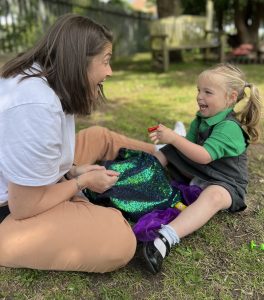
In Ysgol Cae’r Gwenyn, positive engagement and interaction with younger pupils is key to supporting their language development. Staff play with, and alongside the pupils offering commentary on their play, repeating sounds and words and modelling language. They follow the pupil’s lead ensuring that the interaction is fun. Practitioners know pupils well and are skilled in encouraging and challenging them. All practitioners are sensitive to the needs of pupils and modify their interactions depending on the individual needs.

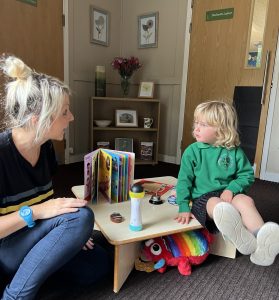
Following close observations and assessments, practitioners identify pupils they feel would benefit from intensive and carefully planned intervention and support. These pupils are given opportunities to engage in 1-to-1 sessions with a trained practitioner in a quiet space with few distractions.

The use of carefully chosen resources and fun, challenging activities helps to support early years communication and language development.

Staff choose a variety of strategies to engage with pupils. They work collaboratively to plan and deliver bespoke and individualised programmes. This intervention often needs to be creative and tailored to the interests and learning needs of the child. Staff have high expectations of pupils and strive to ensure that they are challenged in relevant and appropriate ways.

Staff work closely with the Speech and Language service to support pupil’s language skills. Speech Therapists ensure that staff are trained in a variety of interventions that work on the early fundamentals of language. They work in partnership with parents to model language.

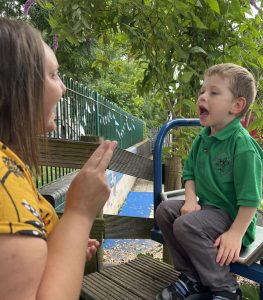
Throughout the session, practitioners use a variety of visual resources to aid communication and support understanding. Resources include Now and Next Boards, photographs of classroom areas on key fobs and visual timetables. All staff use Makaton signing as a visual way to aid communication.

Snack time is a very important part of each session. Food is a great incentive in encouraging the use of choosing boards, use of Makaton signing etc. Songs and rhymes are used throughout the session. They have a very positive impact on pupils’ language as well as providing a sense of fun and excitement. The school has a range of resources that are colourful, stimulating and appealing to children and which support listening skills and language development. These include puppets, colourful recording devices, pop up books, fairy lights and unusual musical instruments.

Practitioners keep their language short and simple and use interesting voices and appropriate facial expressions to support communication. Repetition helps language development and increases confidence. Staff follow the same daily format, sing the same songs, repeat the same instructions, directions etc, at key times of the day. On many occasions, it appears that pupils are not listening or paying any attention to what is going on around them but it is important not to make assumptions about whether a child is listening and absorbing the language. When the time is right, many pupils show they are paying attention but have chosen to share their voices, when they are ready.

What impact has this work had on provision and learners’ standards?

Detailed practitioner observations indicate that nearly all children make progress in their language development.  The interventions implemented impact positively on pupils’ ability to communicate their needs and feelings. Practitioners’ knowledge and interest in supporting pupil’s language and communication skills, helps them meet their own professional development needs and is key to raising standards in the school.

How have you shared your good practice?

Ysgol Cae’r Gwenyn welcomes colleagues from local schools to observe their practice. Visitors have the opportunity to discuss their observations following their visit and to ask questions regarding language development. The school hosts drop-in sessions for staff from schools in the authority, where engaging language resources are displayed and ideas and strategies are shared. The school shares ideas for developing language skills with parents in review meetings and in staff led workshops.

Improvement Resource Type: Effective Practice


Information about the school

Ysgol Brynaman is situated in a rural area at the foot of the Black Mountain. The school serves the village and the nearby villages of Rhosaman, Ystradowen and Cefnbrynbrain. Around 20% of pupils also live in the county of Neath Port Talbot. Fifteen per cent (15%) of pupils come from homes where Welsh is spoken fluently. This number has decreased slowly over the years. 

Learners come from a variety of social backgrounds, with a minority coming from disadvantaged households. Twenty-five per cent (25%) of children are eligible for free school meals, which is a number that has increased significantly since the lockdown periods. Around 5% of children are on the ALN register. 

Context and background to the effective or innovative practice

The aim of the staff and part of the school’s vision is to ensure that all pupils are completely bilingual by the time they leave Ysgol Brynaman. Over the past three years, very few children have any Welsh language skills on entry to the nursery class. As a result of the pandemic, a minority of children throughout the school also lost confidence in speaking Welsh. Therefore, the school had to re-visit its curriculum, planning and pedagogy. The aim was to ensure that there were plenty of purposeful opportunities for pupils to hear rich language through good modelling of the Welsh language, which would then motivate them to be able to speak Welsh fluently. 

Description of the nature of the strategy or activity

Leaders have high and firm expectations to promote the Welsh language, which permeate all of the school’s staff. Staff model the language correctly consistently. They use a variety of methods skilfully and this helps pupils to develop their fluency. This is done by feeding vocabulary purposefully and by having high expectations when encouraging pupils to respond correctly through specific speaking and listening sessions. Pupils are encouraged to speak Welsh by the Criw Cymraeg and Welsh songs are played on the playground during every play time to raise the profile of the language during leisure time.  

Staff in the nursery and reception classes provide beneficial opportunities for pupils to sing rhymes, and practice language patterns in short and snappy sessions. These are reinforced in practical group activities in the imaginary world area. For example, in the nursery class, they provide sensory resources to accompany the story of the Three Little Pigs. As pupils experiment with twigs and straw, blowing and knocking, staff play alongside, constantly feeding vocabulary and encouraging them to respond appropriately. Another example is the effective use of practical numeracy activities in reception as pupils add straw to the bald faces, with staff feeding them vocabulary purposefully. Across the school, there are reading sessions at the end of the day. For example, in Year 2, pupils vote for the story they want to hear, with the teacher again using vocabulary such as title, blurb, author and illustrator to reinforce literary vocabulary for pupils before reading the story. Contemporary and local heroes are used to promote pupils’ interest. For example, in Year 6, a Welsh video clip is used of the Welsh rugby captain and former pupil of the school to set a numeracy challenge for the pupils. 

What impact has this work had on provision and learners’ standards?

As a result of the above methods and activities, a Welsh ethos has been developed within the school, with most pupils very proud to attend a Welsh-medium school and using the language with pride. Children in the nursery and reception classes develop Welsh listening and speaking skills from an early age. As pupils move through the school, they become increasingly confident learners. They offer answers to staff in Welsh and are keen to talk to visitors. The use of local contemporary heroes has developed an attitude of belonging to their community, increasing pride in speaking Welsh in the classroom, but also on the playground. By the end of their time at Ysgol Brynaman, most of the oldest pupils are proud to be fully bilingual pupils.  

How have you shared your good practice?

Good practice was shared with all staff, in the first instance, to ensure consistency in the development of the language throughout the school. This was also shared with our stakeholders, such as in governors’ meetings and open evening for parents, where parents were also given ideas on how to encourage and help their children to speak Welsh outside school. 

We have also shared our good practice with the cluster schools when they have visited the school.  

Improvement Resource Type: Effective Practice


Information about the school

Genus Education was established in February 2010 as an independent special school for pupils with social, emotional and behavioural difficulties. The school is administered by Genus Care Limited which currently operates seven children’s homes across South Wales. Genus Education provides education for children resident in the company’s children’s homes who are not able to access mainstream education. The school is registered for up to ten pupils between the ages of seven to eighteen years. There are currently six pupils on roll, around half of whom have a statement of special educational needs. All pupils are placed by local authorities in Wales. The head of education has been in post since 2019 and oversees education across the school sites. He is supported by a team of three teachers and care staff who are based in the residential homes. The last full inspection by Estyn was in September 2023. The last monitoring visit was in September 2022. 

Context and background to the effective or innovative practice

Genus Education, guided by a commitment to holistic education, embraces the philosophy of Sir Ken Robinson, recognising the distinctive talents inherent in every child. Understanding the significance of exposing pupils to a diverse array of activities, the school has introduced the ‘Finding My Element’ initiative. This program aims to empower pupils by providing opportunities to explore new interests, develop crucial social skills and uncover hidden talents. Genus Education believes that limited exposure to various activities can hinder the discovery of these talents. The ‘Finding My Element’ initiative offers pupils a monthly platform to engage in a broad spectrum of previously unexplored activities. This not only fosters personal growth and social development, but also lays the groundwork for future career exploration. 

Description of nature of strategy or activity

The initiative unfolds through monthly exploration activities encompassing sports, arts, cultural events, nature expeditions, community service, and vocational workshops. For example: blacksmithing, graffiti Art, fencing, dj-ing, pottery, surfing, magic workshops, horse riding and martial arts.  

These activities are inclusive, encouraging participation from all pupils of all ages within Genus Education. This is enhanced through guided reflection sessions to help pupils articulate their evolving interests and a specific talk with instructors detailing career pathways within the activity. The strategy also emphasises the development of social skills through group activities and incorporates personalised learning plans to align academic and personal growth. 

Genus Education’s ‘Finding My Element’ initiative fosters exploration, self-discovery, and social development. The school aims to prepare pupils for academic success but also for a life filled with purpose and fulfilment. The continuous review and adaptation of the initiative demonstrate a dedication to ensuring its ongoing success in achieving its objectives. Through this comprehensive policy, Genus Education is shaping a generation of pupils equipped to contribute positively to society and lead lives of significance. 

What impact has this work had on provision and learners’ standards?

Pupils are discovering passions that go beyond traditional academic subjects. The emphasis on social skills is reflected in improved interpersonal relationships, effective communication, cooperation, conflict resolution and leadership. The personalised learning plans ensure that pupils’ interests are integrated into their educational journey, creating a supportive learning environment. The initiative not only prepares pupils for lifelong learning and career exploration but also contributes positively to their personal growth and empowerment. 

How have you shared your good practice?

Genus Education recognises the importance of a strong partnership between the school and parents or guardians. Regular meetings, progress updates, workshops, and opportunities for active engagement are facilitated to involve them in their child’s educational journey. This collaborative approach ensures that the benefits of the ‘Finding My Element’ initiative extend beyond the school walls, creating a holistic support system for the pupils. 

In addition, the school actively shares its good practices with the broader educational community.  

Improvement Resource Type: Effective Practice


Children in school uniforms happily running in a school hallway.

Information about the school

Ysgol Emmanuel is a two form entry English medium primary school in Rhyl. The school is located in an area of multiple deprivation and the school catchment area covers two of the most deprived areas in Wales. There are 460 pupils on roll and 63% of pupils are eligible for free school meals, significantly higher than the average for the local authority and Wales. Currently 7% of pupils have English as an additional language with 11 different languages spoken. Currently 3% of pupils are looked after or previously looked after. The school also has a school funded resource provision for ALN pupils.

The school vision is that ‘as a community, we learn, grow and achieve together’. The main aims of the school are to help young people to understand how to be happy and to develop and maintain their own emotional, physical and mental well-being; to be inclusive; to create a community that builds tolerance, respect and empathy in young people; to reduce the impact of poverty on outcomes and well-being for pupils and to further the professional development of staff. This whole school approach aligns with all of these aims.  

Context and background to the effective or innovative practice

The school is located in an area of high deprivation and as such, has high numbers of pupils with adverse childhood experiences (ACEs). It is a priority to improve pupil engagement and to support educational and emotional success. Historically, some pupils had struggled with self-regulation which impacted on learning and engagement. There were rising numbers of pupils with other learning needs and they needed bespoke support to help them to achieve. The school recognised that a different approach was needed as the existing style of pupil well-being and behaviour management was not working effectively. It was agreed that a research based trauma informed approach was needed. This would allow staff to understand the needs of pupils and how trauma and adverse childhood experiences may be a barrier to learning and succeeding. 

Description of nature of strategy or activity

After evaluating provision in the school, senior members of staff completed professional learning which focused on neuroscience, toxic stress, attachment theory and mental health and well-being for pupils. This evidence based training explained the effects of toxic stress and confirmed the reasons behind much of the negative behaviour or worsening pupil mental health that had been observed in school. As this change in mindset required a whole school approach, training for all staff which focused on the use of trauma informed approaches including attachment theory and the detrimental effects of ACEs on pupils was rolled out. This professional learning offer also focused on different strategies to regulate and calm pupils and the importance of an emotionally available adult for every child if required.   

A graduated response for pupils was introduced to meet their individual needs using the same approach as for pupils with additional learning needs (ALN) in line with the new requirements of the ALN bill. Well-being assessment tools, referrals from professionals or requests from parents and carers were used to identify pupils with the most urgent need of intervention. Once the approach had been implemented, professional learning was extended to include training additional staff in trauma informed practitioner approaches and additional support staff were trained to deliver a wider range of bespoke well-being interventions as well as restorative justice practice. A qualified play therapist, based at the school two days per week, was recruited to support pupils with the highest need. Senior leaders including the additional learning needs coordinator (ALNCo) implemented a meet and greet every morning on the school gates to give parents and carers the opportunity to express any concerns before pupils start their school day. Staff meet and greet pupils at the classroom door. Daily check-ins with pupils who were reluctant or who needed additional support to come into the school building were implemented by the well-being team. A trained assistance dog provided gentle and friendly support to pupils. Staff were also trained in child mental health first aid and the school became a case study for the CAMHS inreach pilot programme.   

ysgol emmanuel - tilly

Behaviour management policies, procedures and strategies were adapted to change the school’s approach to behaviour and well-being and to focus on the positive rather than the negative. The physical school environment was adapted to better meet the needs of pupils and to reinforce this approach; calming corners were introduced in classrooms and sensory spaces were created to help pupils to regulate if they were heightened. Strategies to support pupils to regulate their behaviour and emotions were re-introduced and a dedicated well-being team was created to provide direct support for pupils. Following on from this trauma informed approach, the school worked collaboratively with local schools to support refugee pupils who had recently arrived in the area having experienced the trauma of war or persecution.  

ysgol emmanuel - garden

What impact has this work had on provision and learners’ standards?

The school’s approaches changed the mindset of staff and made them more aware of the signs of poor mental health or the effects of adverse childhood experiences on behaviour and engagement. This allowed senior leaders to put the most appropriate support in place for pupils. Standards have improved due to better levels of pupil self-regulation and engagement; in addition levels of exclusion have fallen and negative behaviour incidents have reduced. The school is a calmer environment and as a result, pupils are ready to learn and able to achieve their potential. Attendance levels are returning to pre-pandemic levels and pupils feel safe and cared for at school.  

Improvement Resource Type: Effective Practice


Information about the school 

Corpus Christi Catholic High School is a voluntary aided 11-16 Catholic comprehensive school situated in the north of Cardiff. There are 1130 pupils on roll and pupil numbers have increased significantly in the last five years. Around 21.5% of pupils are eligible for free school meals (FSM). There are currently 337 pupils with English as an additional language.  

It is a close-knit Catholic community based on Gospel values. The school’s mission is to place Christ at the centre of all the school does. Catholic Social Teaching is used to instil in learners a sense of social justice, and to care for others and the world.   

Pupils live in a wide catchment area, and they come from a wide variety of socio-economic backgrounds which include wards of Lisvane, Cyncoed, Whitchurch, Llanishen, Adamsdown, Llanedeyrn, Pentrebane and Pentwyn. Around half of the pupils use public transport to travel to school. Pupils come mainly from six partner primary schools but there is a diverse catchment area that goes beyond the six feeder primary schools.  

Context and background to the effective or innovative practice 

Following the global pandemic leaders recognised a need to support vulnerable learners who had fallen behind with their learning. Funding from the Recruit, Recover, Raise Standards grant was used to appoint two Associate Assistant Headteachers and ten Progress Recovery Leaders to support learners who had not engaged with blended/hybrid learning. The school developed a programme called ‘ExCEL’ to build confidence, raise aspirations and inspire learners to progress in their academic studies. The name ExCEL stands for Empower Confident Engaged Learners.  

Description of nature of strategy or activity 

Following the pandemic, the ‘ExCEL’ programme identified and worked with the 10% most disengaged learners in each year group. Those learners with the lowest ‘attitude to learning’ scores were identified by the Pastoral Team and vulnerable pupils or those eligible for free school meals were prioritised. This was approximately 120 pupils, 24 from each year group. Progress Leaders were responsible for meeting weekly with learners after school. Sessions focused on developing learners’ softer skills: growth mindset, good learning habits and independent learning.   

Upon selection of learners, parents/carers were contacted to explain the purpose of the programme and the reason for their child’s selection. The benefits of ‘ExCEL’ for their child, barriers to learning and bespoke interventions were discussed and targets agreed. A home-school partnership agreement formed an integral part of this programme.  

On a half-termly basis, learners participated in a range of sessions to improve specific areas in need of development. Barriers to attendance were overcome by the provision of transport home, rewards in the form of refreshments and recognition of positive engagement.   

After a successful first year of raising the attainment, attendance and engagement of the school’s vulnerable learners, Corpus Christi continued ‘ExCEL’ into 2022-23 as it evolved into a programme that supported the school’s improvement priorities (SIP). All staff involved received further training to equip them with the skills to provide sessions on literacy, numeracy, mental health, behaviour and attitudes to learning.

What impact has this work had on provision and learners’ standards? 

‘ExCEL’ has had significant impact on learners and has been supported by strong parent/carer engagement. As part of its evolution, the ExCEL programme has forged stronger links between the pastoral and academic systems within the school, which has resulted in improved attainment, well-being, and attendance across the school. Leaders aim for the ‘ExCEL’ programme to be one that evolves and responds to the needs of learners.   

In its first year, over 85% of participants significantly improved their attitude to learning. Eighty-two per cent of ExCEL learners in Year 11 improved on their projected academic targets. ‘Excel’ includes a literacy programme for pupils in Years 7 and 8 and 76% of pupils involved in the programme improved their reading ages by at least 6-12 months, which had a positive impact on all areas of learning. The programme has also delivered ‘Thrive’ to in excess of 60 pupils to support those with poor attitudes to learning and to support their emotional health and well-being.   

Improvement Resource Type: Effective Practice


Information about the school

Rhiwbeina Primary is a three form entry school serving a predominantly suburban community in north Cardiff. There are 683 pupils on roll. Around 2% are eligible for free school meals and the school has identified around 1% as having additional learning needs (ALN). Approximately 3% have English as an additional language (EAL). The school has a strong creative ethos, priding itself in creating authentic local and cultural links within a cross curricular context. 

Context and background to the effective or innovative practice

Rhiwbina and Cardiff have a rich historical heritage that the school has sought to harness to enrich the pupils’ understanding and sense of belonging to their locality and heritage. 

The school uses a humanities based ‘thematic’ approach as the driving force behind their curriculum. They use drama effectively to improve pupils’ spoken and written communication. A number of the staff have, over a significant period of time, researched and investigated events, places and people from a range of periods. They use this information to build accessible and inspiring fact-based ‘stories’. Robust historical research, using local libraries and the National Record Office, underpins this approach. 

The school has, through this process, established strong community links where pupils regularly visit the places that they are studying in order to consolidate and extend their learning experiences. Interacting with members of the local community, businesses, community groups and public services has been crucial in facilitating this approach. 

Description of nature of strategy or activity

Each half-term, every year group studies a new topic, focusing on either local, national or global contexts. 

Examples include: 

Local: 

  • ‘Y Ty Glo’, the lives of the Trehafod mining community in 1900. 

  • ‘The Wenallt Warriors’, lives of members of the Silures Celtic tribe. 

  • ‘For King and Country’, lives of actual Llandaff residents in the Civil War of 1640s. 

  • ‘An Orphan’s Tale’, lives of workhouse children in Victorian Cardiff. 

  • ‘Keep Calm & Carry On’, lives of children evacuated from London to Rhiwbina. Based on the first-hand account of an octogenarian who was evacuated to the area from Tottenham. 

National: 

  • ‘Rebellion 1400’, lives of those supporting the uprising and rebellion of Owain Glyndwr, taken from historical records. 

  • ‘Pudding Lane 1665’, lives of Pudding Lane inhabitants, taken from the Hearth Tax, during The Great Fire of London. 

  • ‘Prisoner in the Keep’, lives of the followers of Welsh Princes in 1066. 

  • ‘Raiders of the Storm’, the lives of Bartholomew Roberts and his crew. 

  • ‘A Titanic Tragedy’, lives of the passengers and crew and the subsequent enquiry. 

Global: 

  • ‘Guardians of the Planet’, the lives of indigenous Amazon tribes who are under threat from deforestation. 

For each of these topics, teachers provide pupils with authentic characters’ names and information based on detailed research for each period. The children then actually ‘live’ as their character for the entire half term, discovering more as their story unfolds, through the use of empathy and suspense. Much of their understanding and empathy with the character is built during drama and spoken activities and followed up through written work in the classroom. 

What impact has this work had on provision and pupils’ standards?

Authentic contexts and characters enable the children to: 

  • Engage at a deeper level with their learning 

  • Develop empathy 

  • Become ethical and informed learners, in line with the four purposes, for example ‘I know about my culture, community, society, and the world, both now and in the past’ 

  • Develop the quality of their spoken language; the sustained role-play allows children to ‘hide’ behind their character, thus developing greater confidence, fluency and expression  

  • Explore relevant Religion, Values and Ethics (RVE) issues and dilemmas in a safe context 

  • Take ownership of their characters, ‘families and tribes’, which provokes an intensity of feeling, allowing them to explore conflict and its resolution 

  • Develop enthusiasm and motivation for creative writing; following drama activities, pupils’ reponses to a range of writing forms, such as diaries, poetry, stories, and persuasive writing, are positive – as they have ‘experienced it’, even reluctant learners have many creative ideas and engage well with their writing 

  • Develop the quality of their written language; the scaffolding provided by the drama ensures that the pupils have a clear framework from which to sequence their writing; this particularly benefits less able pupils and, in addition, this approach introduces thematic terminology that provides the children with the vocabulary to enrich their language and writing 

How have you shared your good practice?

This good practice has been shared within the school through the delivery of exemplar lessons and team teaching. Good practice has also recently been disseminated more broadly at Language, Literacy and Communication (LLC) liaison link meetings with feeder schools and the local high school.