Provision for developing pupils’ reading and oral skills

Quick links:
Information about the school
Ysgol Gyfun Gymraeg Rhydywaun opened in September 1995. It serves children and young people in the Cynon Valley and Merthyr Tydfil. There are 1,026 pupils at the school, along with 118 in the sixth form. Twelve point one per cent (12.1%) of pupils are eligible for free school meals.
Context and background to the effective or innovative practice
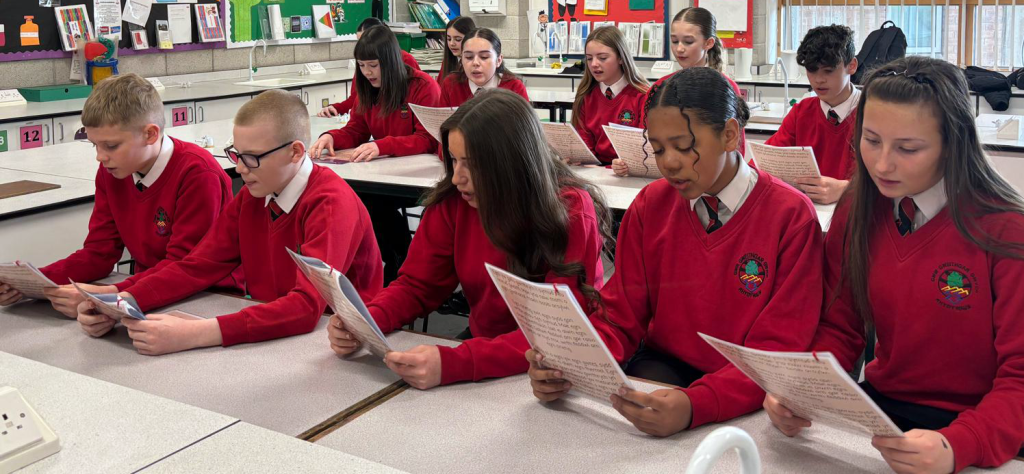
In response to the significant decline in pupils’ standards of reading and the educational gap brought about by Covid, the school has prioritised raising pupils’ reading and oral standards. Two whole-school strategies were devised – ‘Dim ond Darllen’ and ‘Llais Rhydywaun’.
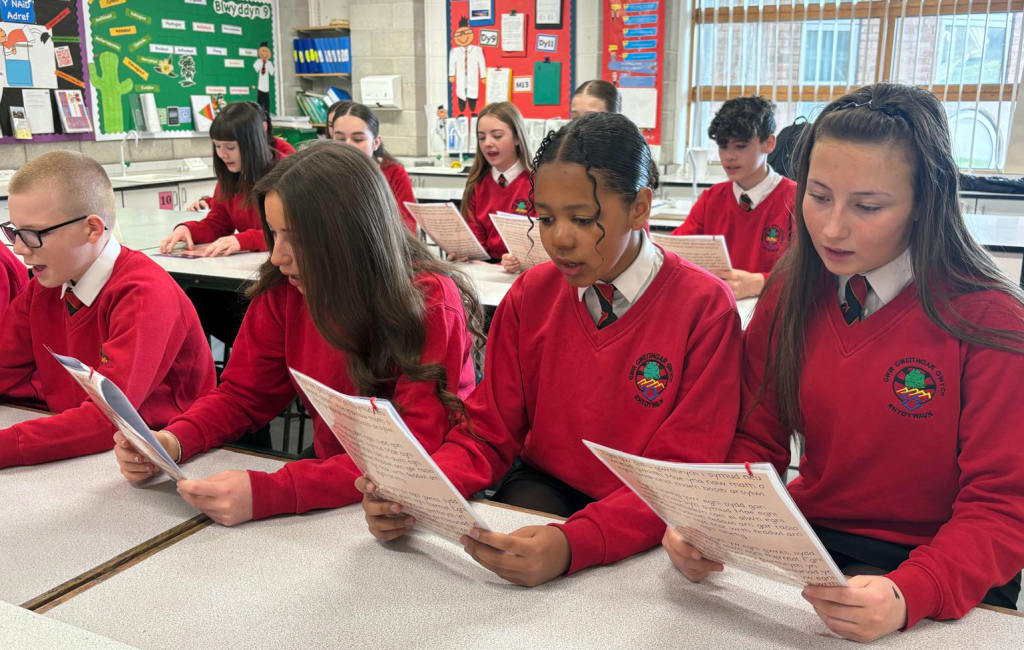
‘Dim ond Darllen’ has developed from a pilot scheme by Sussex University. The university worked with 300 primary pupils for 12 months. Through daily choral reading, an improvement of 8.5 months was seen in the reading ages of all pupils. The school has built on this research and created a secondary scheme, where systemic choral reading takes place in each department.
The ‘Llais Rhydywaun’ oral strategy is based on proven principles which highlight four key areas for effective speaking. These include fostering practical use of the voice and physical expression; developing rich language and language structure appropriate to different context; enabling pupils to organise their ideas, reason clearly and respond creatively; and building the confidence to participate, listen actively and convey a message effectively to various audiences. By embedding these principles across the curriculum, the school promotes oral skills in all subjects, encouraging the use of investigative conversation and formal speaking. This method reflects best practice and supports pupils to express themselves confidently and critically in any context.
Description of the nature of the strategy
All staff support the challenge to improve pupil’s reading and oral standards. Both strategies have been introduced and embedded through continuous professional development session, to ensure that all teachers and teachers of literacy.
The pillars of the strategies:
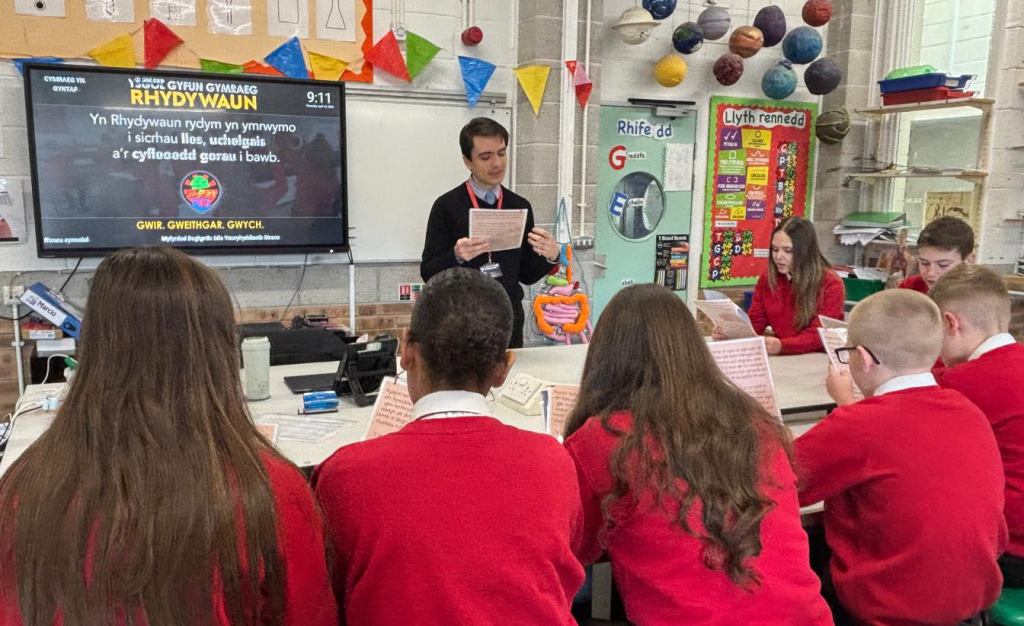
- The strategies are implemented systematically. For example, all reading sessions begin with an oral exercise, namely pronouncing the ‘Wow’ words (tier 2 and 3 words). The vocabulary supports pupils to understand the text and to build elegant vocabulary and confidence orally. Key stage 3 lessons begin with a purposeful oral prompt.
- Departments have woven the reading passages and oral tasks into their schemes of work across the curriculum.
- Parents are supportive of the scheme: literacy training and booklets are available for them to work with their children.
- Choral reading sessions are held in each subject, once in each timetable cycle in key stage 3.
- Challenging reading materials are created for key stage 3 pupils. They are a learning resource, increase reading stamina and model language accuracy.
- All teachers are teachers of literacy, have received training and have the confidence to experiment with a variety of reading and oral strategies regularly in their lessons.
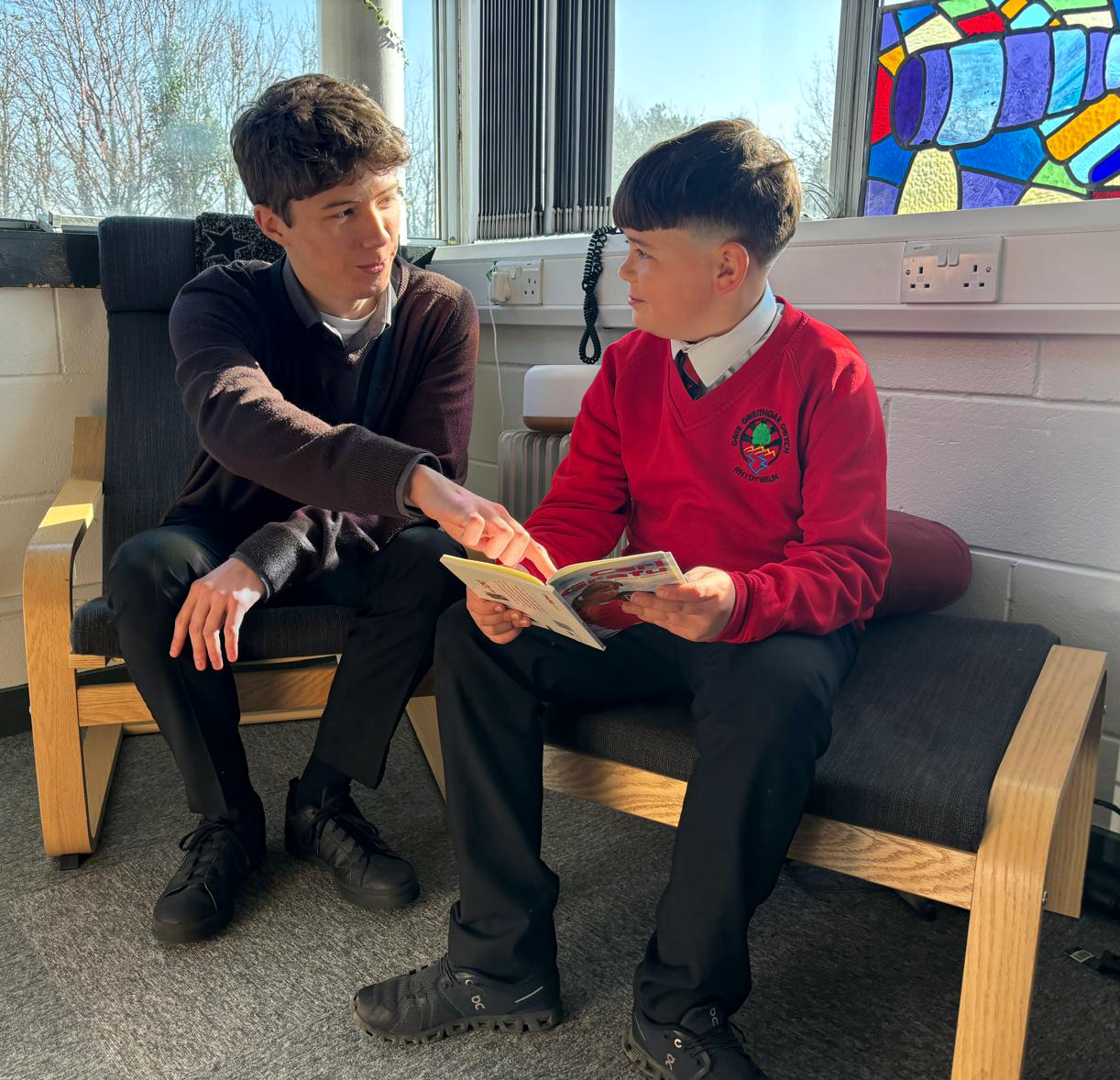
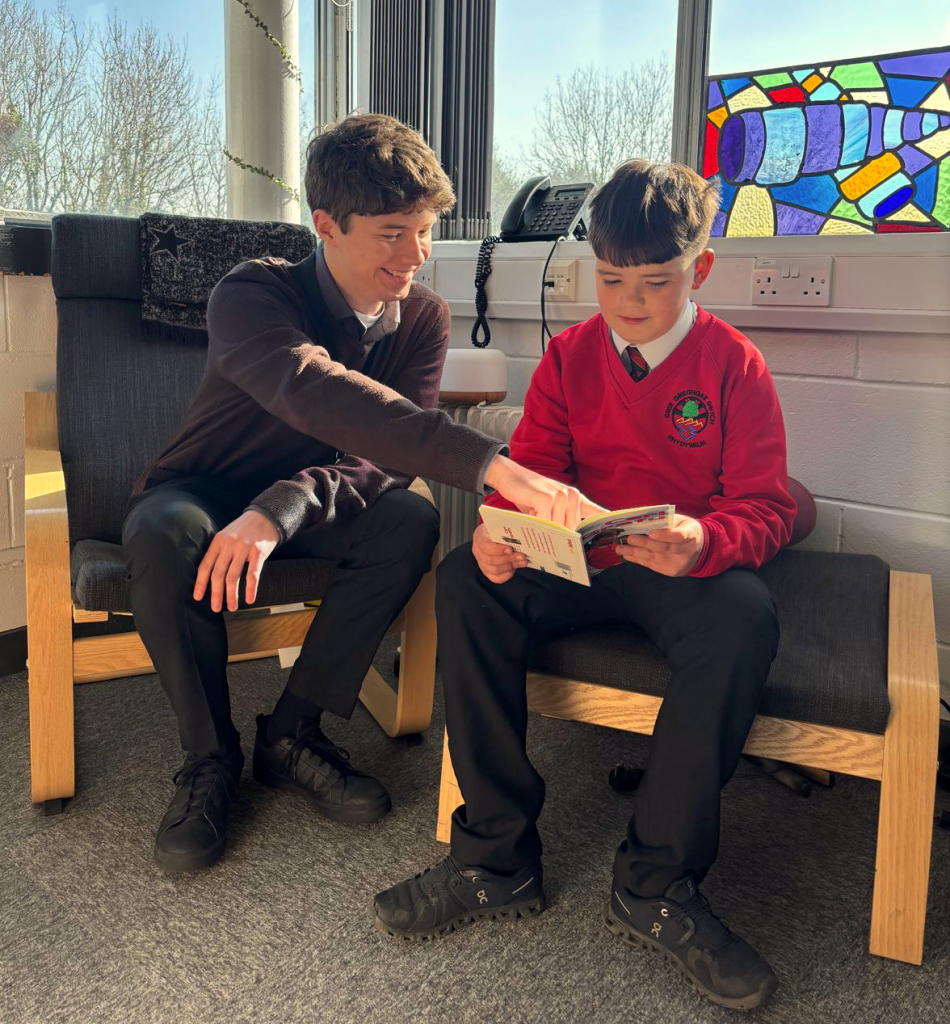
- Reading takes place during tutor periods and the reading material is discussed through ‘Rolau Trafod’ (‘Discussion Roles’).
What impact has this work had on provision and learners’ standards?
The strength of both strategies is the frequency of the sessions and the teachers’ enthusiasm. Choral reading and teaching and learning through reading is the norm in key stage 3. Speaking and listening tasks have been introduced and embedded in all subjects.
The reading materials are at the heart of learning and promote a rich vocabulary, which reads to correct and refined oral and written work. Pupils can be seen to be confident when reading aloud (choral and individually) and correct themselves when reading’. ‘Llais Rhydywaun’ techniques, for example ‘Diwrnod Dim Beiro’ (‘No Biro Day’), support pupils’ oral skills and ensure that teachers introduce and share good practice.
Year 7 pupils were tested in the first year of the strategy. A significant increase was seen in pupils’ reading skills within the first eight months of the project – 78% of the whole year, 80% (girls), 77% (boys), 71% (FSM). An improvement was seen in Personal Reading Assessment scores, which an increase of at least 20 points in the mean reading progress scores in Welsh in Years 7, 8 and 9.
Both strategies have ensured that pupils are more ambitious in lessons. Because of the improvement in their reading and oral skills, they have the tools to succeed.