Embedding British Sign Language to Support Communication and Inclusion
Quick links:
Information about the setting
Alphabet Playgroup is a preschool located in the grounds of Undy Primary School. They are predominately an English-speaking setting registered to care for children aged 2.5 to 4 years. The provider always love introducing children to the Welsh language, so when the opportunity arose to introduce a new language that every child could access, they embraced it!
Context and background to the effective or innovative practice
The sign language journey started in 2018 when the Alphabet team were received the opportunity to have an intensive programme of learning some typical everyday signs. All practitioners attended and had fun learning a new language together with the children. They introduced some simple signs at ‘amser cylch’ and the children embraced it. All children felt included, valued and proud that they were celebrating their differences.
Description of nature of strategy or activity
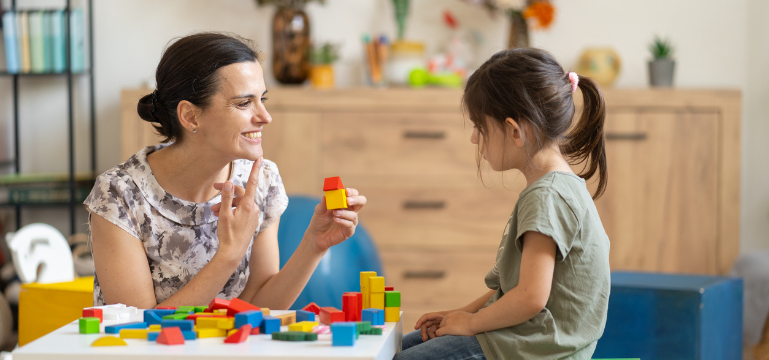
The provider believes that it is most heart-warming and rewarding when a child who was preverbal begins to communicate beyond gestures with practitioners and peers using familiar sign language. Practitioners use sign language wherever they can. They consider the children’s ideas and introduce new signs as appropriate. Throughout sessions they use their frequent signs, in all the daily routines. They find the best time to use signs is during free play, as it’s the easiest language to follow in a busy and chatty setting. They introduce simple signs even before the children start their sessions, a couple of simple greetings on a pre visit, for children to begin to familiarise themselves with the process. Staff always use the simplest of signs with new children, like “eat, drink, bag, coat and home”, to support their early communication skills, and develop their confidence.
To encourage the children’s use of signs the setting displays photos and pictures of signs on the wall for easy reference. They have a folder of pictures in the book corner, and a basket of signing cards to use freely throughout the session. Practitioners love sharing their signs with families at singalongs, once a term, where they sign greetings and display signs through songs that they sing together.
What impact has this work had on provision and children’s standards?
Communication is about the successful giving and receiving of messages and is the key to all interactions. Language and conversation are essential for learning. The impact is that the children have an additional language with which to communicate. Practitioners see children developing confidence to connect, make their needs and requests known to others and strengthen their understanding. They have observed that children develop curiosity to learn new signs and have fun playing with their new language.