Effective Practice Archives - Page 42 of 66 - Estyn

Improvement Resource Type: Effective Practice

Improvement Resource Type: Effective Practice


Information about the school

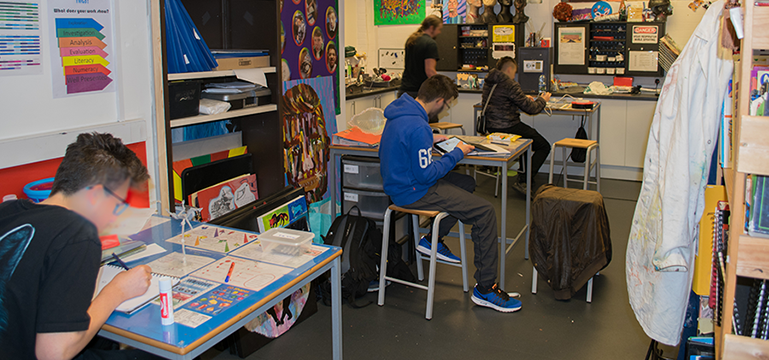
Woodlands School is an independent special school for pupils with complex needs.  Pupils are placed by their local authorities, many under full care orders.  They live in one of four care homes within the organisation.  Currently, there are 18 pupils on roll, aged between 12 and 19 years.  Approximately two-thirds of pupils have a statement of special educational needs or education and health care plan.  The headteacher has been in post since January 2014.

Context and background to the effective or innovative practice

Following a core inspection in 2013, the proprietors recognised the need to improve teaching and learning.  In January 2014 they appointed a new headteacher, with significant experience as a senior leader in mainstream education.  As a first step, the proprietors and the new headteacher outlined the vision for the school and began the process of implementing a strategic plan for improvement.  The plan’s main priority was to establish a culture of high quality teaching and learning that would enable pupils to achieve their academic potential.

Description of nature of strategy or activity

The first and most urgent action was to communicate a vision of high expectations and resilience that centred on the central role of teaching and learning within the school.  Previously, the company had had a clear ethos for aspects of care and therapy but the role of education within this was less well defined.  The headteacher wrote a very detailed action plan following the Estyn report, which gave the school a strong focus on the areas of urgent improvement.  A staffing review of roles and responsibilities followed, which led to the appointment of an assistant headteacher with responsibility for teaching and learning.  Senior leaders, supported by the proprietor, improved provision on site and increased opportunities for outdoor learning opportunities.  Teachers updated schemes of work and implemented detailed lesson plans to motivate and inspire pupils’ interests and meet their individual needs.  Timetable changes ensured teachers delivered their specialist subjects and any gaps in the curriculum allowed for new subject teachers to be appointed. 

The effective use of daily assemblies and the development of a school council enabled staff to share information with pupils and engage them in decisions on the school’s rewards and sanctions system.  This helped develop an ethos and culture that enabled pupils to respond positively to new school rules and routines. 

The school put in place suitable risk assessments to support classroom learning together with the implementation of consistent behaviour management strategies.  As a result, staff developed confidence and trust in their ability to maintain pupils’ interest and motivation to learn.  This led to greater opportunities for collaborative learning for pupils who had previously been taught individually. 

The school focus on the professional development of staff, their understanding of teaching pedagogy and practice was key to ensuring that teachers improved their expertise delivering the curriculum, where necessary in subjects up to A level.  Improving staff skills in teaching literacy and numeracy and specific methodology, such as precision teaching, equipped staff with the skills to ensure that all pupils could access the curriculum offer. 

Staff developed a thirst for knowledge about what excellent teaching looked like and visited other schools recognised as having good practice.  They then adapted ideas to suit Woodlands.  A few staff trained as external examiners to support the work of the school. 

An induction programme for new pupils was developed to ensure that they understood the expectations for their learning and behaviour. The school also developed a system to evaluate pupils’ attitudes to learning and reward their engagement in lessons, regardless of academic ability. To support this approach, pupils were encouraged to take ownership for their own learning by commenting in progress logs on how confident they felt at the end of each lesson.  

What impact has this work had on provision and learners’ standards?

The school’s focus on teaching and learning benefits pupils enormously.  It ensures that all pupils leave with externally recognised qualifications, including accreditation of their essential skills.  This supports their future pathways very effectively, including access to university provision.   

How have you shared your good practice?

The headteacher attends meetings of the North Wales Association of Special School Headteachers (NWASSH) and has shared practice with a local PRU and special school.  The school is also a member of the Welsh Independent Schools Council.

Improvement Resource Type: Effective Practice


Context and Background

The Cathedral School is an independent day school for boys and girls from 3 to 18 years of age.  The school is close to Llandaff Cathedral in the city of Cardiff.  It was founded in 1880 and has been owned since 1957 by the Woodard Corporation, an educational charity.  The school describes itself as an Anglican choir school.  It has a close relationship with Llandaff Cathedral, and provides choristers (boys) and choral scholars (girls) to support the Cathedral’s choral tradition.

Since 2012, there has been an increasing demand for places and a rapid expansion in pupil numbers.  Over the last three years, the school has implemented a number of successful strategies to highlight and further develop the pupils’ sense of community and responsibility to one another and to the world around them.  The development of a shared vision across the 3-18 age range, new leadership opportunities for staff and pupils and a close interaction between academic and pastoral leaders have helped foster values such as respect, tolerance, kindness and compassion.  These fundamental values permeate across the whole school community and help pupils to develop self-confidence, acquire a broad range of important life skills and become well-informed and active citizens.  

Description of nature of strategy or activity

1. Build a shared and purposeful vision of the school community including parents, staff and pupils

In 2016, with the appointment of a new headteacher, the governors identified the opportunity to reshape the senior leadership team and to restate the school’s vision.  The school conducted three wide-ranging parental surveys, which ensured that leaders gained a clear understanding of the views of all parents, regarding both the strengths of the school, as well as any relevant areas for development.  The headteacher held weekly meetings with pupils and met with all members of staff individually.  This enabled all stakeholders to contribute meaningfully to the whole-school vision.

A number of strands emerged from these meetings, which together formed the school ethos statements.  Two key principles in this shared vision were the concepts of care and of leadership. Care was defined as enabling an inclusive community that builds understanding, respect and empathy for all, developing an active social and moral conscience and serving others for the common good.  The definition of leadership emerged as inspiring others to achieve a shared purpose, listening, learning and working together, ensuring that every voice counts.

These concepts underpin all aspects of the school’s provision for pupils’ care, support and guidance.  They were embedded around the school through parent meetings, assemblies and in class time.  The next steps were to ensure that school systems enabled this vision to become a reality.

2. Establish effective pastoral structures across the 3-18 age range

In order for this vision to be realised, clear lines of accountability and new opportunities for staff leadership were implemented.  The governors invested significant resources into ensuring that this approach was effective.  

  1. Oversight from Senior Leadership: An assistant head with responsibility for safeguarding was appointed with an extended remit.  This included responsibility for pupils’ social, moral, spiritual and cultural development and line management of the school’s personal development programme (PHME) as well as the school counsellor.
  2. Clear lines of accountability through Middle Leadership: New middle management roles were established for the leadership of PHME programme, creating a department that spanned across the 3-18 age range.  This enabled a coherent framework to be set up and expertise to be shared effectively.  Additional curriculum time was allocated for PHME and a programme established that could flexibly respond to pupils’ needs while providing clear and age-appropriate guidance to develop the social and emotional skills of all pupils.
  3. Support for pastoral leaders: The house system, which lies at the heart of the pastoral provision for our pupils, was strengthened through the addition of an assistant housemaster / housemistress, to ensure that pupils’ wellbeing could be tracked effectively and necessary interventions identified and acted upon in a timely manner.
  4. High expectations of every teacher: The role of the form tutor was redefined.  Every tutor now teaches PHME and pastoral reporting was given an increased emphasis.  Training opportunities to support tutors and promote best practice were built into the inset programme.  
  5. Additional pastoral provision for pupils: In addition to the school counsellor, two new emotional literacy support assistants were trained to enable a quick response to pastoral concerns faced by the pupils.

3. Strengthen the spiritual foundation of the school

The school’s strong Christian ethos has been made more relevant to every pupil through the ‘thought for the week’, put together by the chaplain and the head of religious studies.This forms the basis of school assemblies, weekly chapel services, whole-school services in Llandaff Cathedral and discussions in tutor time. This common focus, which is built on at an age-appropriate level throughout the school, celebrates pupils’ achievements in a variety of spheres of personal development (for example sporting success, active citizenship and kindness to others).It enables staff and pupils to engage with and understand their part in fostering values such as respect, tolerance, kindness and compassion.

4. Provide opportunities for young people to become active citizens

At the same time, it was recognised that pupils need to take responsibility for their own wellbeing and the wellbeing of the school as a whole.  The voice of the sixth form was strengthened by extending the student leadership team and providing these pupils with explicit opportunities to influence and give feedback on the priorities within the school development plan.  This approach was later extended to allow all pupils to feed in through pupil councils.  Training days for student and pupil leaders across the key stages were introduced.  Young people have responsibility for leading specific house events, such as the Eisteddfod and sports day, while every pupil in key stage 3 and key stage 4 has the opportunity to lead an assembly each year.  Pupil initiatives such as ‘Project Rainbow’, the pupil established LGBTQ+ society, are encouraged and supported with staff time.  In the primary section every pupil has the opportunity to undertake a leadership role each year.  This aspect is monitored by form teachers who encourage and support less confident pupils to take on a role in which they have an interest.

As a result, pupils are able to develop their self-confidence and acquire a broad range of important life skills.

5. Close interaction between academic and pastoral monitoring.

The Cathedral School has a reputation for outstanding academic success.  However, there was strong recognition from staff that excellent exam results are dependent on pupils’ pastoral wellbeing.  Consequently, as part of the school’s weekly inset programme, time was allocated to allow pastoral leaders to guide interventions for underperforming pupils.  A clear structure for pastoral reporting was developed in the senior section using research from the Educational Endowment Foundation.  Tutors provide twice-yearly formal feedback on each pupil’s development in key areas, which supports their social and moral wellbeing.  Alongside academic tracking, senior pupils and students are surveyed every half term with regard to their wellbeing.  As a result, pupils are aware that the school takes their wellbeing seriously while the results of the surveys allow early intervention to be targeted carefully.

What impact has this work had on provision and learners’ standards?

This coherent approach and the related initiatives have proved highly effective strategies for promoting pupils’ spiritual, moral, social and cultural development.  The range of support available to pupils has increased in both quality and quantity.  Those directly involved include the chaplain, pastoral leaders, form teachers, emotional literacy support assistants, mental health first aiders, trained peer supporters, and the school counsellor.  These staff operate within a coherent and integrated system.  The number of older students mentoring younger pupils with emotional or educational needs has increased, and the school has also seen an increase in young people seeking out citizenship opportunities outside school, for example standing for the Welsh Youth Parliament or designing a computer programme that can identify phishing emails.  Pupils have taken an active role in shaping and formulating school policy, for example by pressing for a ban on single-use plastic bottles throughout the school.  This policy was successfully implemented in September 2018.    

How have you shared your good practice?

As a hub school for the Jigsaw personal development programme, the Cathedral School has hosted training events for other schools as well as hosting wellbeing and safeguarding seminars for the Welsh Independent Schools Council.  The school is a member of the Urban Schools network, an informal collaboration of Church in Wales Schools in Cardiff, and worked to develop a shared Year 5 Prayer Space project, focusing on truth and justice, and a combined project for Christian Aid.  The school’s pupils, together with pupils and students from other local schools, are currently working together on a Clean Air initiative for Llandaff.
Improvement Resource Type: Effective Practice


Information about the school

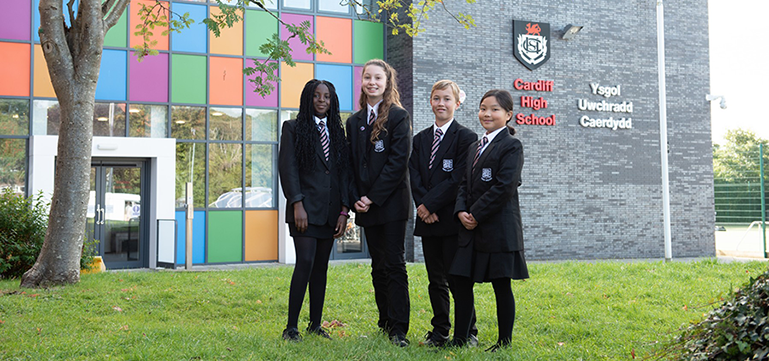
Cardiff High School is a diverse and vibrant comprehensive school situated in the north of the city of Cardiff.  There are 1,613 pupils on roll, of which 422 are in the sixth form.  Around 6% of pupils are eligible for free school meals, which is much lower than the national average of 16.4%.

The school has a diverse pupil intake. The majority of pupils speak English as their first language.  Four hundred and thirty-five pupils are categorised as pupils with English as an additional language and around 36% of pupils come from a minority ethnic background.  One per cent of pupils speak Welsh as their first language.

The percentage of pupils with special educational needs is around 18%, which is lower than the national average of 22.9%.  The percentage of pupils with a statement of special educational needs (2.4%) is just above the national average of 2.2%.  The school has a specialist resource base serving the local authority for 15 pupils with specific learning difficulties.

The school is currently a pioneer school and is working with the Welsh Government and other schools to take forward developments relating to education reform in Wales.

Sustaining and improving effective practice

In 2015, Cardiff High School was a highly effective and high performing school with year on year progression in terms of outcomes.  The school had a long history of excellence in learning and teaching, was judged as excellent by Estyn, was rated as a green category school, had been identified as sector leading and was routinely working with other schools, working at local and national levels to shape and develop the self-improving system.  However, the question that the school posed itself at this point was, ‘How can we be even better?’

Cardiff High School’s belief that learning is at the heart of everything they do underpins the school’s approach to learning and teaching.  In order to strengthen this culture, in 2015 the school made the strategic decision to invest significantly in learning and teaching.  As a result, the leadership of learning and teaching was enhanced through the expansion of the senior leadership team to include two assistant heads, who alongside a deputy head lead the strategic vision across the school.  Furthermore, a learning and teaching team was established from middle leadership to lead and support the implementation of strategic priorities.  With this framework in place, a new vision for learning and teaching was established with the emphasis on:

  •  leadership at all levels
  •  developing and sustaining highly effective classroom practice
  •  professional learning and aspiration to improve for all

Leadership at all levels

Senior leadership established learning and teaching as the key priority for ongoing school improvement.  Learning and teaching are the central priority in both the SIP and DIP every academic year.  The school recognises that it can always improve and enhance the quality of learning experiences. 

The school recognised that meaningful and sustained development of learning and teaching was only possible through the recognition and growth of teacher efficacy.  This meant that, in order for the school to realise its vision, it needed to empower teachers to lead learning in their classrooms and to provide the appropriate balance of challenge and support to make this happen.  This approach also applied at departmental level where middle leaders are trusted to develop a vision for learning and teaching that is appropriate to each subject specific context.  For example every department was given responsibility for its own approach to feedback.

Quality assurance of this approach to learning and teaching is underpinned by a philosophy that it is done with and not to staff and departments and that it is a developmental process to foster further improvement.  The school believes that this collaborative approach and its emphasis on professional trust is the essential component in implementing effective pedagogical practice. The model strikes a highly effective balance between support and challenge that is both robust and places learning at the heart of quality assurance processes. 

Developing and sustaining highly effective classroom practice

The school wanted to establish a clear pedagogical framework in order to create a consistent language for talking about learning and teaching, provide staff with accessible research informed strategies, and establish professional learning as an entitlement for all staff.

As a result, senior leaders set five core priorities for learning and teaching:

  • whole school learning and teaching model using a specific pedagogical framework
  • closing the gap between potential and performance for all pupils
  • literacy, numeracy and digital competence
  • feedback
  • learner voice

The school implemented a commercial learning and teaching model.  It felt that the model articulated the five core elements required for highly effective learning and teaching:

deepening thinking, role modelling, impact, challenge and engagement in learning.  This model provides a common language for conceptualising learning and teaching whilst allowing for teacher agency and flexibility of approach.

Closing the gap between performance and potential is a philosophy that permeates the school and, as a result, there is a culture of aspiration for all.  As part of this approach, the school has adopted several pedagogical strategies based on current educational theory.  The strategies promote an emphasis on engagement in learning and high levels of challenge to stretch every learner. 

Literacy, numeracy and digital competence are essential cross curricular skills that the school feels are best applied in context, where relevant, and at an appropriate level.  In order to support the collaborative ethos of the school, the learning and teaching team co-plan, deliver and reflect on skills application and progression with subject specialists.

The school believes that feedback should inform planning and effective classroom practice at all levels, and may be given verbally, in written form or digitally.  The school’s feedback policy outlines the four pillars of highly effective feedback.

  • regular and timely
  • focused and specific
  • acted upon
  • shared practice 

Middle leaders take ownership for their subject and context specific approaches to feedback. These are shared with all stakeholders and are regularly quality assured.  This results in highly responsive and reflective feedback processes, which are finely tuned and feed directly into the quality of learning experiences in the classroom.

The leadership of learning in the school effectively incorporates learner voice and opportunities for learners to take an active role in informing learning experiences.  The school elicits the views of learners in a number of areas including departmental reviews, work scrutiny and subject specific panels.  Pupils are also engaged formally through a school parliament working within school and across the consortium to shape pedagogical experiences.

Professional Learning

Senior leadership believes that staff wellbeing and professional development are central to the school’s exceptionally high standards of learning and teaching.  A culture of professional learning is firmly embedded at all levels and is viewed as a professional entitlement for all and by all staff.  The school recognises that staff are the most valuable asset and looks to provide regular, high quality and bespoke development opportunities.  The school considers itself a highly effective learning organisation.

The school provides numerous pathways for staff to develop professionally:

  • research informed strategic vision
  • strategic whole-school INSET provision focused clearly on improvement priorities
  • a supportive culture of lesson observation, learning walks and sharing good practice
  • collaborative approaches to key aspects of learning and teaching pedagogies
  • a whole-school coaching ethos and coaching programme
  • a whole-school Action Enquiry
  • a suite of commercial programmes to develop pedagogy and leadership e.g. those for outstanding teachers, teaching assistants and leaders

The school recognises that the successful leadership of learning in teaching does not exist in isolation.  It is only possible to achieve when it works in harmony with all other aspects of the school.   The alignment of wellbeing and achievement, curriculum, data, and learning and teaching is needed to ensure that learning experiences are highly effective and achieve the four purposes. 

Improvement Resource Type: Effective Practice


Information about the school

Ysgol y Garnedd is a designated Welsh-medium community school, which serves the city of Bangor and the nearby villages.  There are 334 pupils between 3 and 11 years old on roll, including 32 nursery pupils.  They are organised into 12 mixed-age classes.  On average over the last three years, 7.5% of pupils have been eligible for free school meals, which is lower than the national average of 18%. There are currently slightly over 12% of pupils on the additional learning needs register, which is lower than the national percentage of 21%, and a very few have a statement of special educational needs.

Context and background to the effective or innovative practice

The school has a strategic ambition to improve and raise standards continuously.  Improving extended writing had been a whole-school priority in 2016 – 2017.  Firstly, provision and opportunities to write at length were reviewed by:

  • looking at current provision in terms of long and medium-term schemes of work
  • identifying and reviewing opportunities for pupils to write at length across the curriculum
  • conducting whole-staff and departmental staff meetings to adapt plans and experiences for pupils
  • looking at the accuracy of pupils’ oracy as a means of developing accurate writing
  • reviewing the process of writing in small steps so that pupils can be equipped to achieve successfully

Through rigorous self-evaluation, it was decided that oral accuracy and language patterns would need to be ensured in order to develop written work further.  It was also decided that it was essential for pupils to be equipped with the necessary skills to complete extended writing tasks across the curriculum.

Description of the nature of the strategy or activity

As a result of findings from monitoring provision, the school decided that a series of language skills lessons would be planned in order to equip and prepare pupils for writing at length.  In addition, the school ensured that pupils were inspired and motivated to complete written tasks by taking part in educational visits before undertaking the written tasks.  The school decided that equipping pupils with relevant skills, inspiring them through visits and the process of evaluating written models were valuable in order to develop and prepare them to complete extended writing work successfully.

What impact has this work had on provision and learners’ standards?

The school measured the effect of action by scrutinising pupils’ work and books.  Nearly all pupils were seen to have improved their ability to create extended pieces of writing across the curriculum.  When samples of writing were looked at across the school, a number of writing tasks of a very high standard were seen to have been completed.  The school has now adapted plans and provision in order to stimulate, prepare and model work before pupils start on their written work.  The school places a clear emphasis on the need for pupils to practise and learn oral language patterns.  This has had a definite influence on the quality of their written work.  As a result, most pupils succeed in creating written work of a high standard across the curriculum in both languages.

How have you shared your good practice?

The school has shared its good practice with staff in the local authority and in local primary and secondary schools.  The school has also taken part in joint scrutiny sessions with other schools in the catchment area.

Improvement Resource Type: Effective Practice


Information about the school

Ysgol Dyffryn Cledlyn opened in September 2017 as a result of a merger between three local schools in the Drefach area.  Work took place over a number of years to align, co-operate and collaborate in the aim towards the single new setting.  The headteacher of the new school was appointed in April 2014 and was responsible for the three schools in the meantime, while integrating teaching, learning and leadership processes to ensure the wellbeing of pupils and staff during a period of change.  Provision now provides education for children aged 3 – 11 on one site and across the school’s five classes.

The school is situated in a rural area and is in the group 1 banding in terms of free school meals, for which 6% of pupils are eligible.

Twenty-seven per cent (27%) of pupils are on the additional learning needs register.

The school is very fortunate in terms of the number of pupils who come from Welsh-speaking homes, and this is reflected in most pupils’ enthusiasm and standard of language across the school, with 70% coming from Welsh-speaking homes.

Context and background to the effective or innovative practice

A neutral headteacher was appointed to the schools in 2014 in preparation for the new school.  The vision of arriving at the site as one with the same objectives was critical.  There was uncertainty in terms of a number of aspects.  The headteacher shared a timetable with the three schools so that everyone was aware of her location and to ensure consistency in terms of how much time was spent at each school.  Initial work had begun between the three schools, by attending the “Three School Scheme”, where key stage 2 pupils attended all three schools for specialist subjects with teachers every fortnight.  By listening to pupils, they felt that foundation phase pupils also needed to attend the “Three School Scheme”, as they were the school’s future.

Description of nature of strategy or activity

Consistency in all aspects across the three schools was invaluable.  Joint staff meetings were held weekly at a different location, in order to create an ethos of a united team.  This enabled the school to ensure consistency in marking methods, plan jointly, monitor books and standards, and review the way forward in order to ensure consistency in learning experiences.  The same themes were used across the school and educational trips were held jointly.  A joint school development plan was created between the three schools, and this gave all stakeholders a clear priority and direction.

There were four governing bodies – one each for the three schools and the new school.  Two schools were merged on one evening, beginning with one school’s body, what the two bodies had in common, and finishing with the other school at the end.  There was consistency between the settings, and also in the content of every report.

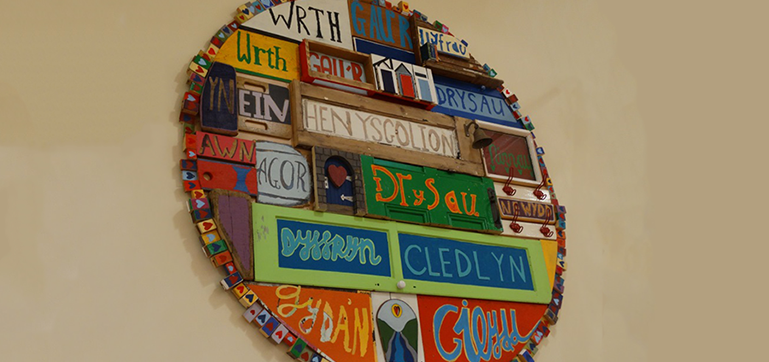
While the school was being built on the new site, pupils and staff visited the site every term to see developments in the construction.  There was also time to experience periods at the new school once the building was complete.  This enabled pupils to create their own rules and to ask what pupils would like to see at the school.  A lead creative school project was also in operation, and this enabled pupils to create a poem together – “Cau ac Agor” (Close and Open).  This can be seen at the school as an impressive mural on which the poem is written – every word on an individual piece of wood which came originally from the three schools.  As a result, the theme of “Belonging” was a basis for all work during the first term.

What impact has this work had on provision and learners’ standards?

As a result, the school’s identity was established effectively.  Consistent steps had been taken previously to enable children to settle quickly and without fuss by listening to the pupil’s voice, and this was reflected in their standards.

How have you shared your good practice?

Good practice has not yet been shared with other schools.

Improvement Resource Type: Effective Practice


Information about the school

Denbighshire portfolio PRU is an all age pupil referral unit for pupils experiencing social emotional and behavioural difficulties (SEBD), operating across three sites.   The main site at Ysgol Plas Cefndy houses foundation phase to key stage 4.  The Ruthin site houses the Stepping Stones provision for pupils in the primary phase.  This provides short-term and part-time placements.  An additional site in Rhyl houses the Milestones provision for a group of key stage 3 and 4 pupils who present with high levels of anxiety.

Around 80% of pupils are eligible for free school meals.  Fourteen per cent of pupils have statements of special educational needs (SEN) and all pupils are on the SEN register.  Pupils are predominantly from English speaking homes.

Context and background to the effective or innovative practice

Ysgol Plas Cefndy is one service encompassing the local authority PRU, alongside a county-wide outreach support team, providing support to schools from nursery to Year 11.  Having an outreach team, which can be called upon to work in the PRU at any time, is an integral part of the work done by the PRU and is at the heart of forming strong and effective links with mainstream schools, prior to, during and post-placement.  The PRU aims to return pupils to mainstream education or to further education, training or employment.

Description of nature of strategy or activity

Before a pupil is considered for a PRU placement there is an agreed graduated response, which schools follow to try to keep pupils in mainstream school.  The PRU supports this response through the outreach services it provides.  Members of the team work alongside schools, providing crisis intervention, group and 1:1 sessions, advice to staff and bespoke training.  The PRU also has an open door policy encouraging school-based staff to visit the PRU to observe best practice.

By the time a pupil is referred for placement, the PRU will already know them.  PRU staff will have an understanding of the pupil’s barriers to learning and will be able to tailor the curriculum to help them overcome these barriers and make a successful return to school, or college for those in Year 11.  Any staff who have worked with the pupils in their mainstream setting will be involved in discussions with the PRU staff to ensure that all relevant knowledge is shared.  This includes the development of ‘One Page Profiles’ throughout all classes.

Pupils in the primary department spend half-days in the PRU and half-days in school.  This approach is key to ensuring that pupils still have a sense of belonging to their mainstream school and this has been a significant factor in the success of the programme over many years.

Reintegration is carefully considered during ‘Pupil Centred Planning’ reviews, where specific aspects of the timetable are considered.  Post-placement, the team continues to support the pupil in a sensitive and agreed way, be it short term in the classroom, sessional support or just checking in with the pupil during the week.  The outreach staff will continue to be involved with pupils and support the schools for as long as necessary, and this often includes transition support for pupils as they move on to secondary school.

The skills needed for reintegrating back into mainstream are part of the curriculum that is followed.  For example, the skills that pupils need to function and flourish in mainstream school are carefully considered, through approaches such as growth mind set and mindfulness, moving-on approaches and therapeutic play sessions for all age groups. Throughout their time in the PRU, staff are always referencing the importance of being back in mainstream, which is always their ultimate aim.

What impact has this work had on provision and learners’ standards?

The outreach team is at the heart of the PRU.  It provides flexibility and quick response when a pupil is in crisis and has become the most effective provision for pupils to make reintegration a success.  It also allows the PRU to make the best choice for individual pupils, when identifying which member of the team will continue to be their contact on return to mainstream.  Leaving the PRU is not the end; it is just part of a continuum of support that only stops when everyone agrees it is no longer required.

The PRU can also ensure that a strong link is maintained with the staff who have supported them, should their help ever be needed.

Over time, a very high percentage of the pupils from the PRU have returned to, and maintained their placements at mainstream schools.  This also means that more pupils can access the PRU and its bespoke curriculum, which gives pupils the skills and confidence that they need to make a successful return to school.

How have you shared your good practice?

The strong links with mainstream schools, who each have designated outreach teachers and support staff, help the PRU to share good practice with all of its schools.  This extends to sharing resources and upskilling school-based staff to use these in their own settings.  School-based staff are also encouraged to visit the PRU.

The PRU is part of the wider PRU network across North Wales where the sharing of good practice is at the heart of the agenda.

Staff from PRUs and Inclusion services across Wales are always welcome visitors, giving them an opportunity to see what is done, and for the PRU to gain new ideas that can be introduced in its setting.

Improvement Resource Type: Effective Practice


Context and background to the effective or innovative practice

The leader’s vision is based firmly on providing exciting early education of a high standard for children in the area.  She has detailed knowledge of child development, in addition to a strong understanding of the principles of the foundation phase.  All practitioners have high expectations for the children and work as an effective team when discussing children’s achievement in order to plan the next steps in their learning.  They ensure that all children are happy and safe and make good progress, whatever their ability.

Members of the management committee fulfil their roles highly effectively as they know the setting exceptionally well.  As a result, they support the setting robustly in order to ensure standards of provision of the highest quality.  They respect practitioners’ expertise and appreciate the activities and progress that children achieve at the setting.

Practitioners, the management committee and parents play an integral part in self-evaluation procedures, which are honest and prioritise teaching and learning.  All stakeholders contribute towards setting clear success criteria, which are based on children’s progress.  This leads effectively to very positive developments in provision.  

Description of nature of strategy or activity

The leader’s experience and understanding of the principles of teaching and early education provision is masterful.  Due priority is given to the learner’s voice in all aspects of the setting’s work.  Practitioners listen carefully to the children and use children’s ideas as a prompt for themes, learning areas and displays.  They include families when planning the theme, by seeking and benefitting from the expertise of parents and members of the local community.  Practitioners weave literacy and numeracy activities skilfully across the areas of learning, including challenging activities that are relevant to the outdoor area.  This has led to highly motivating provision, in which the leader has very high expectations of herself and her colleagues.  Staff share information about daily activities, children’s progress and teaching strategies very successfully.  This ensures that children make excellent progress. 

The committee is highly supportive and proactive in acting tirelessly to support staff with their work.  Lines of communication and accountability between the leader and the committee are highly effective, and this enables the committee’s officers to make informed decisions for the benefit of the children.  As the committee’s officers visit the setting regularly, they have detailed knowledge of standards and teaching and learning strategies.  As they know the setting so well, they understand and support the needs of provision very successfully.  For example, they ensure purposeful resources that focus on raising standards and include specialist resources for individuals.

What impact has this work had on provision and learners’ standards?

As a result of robust leadership procedures, the principles of the foundation phase are implemented very successfully, and children develop their skills highly effectively.

Children’s early oracy, reading and writing skills, in addition to their numeracy skills, are developing extremely robustly.  Activities such as using idioms and mathematical vocabulary when discovering which shoe fits which child in the shoe shop, stretch and challenge children.  This has an effective influence on children’s perseverance and resilience when concentrating enthusiastically on their tasks.  The outdoor area ensures a clear focus on developing specific literacy and numeracy skills.  Practitioners question and play alongside children skilfully.  This nurtures children’s desire to express themselves confidently.

The management committee has a direct effect on high standards by ensuring that all practitioners take advantage of relevant training.  As a result of beneficial meetings, they are aware of the effect of training on children’s standards and wellbeing.  

How have you shared your good practice?

The setting has conducted training for new leaders and foundation phase modules.  Examples of provision and children’s standards of attainment have been shared regularly on a national website for foundation phase teachers and staff at non-maintained settings.  Practice is shared by supporting training for schools.

Improvement Resource Type: Effective Practice


Information about the school

The Tai Education Centre is a local authority run PRU for up to 56 primary age pupils.   It provides education for pupils in the foundation phase and key stage 2 experiencing social, emotional and behavioural difficulties.  There are increasing numbers of pupils who also present with additional needs such as Autistic Spectrum Disorder or Attention Deficit Disorder and a range of other additional needs.  

Almost half of pupils have a statement of educational needs and are eligible for free school meals.

Context and background to the effective or innovative practice

Pupils often begin their journey in Tai Education Centre disengaged from education having had negative experiences in previous schools.  In September 2018, pupils faced an additional challenge as the Centre moved premises.  This initially had a negative impact on the pupils’ wellbeing and behaviour.  At this time, the Centre was also conducting audits and planning for a Curriculum for Wales. 

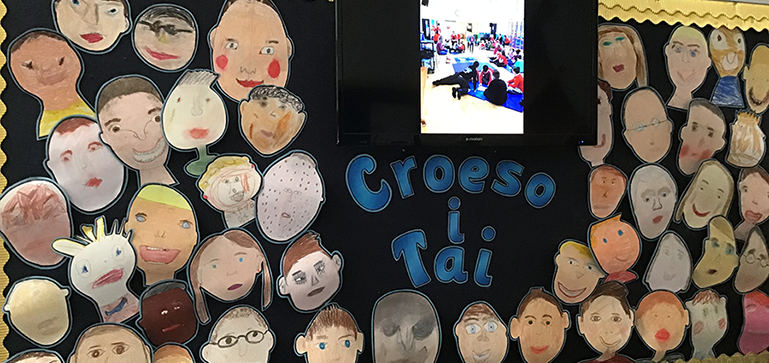
Staff have a strong track-record of successful collaborative working and feel that, in order for pupils to re-engage with education successfully, it is imperative that the curriculum is pupil led and meaningful.  Pupil voice is therefore an integral part of developing the curriculum, with all work adjusted to enable every child to succeed.  The motto ‘Learning Together’ is embedded throughout the whole setting and is paramount to the team work approach, enabling both pupils and staff to learn and succeed.  This whole-school planning approach has been adopted in Tai and the principles of the new curriculum have been embedded throughout the school.

Description of nature of strategy or activity

Tai Centre is a Pioneer School for Professional Learning.  All staff have been involved in training sessions, ensuring equity and consistency about new initiatives and developments throughout the setting.  Staff are passionate about providing pupils with a curriculum that is exciting, fun, relevant, meaningful and appropriate to each individual’s needs.

Pupils undertake baseline assessments on entry to Tai.  This assessment enables teachers to have an immediate understanding of their level of ability.  Pupils then set individual targets along with staff as part of their Personal Development Plan.  These are working documents, which are updated frequently involving all stakeholders, enhancing effective planning.  Half termly pupil progress reviews are held, quickly identifying suitable progress or underperformance.  This enables early identification of interventions to support and challenge pupils effectively.

Planning has been revised so that medium term planning incorporates the four core purposes and the six Areas of Learning Experiences (AOLE) in A Curriculum for Wales, together with the National Literacy and Numeracy, and Digital Competency Frameworks.  Pupil voice is the driving force behind the school’s curriculum planning.  Pupils identify whole-school topics and decide what they want to learn and how they will learn it.  From this, staff share ideas, knowledge and skills within the PRU’s own AOLE groups, which involves all teaching and support staff.  Team work is regarded as paramount towards making improvements in the curriculum offer and outcomes.

Immersion days begin each new topic and involve all staff and pupils embracing a whole-school theme.  All topics focus on ‘real life’ contexts such as using money in businesses.  Typically, the immersion involves staff dressing up in theme related clothes and challenges being set for pupils, classes and specific groups of learners.  This enables each whole-school topic to be introduced in a fun, intriguing, meaningful way for both staff and pupils.

In addition to the themed approach, there has been a whole-school focus on meeting individual pupils’ needs well and creating and enhancing pupils’ independence.  This approach has enabled pupils to be more confident at identifying their own ability and knowing how to challenge themselves.  Many pupils are developing a range of independent skills effectively and using these skills more successfully in their mainstream school.

Parents, carers and stakeholders are also involved in the learning process, with parent courses and ‘show cases’ held regularly.  This has a positive effect in enhancing their own learning and their child’s.  

What impact has this work had on provision and learners’ standards?

Nearly all pupils at Tai Education Centre make particularly strong progress in relation to their starting points, which is often from a very low baseline.  Pupils thoroughly enjoy having ownership of and designing their own curriculum.  This approach has had an extremely positive impact on their learning and behaviour.  Levels of engagement and motivation across the school have improved and nearly all pupils make strong progress in developing their self-esteem and belief in themselves as successful learners.  This is reflected in their points and achievement of targets.  The learning, quality of work and progress of all groups of pupils show that they achieve exceptionally well and nearly all pupils achieve their personalised learning targets.  Reintegration has also improved, as has the behaviour and wellbeing of the pupils, with a reduction in exclusions and behaviour incidents.

There is also an increased confidence amongst staff to share expertise and to embrace their own professional learning.  

How have you shared your good practice?

The PRU works extremely closely its mainstream schools.  Ideas, skills and strategies are shared weekly and schools are invited to all events and reviews.

Training sessions have been delivered within local and regional improvement groups and non-Pioneer schools within the local consortium and learning resource base classes.

Improvement Resource Type: Effective Practice


Information about the school

Ysgol Gynradd Bryn Tabor is situated in the village of Coedpoeth in the county of Wrexham.  Welsh is the main medium of the school and English is introduced in key stage 2.  There are 274 pupils between 3 and 11 years old on roll, including 36 part-time nursery age pupils.  They are divided into 11 classes.

Over the last three years, the average proportion of pupils who have been eligible for free school meals has been around 12%.  This is lower than the national percentage of 18%.  Around 5% of pupils come from Welsh-speaking homes.  The school has identified around 21% of its pupils as having additional learning needs, which is close to the national percentage.

Context and background to the effective or innovative practice

Ysgol Bryn Tabor has encouraged pupils to express an opinion about school life for a long time.  Various pupil councils, including the school council, eco council, ‘dreigiau doeth’ (the Welsh language charter council) and the digital wizards are hard-working and have a positive influence on the school’s life and work.  They meet regularly and report back to pupils, staff, parents and governors about their activities and findings.  A good example of the digital wizards’ work is the work that they do to organise training for pupils, parents and teachers on how to use robots.  Pupils have also had input into what will be taught at the beginning of a theme or unit of work for some time.  However, the school came to the conclusion that, in order to develop enterprising, creative and ambitious learners who are at the heart of the new curriculum, the ‘pupil’s voice’ needs to be develop as a central part of the school’s vision.

Description of nature of strategy or activity

There are comprehensive procedures to develop the pupil’s voice within the school.  This permeates all parts of the school’s work.  With the arrival of the new curriculum on the horizon, a golden opportunity was seen to experiment more and take a risk, to be creative and innovative. 

The school’s planning principles are effective.  Teachers within the school’s different units work and plan together very successfully.  Plans are based on pupils’ ideas and include a detailed reference to the literacy and numeracy framework, skills to be developed and rich tasks.  At the beginning of every unit of work, pupils are given an opportunity to choose the class’s theme.  In the foundation phase, pupils bring in three objects to represent what they would like to learn more about.  By key stage 2, homework tasks are used to engage their interest.  Pupils vote to see which theme is most popular, and teachers plan carefully and identify what pupils would like to learn during the theme. 

Pupils’ ideas inform the curriculum.  Teachers support pupils to choose, devise and develop challenges for the class areas.  As the process has developed, pupils’ ideas have evolved to become more varied and creative.  Pupils also choose the level of challenge in their tasks.

What impact has this work had on provision and learners’ standards?

Teachers address recent developments in education enthusiastically and look for opportunities to develop professionally.  They work effectively with teachers from other schools and attend relevant training.  This leads to developing new activities to trial and develop within the classroom.  Staff’s commitment to listening to the pupil’s voice and introduce new strategies that promote independent learning contributes exceptionally to high levels of motivation and interest in their work.

Developing these working methods has had a beneficial effect on staff’s professional development.  They show a strong commitment to continuous and sustainable improvements by working and planning together.  This has helped to reduce the workload.

Provision has a very positive effect on learners’ skills.  The effect on wellbeing and attitudes to learning is excellent:

  • Pupils take pride in having a strong voice in what they learn.
  • Pupils’ enthusiasm and commitment to their work have improved.
  • Most pupils have very positive attitudes to learning.
  • Nearly all pupils work extremely conscientious on tasks, concentrate for extended periods and persevere excellently to complete their tasks.

How have you shared your good practice?

The school’s staff continue to work together, plan jointly and share good practice within the school.  The school takes part in school-to-school activities, and staff share good practice at consortium level.

Improvement Resource Type: Effective Practice


Information about the school

Ysgol Pant Pastynog serves the villages of Prion, Peniel, Saron, Nantglyn and the surrounding rural area in Denbighshire local authority.  The school is under the voluntary control of the Church in Wales.

Welsh is the main medium of the school’s life and work, and English is introduced in key stage 2.  There are 78 pupils between 3 and 11 years old on roll, including 8 part-time nursery pupils.

The average proportion of pupils who have been eligible for free school meals over the last three years is around 4%, which is significantly lower than the national percentage of 18%.  Around 80% of pupils come from Welsh-speaking homes.  The school has identified around 13% of its pupils as having additional learning needs, which is lower than the national percentage of 21%.

Context and background to the effective or innovative practice

‘Respect Everyone and Everything’ embodies the mindset of Ysgol Pant Pastynog.  This strong and sustained ethos is at the heart of all of the school’s work and ensures that all pupils are able to express their views and play a leading part in the school’s direction and future.

Older pupils are given opportunities to shoulder various responsibilities, for example by being members of the school council, the eco council and as digital leaders.  Over the last two years, these responsibilities have been developed to include many more learners, in addition to strengthening the ‘child’s voice’.  The school has now developed a number of other opportunities for pupils to shoulder responsibilities, including membership of a church committee, as sports ambassadors and super ambassadors, Welsh language charter ambassadors and as road safety officers.  Pupils are given excellent opportunities to guide the direction of the school and set a clear vision and strategy for the future.

Description of the nature of the strategy or activity

Staff have supported pupils in order for them to be able to hold meetings independently and discuss jointly in multi-committee meetings in order to facilitate projects and ensure better continuity and progression in the school’s work.

It was decided that the school’s oldest pupils should remain in ‘post’ for two years and continue in the role of ‘mentor’ from their previous post.  The fact that pupils are able to stay in ‘post’ for two years and mentor new members means that consistency, progression and development have a highly positive effect.  Through the work of various committees, the pupil’s voice at Ysgol Pant Pastynog is at the heart of the school’s decisions and is central to the experiences and education of all pupils.

What impact has this work had on provision and learners’ standards?

There is an obvious effect on pupils’ independent working and thinking skills.  In preparing for the new curriculum, pupils at Ysgol Pant Pastynog are developing as independent learners who make their own decisions about the direction of lessons, the experiences that they would like to have and how to learn.  Pupils have much greater ownership of their schemes of work and, as a result, their enthusiasm and desire to learn are significant.  This can be seen as external agencies hold workshops at the school and observe how skilfully and confidently pupils solve problems independently.  Pupils’ self-confidence can also be seen to have developed, and pupils of all abilities are more willing to take risks and try more challenging tasks.

By being members of a ‘committee’, pupils are given a wide range of experiences, including meeting the governors, parents, councillors, officers and other members of the community.  This means that pupils’ communication skills have improved effectively and they discuss, listen and develop new ideas much more confidently.

How have you shared your good practice?

Every time new visitors come to the school, a specific committee of pupils guide them around the building.  The choice of ‘committee’ depends on the purpose of the visit, as pupils’ expertise is important to what is discussed.  This practice is also shared with governors, parents and the wider community through information sessions and specific meetings.  The school also works with committees and councils from other schools, for example Llanrhaeadr Community Council’s recycling project and the St Dyfnog’s Well project.