Effective Practice Archives - Page 41 of 66 - Estyn

Improvement Resource Type: Effective Practice


Improvement Resource Type: Effective Practice


Information about the school

Gwenllian Education Centre is an independent special day school for children and young people who have diagnosis of autism or an associated condition.  Pupils are aged between 5 and 19 years.

The school is committed to provide pupils with the best individualised educational experiences and opportunities possible, and ensure that these enhance their lives.  

Context and background to the effective or innovative practice

All pupils at the school experience significant difficulties with communication.  This ranges from pupils with no speech or form of communication, to pupils with many positive skills and extensive language, but who exhibit difficulties when interacting with others and mastering social skills, for example when turn-taking, requesting assistance or negotiating.  Most pupils have previously exhibited challenging behaviours such as aggression towards others, property destruction and self-harm. 

For many of the school’s pupils, a wide range of traditional methods to develop their communication (for example, picture exchange systems, signing, objects of reference, switches, voice output devices, choice boards, and speech assistive technology or signing) have often previously been unsuccessful.  As a result, senior managers decided to focus on pupils’ individual strengths and their strongest means of learning, including using visual, kinaesthetic and auditory means, to stimulate and motivate their interest in communication. 

The long-term goals of this approach are to:

  1. Reduce behaviours that challenge by increasing functional communication
  2. Enable pupils to independently ask for their wants and needs
  3. Support pupils to communicate using speech
  4. Continue to develop pupils’ communication skills by increasing their vocabulary and sentence structure
  5. Support pupils to develop more advance communication such as asking questions

Description of nature of strategy or activity

The senior management team developed a framework to assist staff to teach communication skills to the pupils.  The framework highlights key areas to consider for individual pupils and a flow chart of the steps required to develop their skills.  The model ensures that staff communication is functional and efficient in order for pupils to rapidly develop their skills.

Initial assessment

This indicates to staff the most likely effective mode of communication for each pupil.  For non-verbal pupils, this is nearly always an augmentative form of communication.

Understanding and developing pupils’ motivation to respond

In order to develop communication, it is important that time is spent developing preferred items or activities that the pupil is motivated to engage with.  When developing these items, the school wants to ensure that they satisfy a range of motivations such as auditory, visual, edible, movement-based etc.  It is important that the pupil has a wide range of preferred items so that if they satiate on one item, there are other items that they can continue to ask for. 

Controlling the environment

Once preferred items and activities have been identified, it is important that the pupil’s access to the items is controlled.  This is because if the pupil has free access there will be no motivation to ask for the items.  Items can be controlled by storing them on shelves, in clear food bags or plastic boxes, for example.

Communication training

Once the pupil’s access to the motivating items is controlled, the school begins communication training.  This involves allowing the pupil to sample the items on offer to establish which one they would prefer to interact with.  The specific strategies and type of prompting used will depend on the mode of communication to be taught (i.e. picture exchange, signing, etc.).  The school’s methodology includes fading out the use of prompts over successive trials.  To ensure success during the training period, the pupil is exposed to hundreds of trials throughout the day. 

Communication as a priority

The school prioritises communication training for pupils at school.  Most learning sessions include a focus on communication.  The skills and focus may vary but the development of communication will have significant implications for learning in other areas.

Consistency and generalisation

Staff are encouraged to implement the training consistently and accurately.  Throughout the day, hundreds of opportunities are provided for the pupil to rehearse asking for items or activities.  The school ensures that the pupil transfers the skill of requesting their chosen item across multiple environments, with different preferred items or activities and with a range of staff. 

Monitoring progress and using data to plan next steps

Recording and evaluating data to plan a pupil’s next steps is a key aspect of developing their communication.  The school records the number of prompted and independent requests made per day and graph the results.  It analyses the data to check if the intervention is working over time.  There should be an increase in independent requests and a decrease in prompted requests.  If not, any potential barriers that have prevented the pupil from making progress are considered, and methods or the motivating items or objects are adapted. 

Developing speech

Once communication is underway and the pupil is making hundreds of independent requests per day without being prompted, the school begins developing their speech production.  A multi-disciplinary team approach, including class teacher, speech and language therapist and school’s behaviour analysist, ensures that staff work together to plan an individual programme to encourage, reinforce and shape pupils’ speech and develop their language acquisition. 

What impact has this work had on provision and pupil’ standards?

The introduction of the communication planning framework has impacted on the following areas:

Communication

All pupils have made significant improvement with their communication skills.  Nearly all pupils can initiate requests and conversations with reduced support.  They communicate more regularly throughout the school day.  They are more confident when communicating and are generalising skills to a wider audience and environments.  

There has been an increase in pupils’ use of speech and most non-verbal pupils are vocalising more consistently and regularly.  A few pupils now say words independently and use words to communicate.  These pupils are more aware of each other and in some cases more willing to tolerate being with each other.  A very few pupils have made significant progress and can now enjoy the company of their classmates.

Behaviour

As pupils’ communication skills have improved, there is a clear reduction in their undesired behaviours.  Generally, pupils are calmer and less frustrated.  This in turn has a positive impact throughout the school as the positive behaviour contributes to a positive, calm learning environment.

Independence

The development of communication skills enables pupils to have more control regarding many aspects of their school day and beyond.

Co-operation, improved learning and skill development

As communication improves, pupils learn to engage and co-operate with school staff.  They access their learning effectively and achieve the knowledge and skills to support their future. 

How have you shared your good practice?

The school shares its good practice through workshops aimed at parents and by encouraging other schools to observe the provision in place.  Open workshops are available for schools, parents and other settings to share our good practice.  Specialist staff are available to work directly with schools and families to support with developing communication plans based on our practice.

Improvement Resource Type: Effective Practice


Information about the school

Myddelton College is a co-educational independent boarding and day school for pupils from 7 to 18 years, located in Denbigh, North Wales.  The school was founded in September 2016 and is administered by IQ Education Limited, a company that has another school in England and links to several schools in China. There are currently 215 pupils in the school.  These include 34 pupils in the primary section and 179 in the senior section, including 43 in the sixth form.  Around 68% of pupils are day pupils who live in Denbighshire, Flintshire or Conwy and about 32% are international pupils drawn from 16 different nationalities.  Almost 23% of pupils come from minority ethnic groups.  About 32% of pupils speak English as an additional language.  A very few pupils speak Welsh as a first language or to an equivalent standard.  The school does not aim to make pupils bilingual in English and Welsh, but does offer opportunities for pupils in key stages 2 and 3 to study Welsh second language.  A very few pupils have a statement of special educational needs.  The school offers additional learning support to a very few pupils, mainly to support their literacy development or general learning difficulties.  The school describes its ethos as being based around ‘21st century learning’ and ‘the three pillars of resilience, scholarship and fellowship’. The school places great emphasis on developing the whole person ‘to be independent learners in the globalised modern economy’.

Context and background to the effective or innovative practice

Myddelton College strives for pupils to leave education with a lifelong interest for participating in physical activity to benefit their health and wellbeing.  When the college opened, it wanted to encourage pupils to develop their abilities through nurturing a growth mind set by helping them to understand that hard work, effective strategies and input from others can help them to improve.  To achieve this aim, the college’s director of sport and outdoor learning created an innovative ‘Learning Through the Outdoors’ programme, making use of the natural location of North Wales and proximity to Snowdonia as an engaging learning environment. 

The programme is founded upon the Hahnian approach to holistic education, which coheres with the college’s ethos and takes a multi-stage approach.  The strategy and stages start with framing the learning experience to ensure that pupils understand what they are striving to achieve while learning through the outdoors, rather than merely participating in an activity.  This approach includes the ‘21st century learning skills’ of self-regulation, through looking after your physical and mental wellbeing and managing your own emotions.  The school observes pupils’ apprehension in this phase of the process, such as a fear that they cannot achieve the task set, which is not avoided or washed over as it is vital to reflect upon in the final few phases of the activity.

The second phase is the doing part, taking on the challenge, working with others and overcoming whatever the mountain weather throws in.  Teachers facilitate the learning experience through working with the group dynamics and challenging individuals based on their own development through elements such as leadership and problem solving.  The third phase, the review, generally takes place back at school.  It is vital to the process for teachers to facilitate the review: what happened, what was done well, what would be done differently next time, who provided support and how effective this was.  The key part is the final phase – transference – how can this be made relevant beyond the outdoors?  Are these learning outcomes applicable to home, school and the future?  If you did not think you could do it but you did, what does this tell you about other things that you think that you cannot do?   These type of questions sow the seeds of self-confidence, self-belief and resilience.  Without this, participation would just be activities and not bring the full and true value for the development of young people.

Description of nature of strategy or activity

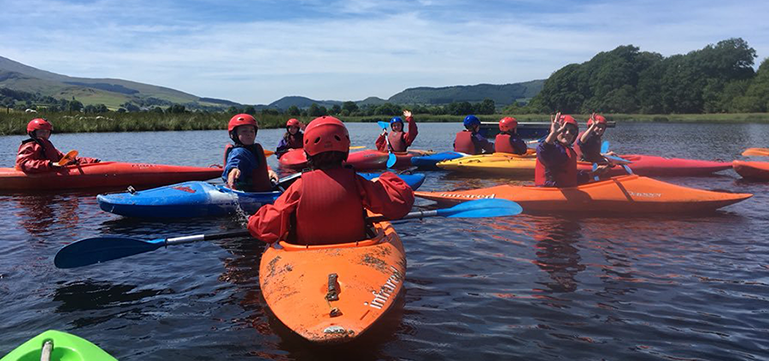
Pupils participate in the learning through the outdoors programme for a whole day every other week as part of the curriculum timetable.  The programme focuses on personal development in a group setting within a challenging outdoor environment.  Example activities include mountain walking and navigation, expedition skills, climbing and abseiling, bush-craft and water sports.  However, the activities are secondary to the primary objectives of the programme’s four main components:

•           Skill development

•           Cross curricular learning

•           Personal and social development

•           Creating memories

Pupils have their own progress record, which centres on each component above, and where they record and monitor their development individually, and, crucially, personalise their goals for their next session.

Central to the programme is that each session and each year group progresses and provides for the Hahnian process of ‘Training, Main and Final’ stages to be embedded in micro (individual) and macro (whole-school) perspectives from the primary section through to the sixth form.  ‘Training’ is when the school teaches the skills that pupils need to be confident and successful individuals. ‘Main’ is where the school gives support for them to practice and develop these further within a group and ‘Final’ is where they put these to full use with limited input from teachers. 

All pupils learn first aid and CPR training as part of the programme.  In the primary section, pupils work towards the National Outdoor Learning Award, learning how to make fire, use knives, make bread and build shelters.  Years 7 to 9 participate in the John Muir Award, focusing on conservation and exploring.  Engaging in the outdoors helps to protect these environments for the future, through pupils’ ownership and connection to nature.  Pupils from Year 9 upwards participate in the Duke of Edinburgh’s Award, learning navigation, camp craft, decision-making as part of a small team, and leadership in challenging situations. 

What impact has this work had on provision and learners’ standards?

Pupils enjoy and are eager to learn during the learning through the outdoors programme.  During the programme, they develop important life skills such as strong resilience and beneficial personal and social skills, including strengthening their organisational, time keeping and teamwork skills successfully. 

Most pupils recognise that several activities can push them out of their comfort zones and they learn how to manage their fear and expectations well.   Pupils who have the greatest difficulties in the traditional classroom setting tend particularly to enjoy the challenging outdoor session, and develop confidence that they transfer to a more positive attitude to learning in the classroom.

Through the learning through the outdoors activities, pupils develop the ability to judge and make risk assessment a part of their everyday life.  They learn how to recognise hazards, what the risk is and what can be done to reduce the risk.  These transferrable skills help pupils to take more managed risks in their own learning in different contexts.   

All activities are co-educational, which shapes an attitude towards equality and inclusion, evidenced in participation levels and feedback from parents about the adventures in which their child has participated outside of school.

Improvement Resource Type: Effective Practice


Information about the school

Ysgol Gynradd Mynach serves the village of Devil’s Bridge and the surrounding area in the catchment area of Aberystwyth, Ceredigion.  There are 33 pupils on roll between 4 and 11 years old, who are organised into two classes.  Welsh is the school’s main language and around 33% of pupils come from homes in which Welsh is the main language.  Around 15% of pupils have special educational needs and around 6% are eligible for free school meals.  The headteacher is in charge of two nearby schools (Ysgol Pontrhydfendigaid and Ysgol Syr John Rhys).  The school was inspected in May 2019.

Context and background to the effective or innovative practice

The school celebrates the fact that it is a small rural school that provides a high standard of education by promoting a very strong sense of belonging and community.  One of the main challenges of small schools is the mixed age classes, which include 4 year groups and a very wide range of ability levels.  The school decided to promote strategies that would encourage pupils’ confidence and independence in their learning by nurturing independent, ambitious, capable pupils who are ready for lifelong learning.

In order for teachers to be able to focus and raise the standards of specific groups of learners, a number of strategies have been adopted that will enable pupils to develop as independent learners.

Description of nature of strategy or activity

Various strategies to encourage pupils to become independent learners include setting goals for their work, setting success criteria and assessing their own progress.  This leads to being able to self-control their motivation towards learning and prepares them to take joint responsibility for the way forward.

Pupils guide planning and choose themes to study each term.  The pupil’s voice has a prominent place within the school, and teachers listen to and act on pupils’ ideas and investigative questions.  This engages pupils’ interest in learning from the outset and is a key part of nurturing independent learners.

Teachers plan purposefully and ensure rich challenges and tasks, which include a large number of everyday experiences.  Pupils see the purpose in learning and relate to the tasks.  They have a great deal of interest and curiosity. 

Foundation phase pupils are immersed in developing independence skills from a very early stage.  Pupils were seen to be too reliant on support from adults and they needed to develop thinking and independence skills in order to encourage them to take responsibility for their own learning.  Through careful planning, they are encouraged to try, solve problems, make decisions, think and investigate.  The teacher provides regular opportunities for pupils to transfer knowledge and apply their skills to meaningful activities.  An example of this is Year 2 pupils presenting work such as a digital information leaflet on a tablet through an electronic presentation, a word processing package or by using green screen.  As a result of these daily experiences, pupils use thinking skills, make decisions, plan and manage their time.  They experience personal success, which helps to develop their self‑respect, confidence and independence.  This is a core element of teaching in the foundation phase.

Teachers and pupils have planned the marking policy jointly, and pupils assess their own work and that of their peers maturely.  Nurturing pupils to be able to give each other constructive feedback helps them to develop analytical thinking skills.  Nearly all pupils respond to this very positively. 

The next step in order to promote pupils’ independence was to develop a ‘Dysgu Dawnus’ scheme in key stage 2, which gives pupils opportunities to guide learning each week.  In pairs, pupils plan, prepare and deliver lessons.  This role-reversal gives pupils the motivation to prepare rigorously in order to explain and convey information effectively to their peers.  Pupils come to understand that the key to better explanation is deeper understanding.  Having empathy when reversing roles in this way leads to enriching and improving individuals’ recognition of each other.  Pupils enjoy doing this and take it very seriously.  They are given an opportunity to role-play, develop a more relaxed learning relationship with each other and encourage emotional growth, in addition to the intellectual development of the teaching and learning process.

‘Dysgu Dawnus’ has been a great success and is now one of the learning highlights of the week.  The teacher and pupils learn something new each time and it has certainly brought a breath of fresh air to lessons!  Even parents are keen to get involved in learning and support pupils to prepare lessons.

What impact has this work had on provision and learners’ standards?

Teachers give pupils a wide range of opportunities to apply their skills in real-life situations, and the strength of provision for digital competence within the school plays a key part in developing all pupils’ independence and perseverance.

Pupils take ownership of their learning.  In the foundation phase, they apply themselves enthusiastically to challenges when choosing their own ways of presenting their work, for example in writing, orally, creatively or digitally.  Pupils of all abilities in key stage 2 succeed in delivering high quality lessons and are encouraged to learn from each other, and develop their own ideas rather than looking to the teacher for guidance.  Pupils can be seen to be succeeding in showing respect and interest in their environment, culture and heritage.

How have you shared your good practice?

In order to share good practice, the school has established a ‘Learning Quartet’ system with the two other schools in the federation.  Teachers and governors of the 3 schools observe lessons jointly, monitor and standardise books jointly and conduct learning walks every term.  This has raised standards of teaching and learning across the schools and is an excellent opportunity to share expertise and good practice in developing all pupils’ independence.

Pupils have the confidence to travel across the three schools to deliver lessons to other pupils.  Sharing good practice with pupils and teachers from nearby primary schools has strengthened pupils’ independence across the schools in the federation and beyond.  A number of primary school teachers within the authority are beginning to emulate ‘Dysgu Dawnus’ in their own schools.

Improvement Resource Type: Effective Practice


Information about the school

Ysgol Ffordd Dyffryn is a mainstream primary school set in the heart of the seaside town of Llandudno in the county of Conwy.

The school serves the neighbouring area, but a few pupils come from other areas of the town.  It provides education for 180 pupils from three to eleven years old, including 19 nursery children who attend in the afternoon only.  

The school hosts an on-site foundation phase Resource Base for pupils from across the local authority with social and emotional difficulties and a key stage 2 Resource Base for pupils across the local authority with autistic spectrum disorder.

The three year average for pupils eligible for free school meals is around 44%.  This is significantly higher than the Welsh average of 19%.  The school has identified about 23% of pupils as having additional learning needs, which is close to the average of 21% for primary schools in Wales.  

Context and background to the effective or innovative practice

The Ffordd Dyffryn ‘Leadership for All’ approach came about following the appointment of the new headteacher and deputy headteacher.  The new senior leadership team (SLT), including the governing body quickly identified the need to empower staff at all levels following the school being placed in special measures by Estyn in 2012.  A clearly defined leadership structure was established, the ambition for high standards were set, and through a coaching and modelling approach staff were supported with their continued professional development.

The senior leadership team have steered a highly effective improvement journey with the wellbeing of all pupils and staff at the heart of the process.  They identify strengths in individuals and encourage professional learning opportunities for all.  There is a collaborative working ethos amongst all staff where they feel their contribution and skills are valued.

The headteacher has a clear understanding of the strategic importance of building leadership capacity at all levels throughout the school.  Senior leaders have a strong commitment to their own personal development, and staff at all levels strive to enhance their own leadership practices.  All staff show a commitment and dedication to the ethos and vision of the school – ‘Inspire, Aspire, Make a Difference.’

Description of nature of strategy or activity

Empowering Staff – At Ysgol Ffordd Dyffryn the culture of empowering all staff to be leaders and to take on responsibilities has transformed the school.  There are clearly defined roles at all levels and staff work collaboratively, knowing their responsibilities within the school.  The headteacher values her staff and recognises their worth, making them feel appreciated and trusted. She is passionate about developing leaders to work collaboratively in order to raise standards.

Over a number of years the school has developed a consistent track record and a very strong commitment to building capacity.  There is a strong culture of distributive leadership and effective training is provided in order to support staff in developing their leadership roles.

Professional Learning – Professional learning opportunities provided to staff have developed teachers’ leadership potential and have subsequently resulted in a high quality pool of leaders who all improve the quality of the school and are involved in disseminating their good practice further afield.  A robust cycle of leadership development for teachers is in place.  In addition, support staff are offered a range of opportunities to further develop their leadership skills.  All of the highly trained teaching assistants take on a leadership role to deliver effective intervention programmes with a focus on nurture, wellbeing and standards.

  • The deputy headteacher has completed the National Professional Qualification for Headship (NPQH) and is currently on secondment as an acting headteacher.
  • Two members of the senior leadership team are part of the Aspiring Heads Leadership Development Programme.
  • The assistant headteacher has completed the NPQH and is currently studying for a Master’s Degree in Special Education (Autism).
  • One Higher level teaching assistant (HLTA) has completed the Graduate Teacher Programme (GTP) and is now a teacher at the school who delivers Teaching Assistants Learning Pathway (TALP) training for the consortium.
  • The headteacher is an Associate of the NAEL, involved in endorsing national leadership programmes and is an NPQH coach for the consortium.
  • Three members of the SLT are part of the Schools Partnership Programme (SPT) with the cluster.
  • One member of the SLT is working collaboratively with the local University on a research-based project on Readiness for Learning.
  • Professional learning for all staff involves working in triads on research-based projects to impact on teaching and learning.
  • Five teachers have completed the Middle Leaders Development Programme (MLDP).
  • A senior teacher is the cluster facilitator for the new Curriculum for Wales.
  • One HLTA is an assessor in Child Care Learning Development (CCLD) who supports staff in gaining their qualifications.
  • Five teaching assistants have completed their HLTA assessment and three are part of the current cohort.

Empowering Pupils – The school cares passionately about the wellbeing of all pupils, and the inclusive nature of the school permeates all aspects of its work.

There is a strong pupil voice, which is reflected through the work of pupil leadership groups.  For example, there are pupil-led policies such as an anti-bullying policy that has been devised by the pupils, which has helped to decrease tensions and improve behaviour across the school.  Working on a research-based project with the local University has influenced positively on pupils’ attitudes to learning.  Pupils have devised a whole-school reward system and a matrix of expectations of behaviour that is visible around the school.

All pupils show a caring and understanding approach to inclusiveness.  Autism Ambassadors are elected for each class and have created resource boxes in order to support pupils with autistic spectrum disorder (ASD) across the school.  The Autism Ambassadors show a passion for sharing awareness across the community, and have set up an entrepreneurial link with local businesses. The pupils have developed and produced a short film to be shared across the county to raise awareness of ASD.

What impact has this work had on provision and learners’ standards?

A clear and robust provision for professional learning, along with clearly defined roles and the belief in all staff to be leaders, has had a positive impact on learners’ wellbeing and has impacted significantly on school improvement and teaching and learning.  

Effective intervention programmes led by highly trained support staff have had a positive impact on pupils’ progress.  For example, the provision for MAT pupils through an intervention programme has significantly raised standards in literacy and numeracy.

In the recent inspection, Estyn identified that pupils’ behaviour in classes and around the school is exemplary.  The positive attitude towards inclusion and equality is acknowledged as a notable strength of the school.  The strong culture of inclusiveness and nurturing provision has an extremely positive effect on pupils’ wellbeing and attitudes to learning.

How have you shared your good practice?

Ysgol Ffordd Dyffryn regularly share good practice through presentations on various aspects of its ‘Leadership for All’ approach across the county and consortium.

Senior teachers regularly support schools across the county in relation to their leadership responsibilities.

In addition, the school shares its good practice with a hands-on approach, supporting schools within its cluster and county by delivering training opportunities to support staff.

Improvement Resource Type: Effective Practice


Context and background to the effective or innovative practice

Over at least five years, senior leaders have developed a strong collaborative culture of reflection and self-evaluation.  This has contributed significantly to forming then delivering the school’s ambitious vision of much improved and consistently high standards of teaching and learning.

Processes to identify areas in need of improvement are robust.  They are embraced by all staff who look to make a positive difference to pupils’ learning and wellbeing.  Teachers view obstacles as opportunities to seek alternative strategies.  The school has used research carefully to ensure that change is viewed as achievable and that staff are not overwhelmed by too many initiatives.  Bureaucracy has been reduced to enable time to be used, as far as possible, on improvement rather than simple compliance.

Description of nature of strategy or activity

Multifaceted, well-considered professional learning has been a key driver to ensuring all staff are supported and challenged well to address areas identified for change.  The investment in an inclusive professional learning programme over the past five years has benefited staff at different stages of their development.  It has included specific programmes and provision for developing leadership in the firm belief that better leaders shape better teachers.  Improved teachers create inspiring and engaging learning opportunities, which impact positively, upon the outcomes achieved by pupils. 

The school improvement plan prioritises carefully a number of practical, key areas for improvement.  These areas have been crafted diligently, but also focus on simplicity of achievement.  The professional learning programme is shaped carefully to ensure that all staff are able to address improvement successfully.

This approach to professional learning has generated a culture of collaboration, open door policy and an understanding of the importance of continuous peer learning.  Joint lesson observations to monitor the impact of strategies being used as part of the professional learning programme, have been instrumental in developing a strong, professional dialogue that focuses upon improvement.  Teachers make relevant adjustments to teaching as a result of this process of support and challenge.  An example of this is how the approaches to marking and assessment that were shared by teachers resulted in a common approach adopted by others. 

The extensive professional learning activities ensure that staff can choose the improvement areas most suited to their needs and the objectives highlighted as part of the performance management process.  These activities align well with the school improvement plan, individual, departmental and national priorities.  The skilful execution of this wide ranging programme has ensures sustained impact on pupil outcomes.  Importantly, many staff contribute to and collaborate in delivering sessions for staff at the school and also staff in other schools, sustaining the school as a learning organisation.

Recently, all staff have engaged in networks to improve an aspect of pedagogy.  Each group is required to reflect upon findings and construct a written evaluative report to share with all staff.  As a result, leaders at all levels are able to reflect carefully and all staff feel involved in improvement priorities.  Discussions about this as part of the performance management sessions provides authentic accountability.  Staff value this as they appreciate the opportunity to talk about their practice and the bespoke nature of the precise professional learning opportunities offered.

The constant reflection, thoughtful, precise improvement planning and the wide range of professional learning opportunities, contribute successfully to the effectiveness of teaching and learning.

What impact has this work had on provision and learners’ standards?

The quality of teaching has improved notably over time.  Teachers are able to articulate clearly how they deliver high quality teaching opportunities as evidenced clearly through lesson observations, the scrutiny of pupils’ work and by listening to learner sessions.  Consequently, standards have been improved and sustained.  Consistently effective teaching, targeted professional learning and careful curriculum planning has secured exceptionally high levels of attainment across all groups of pupils.

Improvement Resource Type: Effective Practice


Information about the school

Headlands School is an independent special school, situated in a residential area of Penarth in the Vale of Glamorgan.  It is part of the Action for Children charity.  The school provides term-time residential and day placements for pupils aged 7 to 19 years with social, emotional and behavioural difficulties and autistic spectrum disorders (ASD).   

The school currently educates 68 pupils from key stage 2 to post-16.  Nearly all pupils come from Welsh local authorities, with a very few from English local authorities.  All pupils have a statement of special educational needs (SEN) and 20 pupils have looked-after child (LAC) status.   

The school’s aim is to develop young people’s wellbeing and independence through an individual approach to education and care.

Context and background to the effective or innovative practice

The question of how to support children and young people who have experienced early trauma and adverse childhood experiences was the starting point for developing our whole-school approach.  The impact for children who have experienced adverse childhood experiences (ACEs) is both well documented by a series of reports by Public Health Wales published in 2014 and highly concerning for those providing services for such children.  Thankfully, what is also well known is the impact of having a trusted adult in the life of the child to ameliorate the consequences of adversity.  Therefore, the school’s aim was to ensure it provides trusting relationships and a trauma-sensitive service to our pupils and their families at all times.

Description of nature of strategy or activity

The strategy proceeded from the vision that the school should be an emotionally safe and secure space where every staff member responds to the needs of our pupils in a trauma-sensitive way.  To achieve this, leaders implemented a significant programme of learning and development on trauma, attachment and relational approaches, and the skills required by staff to implement them effectively.  This is supported by regular reflective practice facilitated by the leadership group.  

The school then embarked on a process of aligning its practice in the classroom with the aim of increasing emotional safety and reducing shame.  It worked in partnership with NHS consultant clinical psychologists to consider the question: what does a trauma-sensitive, compassionate school look like?  The resulting action plan inspired change throughout the whole school.  Staff considered everything from policies and procedures and leadership issues down to moment-by-moment interactions in the classroom, so that all practice was infused with a sensitivity aimed at meeting pupils’ needs in a way which increased safety and reduced felt shame.

The school ensures it can best meet pupils’ needs by prioritising opportunities for staff to reflect on their previous experiences and history.  This helps staff to understand how pupils might be feeling about themselves, the world and others.  To do this, the school uses a psychological formulation approach which allows us to tailor relational-based interventions for each pupil.  These individual interventions sit within a whole school framework that aims to create safety for staff and pupils.  Our philosophy is based on bringing about change through modelling of healthy relationships and positive experiences.

What impact has this work had on provision and learners’ standards?

The school’s evaluation processes have found several interesting outcomes.  They include:

  • An improvement in the quality of feedback to pupils.  Observations noted that teachers now tend to include more acknowledgement of the emotional context in their feedback, for example: “I really enjoyed seeing how you applied the ideas we discussed today and how you kept trying even when they weren’t successful.  That must have been hard.  Why do you think they didn’t work?”
  • An increase in empathy and compassion.  As part of a research project we conducted semi-structured interviews with staff, parents and pupils to find out the impact our approach was having.  A key finding was that pupils are more empathic with each other and as a result are able to manage their emotions and tolerate the classroom environment for longer.
  • An improvement in the quality of relationships between staff and parents and carers.  Parents noted that school staff communicated with them in a way which developed trust and cohesion. This made coping with emerging tricky and complex issues easier and more collaborative.    

How have you shared your good practice?

We have shared our model and practice at an international conference on dyadic developmental practice in England.  We have also facilitated training and workshops at national conferences, schools and universities.

Improvement Resource Type: Effective Practice


Information about the school

Ysgol Gymraeg y Gwernant is situated in the town of Llangollen in Denbighshire local authority.  There are 142 pupils between 3 and 11 years old on roll, including 16 part-time nursery pupils.  Over a three-year-period, slightly below 10% of pupils have been eligible for free school meals.  Around 4% of pupils come from Welsh-speaking homes and very few are from ethnic minority backgrounds.  The school has identified around 21% of its pupils as having additional learning needs.  Welsh is the main medium of teaching and learning, and the aim is to ensure that all pupils are fluent in Welsh and English by the end of key stage 2.

Context and background to the effective or innovative practice

Over a period of time, a significant number of pupils were seen to be having difficulty with independence skills, their ability to take responsibility, in addition to their ability to persevere.  The school was accessing increasing support from behaviour support services, educational psychology and, in severe cases, the mental health team.  An increasing number of pupils who needed support with anxiety, behaviour and developing communication were causing concern and, in some cases, there was a significant effect on their ability to develop academically.  The school had also noticed that because family life was very busy, parents were doing more for their children rather than allowing them time to be independent.  This was reflected in basic expectations from day to day, for example in terms of remembering to bring their physical education kits, reading independently at home or completing and returning homework.  It was clear that pupils were spending more time on digital technology during their spare time, which has a significant effect on their social and communication skills, but more importantly, on their health and fitness.  It was decided that a new strategy was needed to support pupils.

Description of the nature of the strategy or activity

For the last three years, the school has been implementing the ‘Amser Antur’ (Adventure Time) initiative.  ‘Amser Antur’ is held every Friday afternoon for all pupils in key stage 2. 

The initiative’s main objectives are:

  • To encourage independence and perseverance
  • Promote communication and teamwork
  • Increase the number of physical and challenging activities for pupils
  • Improve their fitness, wellbeing and mindfulness

There is a focus on rewarding pupils for completing tasks independently and working well with others.  All pupils have their own diaries to record points throughout the week.  Once the pupil reaches the expected number of points for completing skills independently and working well together, they can join in with ‘Amser Antur’.  During the term, activities included canoeing, yoga, white-water rafting, cooking, swimming, climbing, orienteering, bushcraft, and art and sports activities.

The school has applied for additional grants to support the funding of some activities, in addition to using part of the deprivation grant.  The school has developed a very good relationship with local outdoor pursuits companies who offer a reduced price, in addition to taking advantage of parents’ skills and support.  After seeing the effect of the strategy, parents are also very willing to contribute to activities.

What impact has this work had on provision and learners’ standards?

The strategy is highly successful and pupils’ independence has improved significantly.  A number of other aspects of behaviour have also improved, which the school had not anticipated.  Teachers and staff report that all pupils participate enthusiastically in the adventure activities, many challenge themselves, work well with others and improve their resilience.  They can be seen to be pushing and challenging themselves by taking part in new activities.  Pupils enjoy the activities immensely.  Parents’ feedback has been extremely positive and they report that pupils are keen to complete their home work and read at home.

How have you shared your good practice?

The school works closely with schools in the cluster.  The school’s teachers work closely within triads in this cluster to share good practice.

Improvement Resource Type: Effective Practice


Information about the school

Cwmtawe Community School is an 11-16 school in Neath Port Talbot, serving the lower Swansea Valley.  Most pupils come from Pontardawe and the surrounding area, with about 50% opting to attend the school from outside the normal catchment area.  There are 1,232 pupils on roll.  The school has two specialist teaching units on site, one for dyslexic learners and the other specialising in autism spectrum disorder.

Seventeen point four per cent (17.4%) of pupils are eligible for free school meals.  The school has 40% of pupils on the special educational needs register, and around 4% of pupils have a statement of special educational needs.

About 5% of pupils come from minority ethnic groups and a very few pupils come from homes where English is not the first language.  Around 14% of pupils are fluent in Welsh.

The leadership team consists of the headteacher, who was appointed in 2014, two deputy headteachers, two assistant headteachers and a business manager.

Context and background to the effective or innovative practice

Over the past few years, increasing demands have been placed on curriculum time at key stage 4 with the introduction of the mathematics numeracy GCSE and the Welsh Baccalaureate.  All pupils study core GCSEs in English language and literature, mathematics, mathematics numeracy, double science, Welsh, religious studies and the skills challenge certificate.  Although these core subjects are essential and enable pupils to access nine GCSE qualifications, they have resulted in the school’s option structure being reduced from five to three choices.  Staff were concerned about limiting pupils’ options and the possibility of marginalising some subjects, so expressed a desire to work creatively to provide a wider curriculum offer.  

Description of nature of strategy or activity

Every January, the headteacher and deputy headteacher with responsibility for the curriculum meet with parents/carers and pupils to explain the options process.  Pupils complete a straw poll indicating the subjects they are interested in studying.  This data is then used to construct the options structure, whilst also building in flexibility for pupils to change their choices at a later date. A two-tiered options structure is devised for different abilities, enabling all learners access to a wide variety of appropriate courses.

In the lead up to the straw poll the school’s careers adviser runs careers workshops to help pupils make informed choices.  An extra pastoral lesson has been added to the Year 9 curriculum to facilitate this and to prioritise the world of work.  A team of staff meet with pupils to provide support and guidance with their choices.  Staff use the last three data performance reviews to ensure that pupils select appropriate courses according to their strengths and potential career pathways. 

Having recognised the limitations of three options, staff have fully led curriculum innovation, enabling learners to opt for two subjects from one option line.  Pupils can study engineering in Year 10 and then opt for product design in Year 11; they study art and design in Year 10 before opting for graphic communication, fine art or photography in Year 11.  Those who are talented linguists are able to study two modern foreign languages within one option.  Staff give freely of their time out of school hours to support pupils in studying these additional qualifications.

The school works closely with the local college to offer programmes tailored to the needs of pupils, providing qualifications in hair and beauty, additional mathematics and motor vehicle.  Pupils with additional learning needs access construction courses in a nearby specialist school.  In Year 9, those at risk of becoming disengaged work with a local community project to achieve a level 2 qualification in Work Related Education. 

Once options have been chosen a new timetable is constructed in readiness for Year 9 to roll into Year 10 after the May half term.  This additional block of time enables pupils to have a trial run of their options, with changes made before the start of the new academic year.

What impact has this work had on provision and learners’ standards?

Pupils take ownership, and feel involved in creating the options structure through the straw poll process.  At an early stage they are encouraged to research appropriate courses, consider potential career pathways and take full advantage of the expertise of the school’s careers adviser.  They are engaged in learning, accessing a range of courses which are appropriate to their needs and interests.  The innovative curriculum structure ensures that the school contests national trends – there is strong uptake in modern foreign languages and triple science continues to flourish.  Due to the demands of this year’s straw poll, triple science is offered across all three options.  All learners, including more able and talented, those at risk of becoming disengaged and those with additional learning needs, have access to a creative and flexible curriculum that is tailored to meet their individual needs.  All these factors contribute to very strong performance outcomes at key stage 4 for pupils of all abilities.      

How have you shared your good practice?

The school has shared its innovative curriculum with the local authority and the regional consortia. 

Improvement Resource Type: Effective Practice


Information about the school

Cwmtawe Community School is an 11-16 school in Neath Port Talbot, serving the lower Swansea Valley.  Most pupils come from Pontardawe and the surrounding area, with about 50% opting to attend the school from outside the normal catchment area.  There are 1,232 pupils on roll.  The school has two specialist teaching units on site, one for dyslexic learners and the other specialising in autism spectrum disorder.

Seventeen point four per cent (17.4%) of pupils are eligible for free school meals.  The school has 40% of pupils on the special educational needs register, and around 4% of pupils have a statement of special educational needs.

About 5% of pupils come from minority ethnic groups and a very few pupils come from homes where English is not the first language.  Around 14% of pupils are fluent in Welsh.

The leadership team consists of the headteacher, who was appointed in 2014, two deputy headteachers, two assistant headteachers and a business manager.

Context and background to the effective or innovative practice

The school has a strong tradition of professionally developing staff at all stages in their careers.  The headteacher, two deputy headteachers, one assistant headteacher, most middle leaders and many teaching assistants have all benefited from the school’s various professional development programmes for career progression.  These programmes include training for accreditation through training programmes for outstanding teachers and teaching assistants and improving teachers and internal job shadowing opportunities.  Staff regularly take the lead to deliver INSET sessions to share effective practice.  All teachers coach and support each other with lesson planning and reflection.     

Description of nature of strategy or activity

In the summer term the senior leadership team identify shadow post roles based on whole school priorities.  The shadow posts roles are advertised for all staff to apply in readiness for starting in the new academic year and run from one to two years, depending upon the nature of the role.  Examples of roles include assessment, recording and reporting; primary transition; coaching at key stage 3; curriculum planning and subject leadership.  Shadow post role holders have support from a designated lead member of staff, for example a senior leader or middle leader, who acts as a coach and mentor throughout the process.  At the end of the cycle the shadow post holder meets with the lead member of staff to reflect upon their experiences and to receive written feedback, which is integrated within the school’s performance management process.

All teachers and teaching assistants have access to accredited training programmes, which are facilitated in-house.  Those aspiring to leadership positions have participated in external programmes working with the local consortia and higher education institutions to gain accreditation.

Staff often take the lead to share effective practice during school INSET days.  Newly qualified teachers have led sessions on the new professional standards and the new Curriculum for Wales; whilst other staff have led workshops focusing on pedagogical approaches and the digital competency framework.

The deputy headteacher with responsibility for professional development structures a programme for lesson planning, observation and reflection, whereby teachers are placed within triad groups within their Areas of Learning and Experience.  This triad group is comprised of the teacher whose lesson is being observed, the subject leader or senior leader and a colleague from a different subject area who coaches the teacher, providing support with planning and reflection.  Planning time is allocated for the teacher and coach to meet.  Once the lesson is observed by the coach and subject leader/senior leader, the teacher completes a self-reflection proforma.  This self-reflection proforma, along with the non-judgemental written observation completed by the coach and subject leader/senior leader, forms the focus for discussion in the feedback meeting.  Once all teachers have been observed a reflection session is held for each Area of Learning and Experience whereby the coaches take a lead in facilitating discussions.    

What impact has this work had on provision and learners’ standards?

Through the various professional development routes, all staff at different stages of their careers gain valuable experiences to lead and take ownership of teaching and learning in the school.  The accredited training programmes and internal training have equipped staff with strategies and skills to become more confident practitioners and be more experimental in planning.  Teaching assistants feel valued and are more confident of their vital role within the classroom, are able to work independently and are less reliant on the guidance of teachers.  They value the opportunity of being able to network with colleagues during training programmes, sharing good practice and strategies.

The job shadowing roles provide opportunities for all staff to gain wider whole school or departmental responsibility and experience.  This has increased staff confidence and enabled participants to be ambitious and successfully apply for posts within and outside the school.

Staff of varying experiences, who have led training on INSET days, appreciate the opportunity to share effective practice, feeling a sense of pride as their work is valued.

The use of coaches who engage with colleagues outside their subject areas, having in-depth conversations about effective and creative planning, has proved to be a real strength of the school. Lesson observation feedback sessions within triad working and Areas of Learning and Experience have further highlighted an improvement in quality and insightful self-reflection, drilling down to the specifics of effective practice.  The school’s ‘open door’ ethos, where staff are willing to be observed to support the professional development of colleagues from within and outside the school, is thriving.  Lesson observations demonstrate teachers’ ability to develop pupils’ metacognition skills, to encourage deeper self-reflection and to promote pupils as independent learners. The high quality teaching and learning in the classroom and the vibrant culture of professional learning has resulted in very strong pupil outcomes over a long period of time.   

How have you shared your good practice?

Through facilitating accredited progammes, hosting INSET provision and through the school’s work as a professional learning pioneer school, the school’s professional development practices have been shared within the local authority, the regional consortia and nationally.  The school has also assisted a number of partner secondary schools and practice has been shared with cluster primary schools. 

Improvement Resource Type: Effective Practice


Information about the school

Trinity Fields School and Resource Centre is the only special school serving the county borough of Caerphilly.  Currently there are 159 pupils on roll aged from 3 to 19 years.  Nearly all pupils have a statement of SEN for severe learning difficulties, physical and medical difficulties, profound and multiple learning difficulties or autistic spectrum disorders (ASD).

Nearly all pupils come from within the county borough and a very few come from a neighbouring local authority.  All of the pupils are from English speaking backgrounds.  Around 40% of pupils receive free school meals.  A very few pupils are looked after by the local authority.  

In addition to the provision on the Trinity Fields site, the school operates two satellite classes at Cwm Ifor Primary School and St. Cenydd Community School.  A further resource centre, led, managed and based at the school, works in partnership with the local authority to provide a range of services to support pupils with additional learning needs in mainstream schools across the local authority.  These services include the Caerphilly Autistic Spectrum Service, health based clinics, an outreach and inclusion service, youth and leisure activities, and respite and home support services.

Context and background to the effective or innovative practice

The local authority has engaged with all stakeholders to undertake a full review of its SEN provision.  From the outset the local authority made a firm commitment, supported by headteachers from across the local authority, to continue to develop its only special school as the hub of these developments with other SEN services closely linked to the hub.

As part of this approach, the local authority continued to provide funding to the school following the successful “Unlocking the Potential of Special Schools” grant to further develop the role of the school to support SEN developments across the local authority.  

Caerphilly’s ongoing financial commitment to Trinity Fields has enabled the following highly effective and valued services to be developed:

Outreach teacher/Home-school support worker

Trinity Fields employs a full-time outreach teacher and a ‘year round’ home-school support worker.  Both of these posts involve very close partnership working with other schools across the local authority and with parents, carers and wider family members.

The work of the outreach teacher and home support worker ensures that pupils benefit from an integrated approach that enables strategies implemented successfully at school to be supported within the home.  In turn, the implementation of positive home routines, for example at bedtime and morning, impacts positively when pupils come into school.   This greater contact between school and home also enables families to benefit from support and to access specialist funding streams and signposting to other organisations and services.   Overall, parents and carers feel that the service provides them with a valuable link to talk through wider issues and ensures that their voice is heard.

Caerphilly Autistic Spectrum Service

Caerphilly Autistic Spectrum Service (CASS) service offers support to children and young people aged 2-19 years with a diagnosis of ASD, who attend mainstream schools or SRBs living in Caerphilly County Borough Council.  It is a unique service that combines the more traditional outreach teacher role with home and communication support for children, young people and their families.  This integrated model focuses on developing an effective multi-agency approach to supporting young people, their school and families.

CASS recognises that children and young people diagnosed with ASD require all of those who are involved in supporting them to understand their needs and provide consistency and stability in all aspects of their lives.  The service has developed into a highly effective service that provides an innovative package of support to young people, their families and schools.  This support includes the following:  

Training: CASS offers a range of recognised and licensed training courses, which families can attend at the point of diagnosis to support them in understanding their child’s diagnosis and developing their strategies to support them in the home. CASS also runs a range of bespoke training courses for professionals working with pupils with ASD.

Home support: Home support includes working directly with children and young people to implement strategies and approaches advised in training to parents and carers.  Alternatively, support may be based around advice and the loaning of resources, or supporting the family with referrals to other appropriate services.

School support: CASS provides support to maintained schools to help them to meet the needs of pupils with a diagnosis of ASD.  This support may include modelling good practice, advice, preparing or loaning of resources and staff training.

Communication support: This provision often involves working closely alongside speech and language therapists.  Our communication support worker uses a range of strategies to promote communication at home and at school.

Leisure and holiday services

Our leisure and holiday services are part of a service commissioned by Caerphilly Children’s Services.  The school provides high quality, short-term respite, play and youth work for children and young people (8-17 year olds) with severe and complex learning and physical disabilities and difficulties.  A safe and stimulating environment is provided for children and young people to have fun participating in activities of their choice.  A highly skilled team supports the children and young people to enhance their social and independence skills whilst accessing a range of opportunities within the school local community.

Services are registered for a maximum of 20 children and young people. There are currently 100 spaces available between ‘Saturday Club’ and school holiday schemes, with the service working with about 65-75 families throughout the year. 

Specialist respite services are also provided for a maximum of three children and young people who are referred by social services.  This close partnership working between the school and social services ensures bespoke support for the child when the family is experiencing very difficult times and there is a risk of family breakdown.

Satellite bases in mainstream schools

The school was approached by the local authority several years ago to support some of its SRBs in mainstream schools.  This support involved recruiting teachers with relevant experience and specialist pedagogy to lead SRB classes.  As part of this support, the school has developed bespoke partnership agreements with the local authority and host schools, outlining the roles and responsibilities of the host school, the local authority and Trinity Fields School.  For example, the school retains the line management (including performance management and professional learning) of teachers within these satellite bases; and the pupils remain on roll of the host school.

This approach has helped to facilitate the sharing and development of specialist pedagogy, as well as ensuring pupils in the SRBs have access to more specialist teaching and resources.  

Trinity Fields satellite bases in Cwm Ifor Primary and St. Cenydd Community School

The governing body of Trinity Fields has worked closely with the local authority and governing bodies of two local schools to establish satellite classes in a primary and secondary school.  In these satellite classes the pupils remain on the roll of Trinity Fields with all staff working in the satellite base employed by Trinity Fields school.  Bespoke partnership agreements that document the roles and responsibilities of the host school, local authority and Trinity Fields underpin this innovative approach to meeting the needs of pupils with SEN.

The close partnership working between Trinity Fields and mainstream schools has helped to supporting wider SEN developments within the three schools, particularly to share expertise and teaching approaches.  The confidence, independence and communication of Trinity Fields pupils have improved, while pupils in the mainstream schools have developed their understanding of disability and its effects.  Finally, the behaviour of all pupils has improved.  Mainstream pupils are far more mindful of Trinity Fields pupils, particularly when on the playground; they include and support pupils as required.

How have you shared your good practice?

Our highly effective collaborative practices have been widely shared with colleagues within the local authority, consortium and across Wales.