Effective Practice Archives - Page 37 of 66 - Estyn

Improvement Resource Type: Effective Practice

Improvement Resource Type: Effective Practice


Information about the setting

Tiny Tots Malpas Road is one of three nursery settings, two based in Newport local authority and one situated in Abergavenny in Monmouthshire.  Tiny Tots Malpas was established in February 1997 and has been trading as a private day care setting for 23 years.  The nursery is privately owned and is based in a large converted house that has been adapted to suit the needs of a nursery, over two floors.  Families are mainly from working backgrounds with English being the first language.  The setting operates five days a week, 52 weeks a year from 8:00 to 18:00.  It is registered to care for 64 children per day aged from birth to 12 years old.

Context and background to the effective or innovative practice

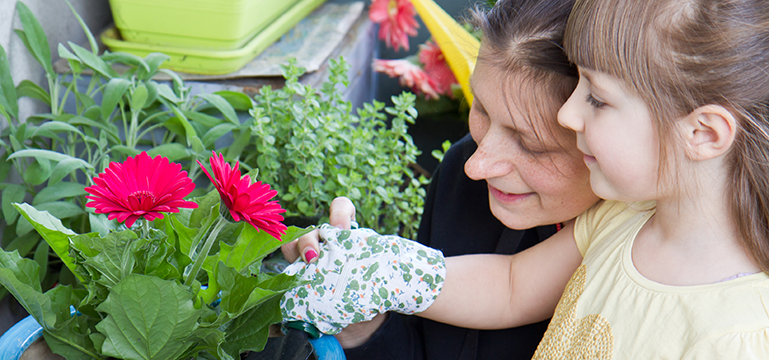
The setting’s main aim in running parental engagement sessions is to give parents the opportunity to see what their children do at nursery, and help them become more involved in their children’s learning and development.  The sessions give parents confidence and a better understanding of different things they could do to support their children’s learning at home.  Staff provide good opportunities for parents to get to know them better, as they discuss what happened when they were doing the home tasks and share ideas for other activities and next steps in learning.  The sessions help to promote continuity in children’s learning experiences between the home and the setting.  This adds to the impact of activities children enjoy in the setting and strengthens their learning.

Description of nature of strategy or activity

Practitioners run the parental engagement sessions during nursery opening times.  There are two different themed sessions per term.  The sessions are run by two members of staff in a separate room in the nursery.  Children and parents take part in the activities together.  There is a clear action plan for each session, so all staff are aware of the aims and intended outcomes.  The setting plans the session to fit in with parents’ working patterns as far as possible.  For example, it offers morning and afternoon sessions and runs sessions on different days over the term.  It considers any health and safety issues, and makes sure that it meets the needs of children not taking part in the sessions.  Parental engagement sessions include woodwork, music and movement, physical literacy sessions, Welsh and cooking.

Each session runs for three quarters of an hour.  Practitioners introduce a skill, and children practise it alongside their parents, such as learning how to throw underarm during the session on ball skills.  There is also an opportunity for children to show parents and families what they have been learning throughout the term.  Practitioners have noticed that parents become more involved in the sessions as their confidence improves, and they use their new-found confidence to continue to practise the skills with their children at home.

At the end of each session, staff ask all parents to complete a feedback form, detailing what they enjoyed, what could be improved, and ideas for future sessions.  When the sessions are planned, practitioners listen well to suggestions from parents and consider their observations of children’s interests carefully.  They make the most of parents’ skills and staff expertise wherever possible, to widen children’s aspirations and experiences.  For example, parents who are doctors, gardeners and members of the armed forces have contributed to sessions.  Staff with a particular expertise lead sessions in music and movement, physical literacy and Welsh.

What impact has this work had on provision and children’s standards?

These sessions have created stronger bonds between families and staff, and parents have a better understanding of what learning in nursery looks like.  This supports the wellbeing of parents and children and contributes to the nurturing ethos of the setting.

Parents are able to see children in the nursery environment working with staff and watch their skills develop.  The children’s and parents’ confidence have grown throughout the sessions and more parents now become more involved in the sessions and will take the lead where appropriate.  

Involving parents strengthens children’s skills development effectively.  For example, children’s Welsh language skills improved following the parental engagement session, where parents joined in the learning and took resources home to practise with their children. 

How have you shared your good practice?

The setting plans to host Practice Worth Sharing events in the summer of 2020.
Improvement Resource Type: Effective Practice


Information about the setting

Meithrinfa Cae’r Ffair Limited is a Welsh medium nursery in the village of Gorslas, near Llanelli.  Nearly all children speak Welsh at home and a very few have additional learning needs.  The setting opened in 2004 and remains under the same ownership and leadership.  Many practitioners have worked at the setting since it opened.

Context and background to the effective or innovative practice

From the outset, the setting leader has had a powerful vision to provide the best quality care and education for children attending the nursery.  She has high expectations of herself, practitioners and the children.  The leader has succeeded in achieving and sustaining high standards of wellbeing, care and development, teaching and learning consistently over a number of years.  To achieve these high standards, the setting leader invests in the physical and emotional wellbeing of all practitioners.  She leads by example and shows that she values practitioners’ contribution to the setting’s success.  This draws all staff together in a strong team, ready to give of their best, work hard and continually improve their practice. 

Description of nature of strategy or activity

The setting leader communicates effectively with practitioners, listens carefully to their concerns and addresses their needs well. 

All practitioners contribute purposefully to evaluating their performance and identifying the setting’s strengths and areas for development.  They have a personal book to record their individual strengths and any aspect of their work that has been particularly successful as well as development targets.  Practitioners share good practice with each other by modelling strategies or activities that have been particularly successful.  This builds their confidence and creates a positive ethos of continuous improvement in the setting.

Practitioners benefit from appraisals twice a year.  They answer ten questions that focus on their strengths and any areas they would like to develop further.  The setting leader listens carefully to any concerns and requests for training, and acts appropriately. 

The leader ensures that all practitioners have a thorough understanding of child development and benefit from regular training.  Training is often delivered to the setting as a whole to ensure maximum impact.  The setting leader attends training alongside practitioners so that she hears the same messages, understands any challenges and can support practitioners effectively to move forward.  This supports the setting to provide innovative and interesting learning experiences highly successfully.  For example, the setting leader and practitioners were inspired following training about ‘playing outside with the elements’ to work out how they could arrange for children to benefit from campfire activities safely at the setting. 

What impact has this work had on provision and children’s standards?

The setting offers stimulating learning experiences that are highly responsive to individual children’s needs.  Practitioners develop children’s skills extremely effectively in meaningful contexts, including well-planned outdoor learning experiences and carefully thought out visits in the local area.  The standard of care offered in the setting and the quality of the learning environment are exemplary.  Children settle quickly at the setting and are very happy there.  Nearly all children make strong progress in developing a full range of skills from their starting points.  

Improvement Resource Type: Effective Practice


Information about the setting

Nant y Groes Playgroup is an English medium setting in the heart of Colwyn Bay, Conwy, registered to take 42 children ranging from two to four years old.  The setting is next to Ysgol Nant y Groes, and most children who attend the playgroup move on to the Nursery class there.  There are seven members of staff.

Context and background to the effective or innovative practice

The registered person and manager of the setting have a clear vision to provide high quality childcare and education for all children, which meet children’s individual needs.  They believe strongly in giving every child the best possible start in life, and seek to support children in their care in all areas of their wellbeing, helping them develop to their full potential and working closely with families.  The Welsh Government has identified the setting’s community as an area of social deprivation, and the setting works in close partnership with professional agencies, including Flying Start.  This has helped in developing expertise in supporting children over the years.

Description of nature of strategy or activity

Practitioners at Ysgol Nant y Groes use a range of strategies to manage children’s behavior extremely effectively.  This means that vulnerable children settle quickly in the playgroup each day, are able to make the most of the learning experiences offered, and make good progress in developing a full range of skills.

There is a clear behaviour policy in the setting, linked to a strong and predictable routine.  The setting sets firm boundaries for children and sticks to these consistently.  Expectations are explained clearly and positive support provided to help children conform to these.  Practitioners get to know the children well, and understand their individual needs and concerns.  They aim to be kind and respectful towards the children at all times, and know how to distract them appropriately and keep them busy and interested.  This gives children a great sense of security and helps them to develop a range of personal and social skills highly effectively, such as beginning to learn to co-operate with one another and waiting to have a turn with toys such as the bikes.   

The setting has developed its expertise and understanding of children’s individual needs over the years through personal reflection on its own practice and learning from training.  In staff meetings, concerns are reviewed about specific children regularly, and decisions made on what can be done to support them best.  All practitioners work sensitively alongside the children, being careful to support them when they need it while not intervening too soon.

Practitioners work closely with parents and carers to develop specific plans for individual children, which provide as much continuity between home and setting as possible.

What impact has this work had on provision and children’s standards?

The strong, positive and consistent approach to behaviour management has created a calm, efficient and respectful ethos in the setting and enabled vulnerable children to thrive.  Children develop their personal and social skills well, at a developmentally appropriate level.  For example, they are beginning to accept and respect the boundaries set for them in the setting and to learn to share appropriately. 

How have you shared your good practice?

Good practice has been shared informally at local authority networking events.

Improvement Resource Type: Effective Practice


Information about the school

Puncheston CP School is situated on the outskirts of the village of Puncheston, and is maintained by Pembrokeshire local authority. There are 59 pupils between 4 and 11 years old on roll. Welsh is the main medium of the school’s life and work.

Over a three-year-period, around 8% of pupils have been eligible for free school meals. This is significantly lower than the national percentage of 18%. Five per cent (5%) of pupils come from Welsh-speaking homes. The school has identified around 30% of its pupils as having additional learning needs, which is significantly higher than the national percentage of 21%.

Puncheston CP School is a naturally bilingual rural school.  The current building was built in 1953 in a beautiful location with panoramic views of the Preseli mountains.  The school is famous for promoting its pupils’ ‘Welshness’, both culturally and linguistically, whether parents are Welsh-speakers or not.  Puncheston CP School is at the heart of the community, and is a ‘village school’ in the true sense of the word.  It has a relatively wide catchment area, with pupils travelling from surrounding areas.

Context and background to the effective or innovative practice

By working with the Learning Leader from the cluster of local schools, an opportunity was identified to take advantage of the advent of the new curriculum and recent developments in education.  Opportunities were developed for teachers and pupils to think inquisitively when planning exciting and rich activities and learning challenges.

Prior to September 2018, the school planned the curriculum around cross-curricular themes.  They often chose new titles for themes in order to ensure that the ideas of pupils and staff were current and relevant.  Every theme focussed on a topic or topics with a range of potential skills for pupils to master.  By pursuing these themes, the school was able to ensure that it met curricular skills over time.

Description of the nature of the strategy or activity

In September 2018, the new school year and a new term began without a theme.  Staff and pupils came together over a period of a week to discuss ideas.  These sessions focussed on discovering what pupils would like to choose as themes, what was of interest to them, and what kind of things they would like to include in their new curriculum.  Staff spent time sorting ideas into four umbrellas, three of which formed exciting ideas for new themes, one for each term.  One umbrella was chosen as the starting point and, after listing the content, one pupil came up with the idea of “Dewch i ddathlu” (Come and celebrate).

Following this session, another session was held in order for everyone else to have an opportunity to contribute to the new theme.  Pupils thought about tasks and challenges under the six areas of learning of the new curriculum for Wales.  Since then, the school has also extended the opportunity for parents to contribute ideas towards the theme.

Following a visit to Ysgol Glan Usk, staff decided to use the idea of a “FFLACH” curriculum (Ffurfio Llwybr i Addysgu Chwilfrydig a Holistig – Forming a Pathway to Inquisitive and Holistic Teaching).  This meant changing learning methods during the afternoon session in order to introduce key stage 2 pupils to the idea of accepting a focus task from one of the teachers, or undertaking a challenge session independently.

Following the idea-sharing session, teachers now follow the philosophy of the foundation phase, and plan for their classes by including challenges and focus tasks.  These plans are flexible, for example in order to assess progress as the term goes on, and in order to meet the needs and dynamics of classes, or when dealing with important events.  Each term begins by launching the new theme.  By the end of the year, many pupils in key stage 2 are now given an opportunity to plan and teach their own lessons to the remainder of the class or a smaller group.

Focus tasks and challenges are recorded in special ‘Llyfrau FFLACH’ books.  These are A3, hardback books, which spark pupils’ interest.  In the foundation phase, there is one ‘Llyfr FFLACH’ to record the learning pathway of each class.  As pupils move to Year 3, each one receives a ‘Llyfr FFLACH’ as a special book to record their learning journey for the forthcoming academic year.

Plans for each class are noted briefly electronically for all staff, so that they can share information between them.  Staff aim to follow a timetable in order to present linguistic forms and arithmetical concepts during the morning lessons.  Where possible, these linguistic forms and concepts are practised in a focus task or as an additional challenge.

The four purposes of the new curriculum have provided a basis for all planning and developing a revised curriculum for Puncheston CP School.  Teachers ensure that all tasks and challenges have a definite focus on one or more purposes.  Teachers spent time over a year getting to the root of each purpose and, as a school, four characters were created to represent the meaning of the four purposes to the pupils at Puncheston CP School.  Lessons also use the twelve pedagogical principles as a basis to inform teaching and learning, and in order to ensure that lessons are of the best possible standard.

What impact has this work had on provision and learners’ standards?

Across the school, the pupil’s voice is a strong feature as pupils provide ideas confidently in order to inform provision.  The wide range of rich learning experiences, which derive from pupils’ ideas and is based on exciting themes, succeeds in motivating nearly all learners to make good progress in their skills consistently.

When undertaking exciting tasks, pupils feel pride as they plan and present in creative ways.  Deriving from the self-assessment and peer assessment that is an integral part of the process, challenges that are planned extend all pupils’ ability and push them to be more ambitious.  By the end of key stage 2, staff provide opportunities for pupils to develop a range of skills proficiently as they plan and lead teaching and learning tasks among their peers.  This is a powerful way of developing pupils as ambitious, confident and knowledgeable individuals.

Due to the prominent role that pupils have in deciding on the content of their learning activities, there is a diligent atmosphere in all classes, which stimulates learners to be conscientious and to persevere.

How have you shared your good practice?

The school works closely with local schools to share good practice and ideas.  Following a year of experimenting with new ways of working, the school’s journey was shared on ‘Dolen’ in order for practitioners across the consortium to benefit from the experiences.  ‘Llyfrau FFLACH’ were shared with other schools, and the school welcomes practitioners to observe classes or scrutinise pupils’ books.

As a Lead Creative School, the school shares its experiences by working with nearby schools.  The school notes that its ‘community book to commemorate one hundred years since the end of the First World War, which was created by using a grant from the Heritage Lottery Fund, is available in local libraries for everyone to enjoy an example of the work of our creative, ambitious and knowledgeable learners’.

Improvement Resource Type: Effective Practice


Information about the school

Nant-y-Parc Primary School is in Senghenydd in Caerphilly local authority.  There are 225 pupils on roll, including 28 part-time nursery pupils.  There are six single-age and two mixed-age classes, including the nursery.

The three-year rolling average of pupils who are eligible for free school meals is around 33%.  This is considerably above the Wales average of 18%.  The school has identified that around 19% of pupils have additional learning needs.  This is just below the Wales average of 21%.  Nearly all pupils are of white British ethnicity and a very few pupils speak Welsh at home. 

The headteacher was appointed in September 2014. 

The school is a regional pioneer school for professional learning.

Context and background to the effective or innovative practice

Following a robust evaluation of the professional standards for teachers and leaders, the school identified a need to further embed a culture of enquiry and exploration among staff, creating opportunities for innovation in educational approaches based on effective collaborative working.

The headteacher and senior leadership team have developed a research-engaged learning community with a clear understanding of the strategic importance of professional development for all staff and, in particular, the impact of action research on improving practice.  Staff are encouraged to engage with research and contribute to the development of a collective vision to enhance pupil educational experiences and improving outcomes.

Fundamental to the school’s research strategy is a process of reflection whereby staff develop and refine their practice in light of new ideas, feedback or understanding of different viewpoints. The school expresses that the approach has been organised in order to develop teachers’ knowledge, explore issues, shape policy and improve practice.  When undertaking research, staff have a holistic approach by ensuring that their work links to the school, local or national priorities and is underpinned by the four purposes of the new curriculum for Wales.  

Description of nature of strategy or activity

The school mission statement is ‘no limits to learning’ and the headteacher believes that there should be ‘no limits to learning’ for staff to improve their practice whilst being informed by theory at the same time.  All staff are assigned to an Area of Learning and Experience (AoLE) within the new curriculum and part of the expectation is to move towards being a self-improving practitioner.  This would include becoming informed about developments in their area, engaging in and with research and being equipped to conduct their own research.

Initially, staff were allocated ‘research and innovation time’ to acquire new knowledge and read key documentation based upon their area of research.  On completion, staff evaluate the impact of their research on practice by completing enquiry forms.  They share their findings during staff meetings, directed time and with schools across the consortia in a variety of workshops.  Enquiry forms include a rationale for the research, key findings and future actions.  Teachers have various opportunities through which they share the impact of their research trials within school, for example the use of teaching ‘triads’ (working in groups of three teachers) to demonstrate how research has been embedded through observing practice.

All staff identified that, in order to deliver expectations, they required the opportunity to visit a variety of educational settings and learn from discussions with colleagues and pupils within these settings.  This included working with outside agencies to source international visits and carry out wider research.  Staff collaborated across schools, universities and other organisations, conducting research, engaging with findings and opening up the dialogue amongst professionals.

What impact has this work had on provision and learners’ standards?

The school has established a culture that nurtures research initiatives enabling staff to be equipped with the capacity, confidence, opportunity and motivation to engage with, and conduct, their own research.  The school believes that balancing the priorities of producing its own research data and using research findings in the classroom to enhance pedagogical approaches has resulted in more efficient practice.  For example, the development of independent learning and pupil voice throughout the school has deepened staff knowledge of pedagogy and increased their understanding of the complexities that underpin the work that they do.

Teaching across the school is consistently of a high quality and nearly all pupils make very good progress in relation to their starting points.  Teachers show a dedication to school improvement and take ownership of their professional development, committing to pedagogical change. 

How have you shared your good practice?

As a regional professional learning school, the school has developed strong networks across the consortium and this has been the first share point for research informed practice.  Research has also been shared within the cluster of local schools, the local authority and through Lead Network Schools (LNS) support.

Improvement Resource Type: Effective Practice


Context and background

Gwent Education Minority Ethnic Service (GEMS) is a regional service hosted by Newport City Council that delivers support for Minority Ethnic pupils who speak English as an Additional Language (EAL) and Gypsy Roma and Traveller pupils.  The majority of supported pupils are in Newport and GEMS has service level agreements with the authorities of Caerphilly, Blaenau Gwent, Monmouthshire and Torfaen. GEMS is comprised of teachers, some of whom are bilingual, and bilingual teaching assistants.  This allows GEMS the flexibility to meet the changing needs of the EAL population across the region. GEMS is wholly funded by annual grants from Welsh Government.

Overview

A significant feature of GEMS is the strong leadership evident over time along with planning and restructuring when necessary to meet the needs of the pupils across the region. The Head of GEMS ensures that an efficient and streamlined service is provided.  This encompasses sufficient support staff being allocated to directly support pupils in schools whilst also providing training to school staff. Timetabling of staff reflects the need to have GEMS support in schools and constantly reflects the ever-changing EAL population in Newport in particular.  The Head of GEMS reviews support to schools on a regular basis and a variety of indicators are considered when determining support packages to schools.  The current approach has been sustained over several years and has been successful in delivering and maintaining EAL provision across Newport and the wider region.  Funding and staffing GEMS is challenging, as the service relies on annual grants from Welsh Government.  Newport, in partnership with other local authorities in the region, manages this challenge well to ensure that the service continues to meet pupils’ needs.

The service provided by GEMS gives all supported pupils the best chance to access the curriculum through collaboration and partnership with schools. The outcomes for EAL pupils in Newport is excellent and GEMS delivers high quality support across a large number of primary and secondary schools and one nursery school.  Schools are able to submit a referral to access the service followed by an initial assessment.  Bespoke support packages are then constructed for schools and individual learners, as appropriate. GEMS staff work with pupils in class, in focussed withdrawal sessions, in partnership with mainstream staff, in small groups or with individual pupils.  The service is also able to provide home language support for pupils looking to gain a qualification in their own language.  GEMS identifies candidates in liaison with schools and provides tailored language support by conducting the oral exams with pupils and supporting the reading and writing element of the qualification.  For late arrivals into Key Stage 4, this may be the only qualification gained before leaving school.  Home language qualifications are often essential for pupils who need to gain points for entry in to college or university.

The GEMS Language Acquisition Record (LAR) monitors the attainment of pupils’ language.  Progress is tracked and adjustments to support made in light of the LAR being updated three times a year.  The language attainment of supported pupils is tracked using a progress monitoring sheet and the senior management team analyse the data at the end of each term.  Underachievement can be identified and support put into place if needed.  This is possible due to the number of bilingual staff and EAL teachers in the service and through careful recruitment of staff.  GEMS has always recruited staff from a diverse range of backgrounds with training and mentoring being given priority to ensure that staff have the right skills to deliver high quality support in schools.  Members of the Roma community have been employed by GEMS and this has enriched the learning experiences for the large number of Roma pupils in schools across Newport. Schools have also employed staff who have previously experienced working with GEMS and had the benefit of GEMS professional development.  GEMS is able to serve the local community and the needs of families through recruitment of staff from minority ethnic groups and staff who speak the languages of the community.

Another strength of the service is the relationship with parents and carers. This is essential in creating a positive understanding of education for vulnerable learners and allows parents the chance to communicate with their child’s school. Using questionnaires highlighted GEMS as extremely important to parents and carers, and the service has used feedback from parents to inform a restructuring of the service. Schools can access the service to support parents during parents’ evenings, attendance meetings and issues concerning behaviour.  GEMS staff are experienced in dealing with hard to reach communities and isolated families and is able to place staff appropriately in these areas.  The GEMS asylum seeker co-ordinator specifically supports newly arrived families in admissions to schools, purchasing uniforms and sign posting families to appropriate support in the community. Linking with other partners such as health and housing ensures the sometimes complex needs of pupils and their families can be addressed.  Using the language support of colleagues also allows for a smooth transition into school settings and life in South East Wales more generally.

While GEMS is primarily a learning support service, GEMS also supports pupils’ wellbeing.  GEMS works closely with a number of agencies including the police to monitor changes in communities, such as rising incidents due to race or other discrimination.  GEMS has worked successfully in partnership with Show Racism the Red Card for a number of years to promote community cohesion and address issues.  The ‘See the world though our eyes’ project has helped promote inclusion through introducing pupils to the features of different cultures, including Roma Travellers. This has helped to nurture good relations within communities and improved the wellbeing of pupils from different ethnic backgrounds.

What impact has this work had on provision and learners’ standards?

Most supported pupils make expected progress through the Language Acquisition Record (LAR) achieving anticipated language descriptors and most pupils acquire sufficient language to access the curriculum at some level.  The service helps pupils to develop their language skills rapidly through, for example, support from bilingual teaching assistants. This enables pupils to engage better in school life at an academic and social level and enhances their wellbeing considerably. In addition, the service supports parents to communicate meaningfully with their child’s school and to become involved in their education.  

Most pupils in primary schools who have received support from GEMS make excellent progress.  Pupils in secondary schools who have received support from GEMS make progress in line with their peers.

Improvement Resource Type: Effective Practice


Information about the school

Broughton Primary School is in the town of Broughton in Flintshire.  The school has 550 pupils between the ages of 3 and 11, including 76 part-time pupils in the nursery.  There are 22 classes at the school including three part time nursery classes.  The average proportion of pupils eligible for free school meals over the last three years is around 13%.  This is below the national average of 19%.  English is the home language for nearly all pupils.  The school has identified around 13% of pupils as having additional learning needs, which is below the national average of 21%.

Context and background to the effective or innovative practice

The school motto is, ‘Being the best that we can be”, which is embedded into its context and vision.  A culture of improvement permeates the whole school and, together with rigorous planning and excellent working relationships between pupils and adults, helps to achieve excellent standards consistently across the school. 

Teachers receive time for planning, preparation and assessment (PPA), which contributes to a high level of co-operation and consistency in the approach to teaching and learning.

Co-operative learning is one of the five core strategies that has been embedded in whole school practice to ensure consistency from nursery to Year 6.  It was identified that co-operative learning could be further enhanced by providing valuable opportunities for pupils to influence what they learn on a weekly basis and complement teachers’ planning and provision to ensure high-level pupil engagement and curiosity.

Description of nature of strategy or activity

The leadership team identified that the school’s councils were contributing effectively to school development and that pupil ideas and contribution to learning needed to be extended to every individual, in every class.  Foundation phase teachers introduced opportunities where pupils would think about and share their ideas on what activities within the topic they wanted to explore in provision areas.  These were recorded and teachers shared these in PPA time to plan shared provisions areas. For example, a collection of old toys was shared with pupils, generating much discussion and questions such as; “Can we make our own toys? What shall we make? what materials could we use? How do they work?”   The pupils wanted to create a museum to show their finished toys to other people.  They planned the tickets, signs, information leaflets and job roles found in the museum. Through role-play, pupils opened the museum to their parents and relatives and shared the results of their topic.

In Key stage 2, a similar strategy is used.  Prior to PPA sessions, teachers collect pupils’ ideas and questions, which are then incorporated into teacher planning.  There is a common topic title and skills coverage across the year groups.  However, learning experiences in each class are steered by the pupils.  Pupils’ ideas are displayed in the classrooms and the answers to questions posed by the pupils become part of their learning journey.  Pupils continually evaluate and reflect on the depth of questions.  Through this process, pupils lead the direction of their learning and their engagement is high.  This supports the tracking and assessment of the questions that pupils pose and contributes to the creation of relevant wall displays to support the learning.  The success of pupil voice in posing their own questions led to the development of a “Big Question” poster.

What impact has this work had on provision and learners’ standards?

  • Reduced teacher thinking time/ workload
  • Increased values to pupil questions
  • Pupil engagement enhanced
  • Independent thinking skills
  • Pupils’ desire to learn improved
  • Increased pupil ownership of learning
  • Empowerment of pupils
  • Greater parental engagement

How have you shared your good practice?

  • Pupils have contributed to governing body meetings and shared how they contribute to their learning.
  • School to school collaboration has taken place.
  • Each class shares pupils’ learning with parents and other pupils in theme weeks and school assembly ‘sharing services’.

Learning walks take place with officers from the GwE consortium, governors and staff from cluster schools.

Improvement Resource Type: Effective Practice


Information about the school

Glasllwch Primary School is in a residential area on the north side of the city of Newport.  The school has 238 pupils, aged from 3 to 11 years, including 32 part-time nursery pupils.  There are nine single-age classes at the school.

English is the predominant language for nearly all pupils.  A very few pupils come from minority ethnic backgrounds and learn English as an additional language.  No pupils speak Welsh at home.  The three-year average of pupils eligible for free school meals is around 3%, which is much lower than the Wales average of 18%.  The school identifies around 14% of pupils as having special educational needs, which is lower than the national average of 21%.

Context and background to the effective or innovative practice

Staff engagement in enquiry based research began in 2016 as part of staff performance management.  During a previous annual School Development Planning day, all staff and governors looked at the 12 pedagogical principals and identified strengths and areas for development.  With this in mind, the following autumn term, teachers were asked to identify an area of practice that they were interested in researching, trialling and developing.  Staff were asked to align this work to the professional standards and in particular to focus on Innovation, Collaboration and Professional Learning.  During the same period, the school was working with two other schools in the region as a peer review group and had begun to organise joint professional learning as well as collaborative projects.  When identifying their research projects, staff could choose either to work on their own, with another member of staff in school or with staff from one or both of a triad of co-operating schools (three schools in co-operation including Glasllwch Primary).

Description of nature of strategy or activity

The professional learning time in staff meetings, as well as a timetabled rota of release and a small budget, ensured that research projects were given the time and resources necessary to carry them out.  All staff were given clear time frames to work and an expectation that projects would be presented to each other and between triad schools, if appropriate, at the end of the summer term in scheduled ‘sharing events’.

Throughout their projects, staff engaged in regular monitoring and evaluation activities to identify the impact of their research on effective pedagogy, standards, attainment or wellbeing, whichever was most appropriate.  As a result, from the outset, research has been given a high profile, with an expectation that all staff engage.

A few examples of action research projects staff have carried out include:

  • The use of floor books in nursery and reception to improve pupil voice and engagement
  • The introduction of whole class guided reading to improve engagement and skills in reading
  • The use of sketch noting to improve creative and communication skills
  • The use of yoga to further develop a calm learning environment
  • Reading for pleasure and the impact on children’s attitudes to reading
  • Improving oracy through an increased focus on expressive arts
  • Developing assessment for learning strategies to support learner engagement and accelerate pupil progress whilst reducing teacher workload

Over the years, staff have further developed their research skills.  Involvement in cluster research into ‘reading for pleasure’ using the Critical Collaborative Professional Enquiry model has been excellent professional learning for one member of staff.  This has been shared with all staff and has supported understanding and practice in research methodology.  The school is also an alliance school working with two other schools across the region to deliver initial teacher education in partnership with Cardiff Metropolitan University.  The deputy headteacher in school is the ‘Research Champion’ supporting students in carrying out enquiry based research.  This link with the university has supported all staff in terms of the accessibility to research materials.

The headteacher is also involved in action research.  As an Associate Adviser to the National Academy of Education Leadership, she has engaged in regional, national and international research focusing on how leaders enable high quality professional learning opportunities that improve wellbeing and achieve better outcomes for all.  This research identified recommendations and has been published in a paper ‘Our Call to Action’ and can be found on The Academy website. 

Pupils at Glasllwch have also been involved in research for the past 12 years through the work of the Glasllwch Learning Squad, a highly skilled and innovative group of learners with a strong focus on creating impact as a result of their research projects. Over time projects have included:

  • Researching languages children would like to learn – resulting in a French Club.
  • Improving expressive arts – developing drama within school.  This has led to a school drama club after school.
  • Improving expressive arts – developing expressive arts within school.  This resulted in staff engaging in professional learning through an outside provider.
  • Researching ways to develop children’s talents, which led to a key stage 2 talent day.
  • Developing languages and cultures in school.  This led to the promotion of trans-languages across the school and a greater focus on learning about other cultures.

What impact has this work had on provision and learners’ standards?

The impact of many research projects across school can be seen in an increasingly purposeful curriculum with authentic contexts for learning as well as in the development of staff expertise, knowledge and understanding of effective pedagogy.  Where research projects have not been successful in terms of having a positive impact on standards or wellbeing, they have not been developed as whole school policy and practice.  Even when this is the case, the process of carrying out research has a positive impact on the development of staff leadership skills as well as recognising the importance of all staff in having an opportunity to be innovative in their practice.

Examples of specific improvements as a direct result of research include:

  • A greater focus on expressive arts has had a positive impact on standards in oracy as well as on learner engagement, self-esteem and general wellbeing.
  • Developments in reading strategies, including whole class guided reading and increased opportunities to read for pleasure, continue to have a positive impact on engagement and maintaining high standards in reading.

How have you shared your good practice?

Research projects and their impact have been shared amongst staff during professional learning sessions; with other schools through sharing and celebration events; with governors through presentations; and with parents through newsletters and regular curriculum sharing events.

Improvement Resource Type: Effective Practice


Information about the school

Woodlands Primary School is in Upper Cwmbran in Torfaen.  There are 342 pupils on roll.  This includes 41 part-time pupils in the school’s nursery class.  The school organises pupils into a learning base for pupils with complex needs, and 11 classes, five mixed age and six single age.  Health visitors are based in the school and there is an Integrated Children’s Centre on site.

The three year average for pupils eligible for free school meals is around 28%.  This figure is above the Welsh average of 18%.  Nearly all pupils come from homes where English is the first language.  The school has identified approximately 21% of pupils with special educational needs.  This is equivalent to the Welsh national average of 21%.

Context and background to the effective or innovative practice

Woodlands Community Primary School has had an established ‘‘Criw Cymraeg’’ for many years. When the opportunity arose for the school to work towards achieving the Siarter Iaith Cymraeg Campus Bronze Award, the ‘‘Criw Cymraeg’’ displayed a great deal of enthusiasm and were happy to share responsibility for implementing new ideas in order to raise the profile of Welsh.  Pupils and staff viewed this as an exciting way to raise standards in Welsh second language teaching and learning.

Description of nature of strategy or activity

The ‘Criw Cymraeg’ began their journey by meeting with all stakeholders to share the Siarter Iaith objective with them.  This involved holding an assembly for pupils and staff, and meeting with breakfast club staff, midday supervisors and the link governor for Welsh.  They created an informative leaflet to send out to parents.  

All key stage 2, pupils completed a baseline questionnaire, allowing the ‘Criw Cymraeg’ to audit current views and practice.  After collating the results of the questionnaire and the audit, ‘Criw Cymraeg’ worked collaboratively to devise their own action plan in order to help them achieve the ten Bronze Award targets within the Siarter Iaith.  They designed their own board to display progress, ensuring that the whole school community were kept informed.  Pupils were given responsibility for gathering and recording evidence to support each of the ten targets.  They participated in regular learning walks, listening to other learners, and were involved in lesson observations during which they would provide feedback to other pupils.  

‘Criw Cymraeg’ introduced new initiatives such as the ‘Sgriblo Sydyn’ board, Welsh Diary homework and language workshops for parents.  The ‘Helpwr Heddiw’ welcomed pupils into every assembly and Welsh was used regularly by pupils and staff during the breakfast club, the fruit Tuck shop at breaktimes and during playground games on the school yard at lunchtimes.  Welsh reading was introduced into the library club, providing older pupils with an opportunity to read Welsh texts to younger pupils.   Amendments were also made to the school’s Welsh guided reading arrangements.  One week per half-term was dedicated to Welsh guided reading instead of shorter weekly sessions, and specific teaching packs were used to ensure that pupils were having regular opportunities for reading in Welsh.

Strong links were made with a Welsh-medium primary school.  Pupils enjoyed using their oracy skills during webcam conversations and developing their writing skills during poetry workshops and a writing project, requiring pupils to email in Welsh.  With the help of bilingual storytellers and composers, key stage 2 pupils wrote and performed their own bilingual opera based on The Mabinogion.  ‘Criw Cymraeg’ were interviewed by the school newsletter club to ensure that parents were regularly informed of their progress.   After successfully achieving all ten targets, pupils were awarded the Siarter Iaith Cymraeg Campus Bronze Award.

What impact has this work had on provision and learners’ standards?

The school notes that there has been a measurable improvement in pupils’ Welsh oracy, reading and writing skills.  Standards in Welsh overall have improved and the school has outperformed all comparators at both level 4 and level 5.  Levels of confidence of staff and pupils have greatly improved and the use of Welsh across all curriculum areas has become fully embedded.

How have you shared your good practice?

The school is a lead school for Welsh.  ‘Criw Cymraeg’ presented at the ‘Bilingualism at its Best’ conference.

Improvement Resource Type: Effective Practice


Information about the school

Woodlands Primary School is in Upper Cwmbran in Torfaen.  There are 342 pupils on roll.  This includes 41 part-time pupils in the school’s nursery class.  The school organises pupils into a learning base for pupils with complex needs, and 11 classes, five mixed age and six single age.  Health visitors are based in the school and there is an Integrated Children’s Centre on site.

The three year average for pupils eligible for free school meals is around 28%.  This figure is above the Welsh average of 18%.  Nearly all pupils come from homes where English is the first language.  The school has identified approximately 21% of pupils with special educational needs.  This is equivalent to the Welsh national average of 21%.

Context and background to the effective or innovative practice

The school is proactive in supporting pupils’ wellbeing, and very aware of the potential wellbeing issues that some pupils may face.

Description of nature of strategy or activity

The school provides a comprehensive range of strategies to support pupils’ wellbeing from preschool to Year 6, including support to develop a child’s emotional wellbeing, resilience and perseverance.  This helps to support the child, for example, to cope with trauma, and there is a network of support for the whole family when dealing with difficult circumstances.  The school applies different techniques to support pupils’ emotional and social development.  Pupils are further supported by tailored programmes to develop their self-esteem and social skills, to help them manage their feelings and to promote empathy.  Good use is made of external agencies to further support this work and provide intensive support for specific pupils as required.  Families are supported from the time their children are babies and throughout their school life, with a combination of advice, training, and signposting through strong links with external agencies.  Older pupils are encouraged to ‘self-refer’ or raise concerns about issues with their friends.  This has enabled the school, for example, to support pupils with anxiety or self-harming issues.  This is further enriched with the opportunity for pupils to practice meditation and relaxation techniques.  Equally, families are encouraged to seek help from the school through the variety of events, for example enabling the school to support families with housing issues and free school meals.  In addition, the school uses social media effectively to support families living in poverty by providing regular, updated information on how to access support and advice.

What impact has this work had on provision and learners’ standards?

The school notes measurable improvements in attendance, behaviour, wellbeing and pupil achievement.  A few examples are:

  1. A group of boys who were continually getting into trouble on the yard were given specific intervention in the form of social skills, familiarisation with playground rules through small group play and taking responsibility for younger, more vulnerable, pupils.  As a result, through gradual reintroduction to the yard followed with support and close monitoring, their behaviour improved, leading to fewer serious incidents and improved progress in their learning and wellbeing.
  1. A pupil who was taught out of class in his previous school showed high levels of anxious behaviour.  Often, this resulted in serious incidents requiring intensive nurturing support.  On entry to the school he consistently received a warm welcome by all staff and would have some social time ensuring that he was in the right frame of mind to enter the class.  He was provided with a safe space in class for anxious moments.  Mindfulness activities were used regularly.  In addition, restorative justice, social stories and growth mind-set approaches were used to follow up on any serious event.  As a result, he is now mainly taught in class and any incidents are diffused quickly with little impact on the organisation of the school.  He is on track to achieve the expected level at end of key stage phase.
  1. Five children who were reluctant to come to school were given morning nurture sessions during breakfast club and their interests were used as incentives.  As a result, their attitude to coming into school and their attendance have greatly improved.
  1. Six families who came to the school for help to manage their children’s behaviour at home reported a notable improvement after accessing support and following the advice offered. External organisations supported the families with children with autism spectrum disorder (ASD).  Visual timetables were made for the home and a person-centred planning approach was used to enable parents to support their child.

How have you shared your good practice?

Elements of practice has been shared with a number of schools across the local authority and further afield.