Effective Practice Archives - Page 36 of 66 - Estyn

Improvement Resource Type: Effective Practice


Improvement Resource Type: Effective Practice


Context and background to sectorleading practice

North Wales Adolescent Service (NWAS) is a small, dedicated educational unit for young people between 12 and 18 years of age. Each year, around 25-30 young people with severe and complex mental health problems attend the unit for therapeutic interventions that support them access their entitlement to education at an appropriate and effective level. All young people are residential patients of the joint health and education facility.

The education unit is sited within a purpose built Child and Adolescent Mental Health (CAMHs) facility provided by the Betsi Cadwaladr University Health Board (BCUHB). The education unit is funded and managed by Conwy local education authority (LEA).

For several years, a very successful therapeutic intervention, Dialectical Behaviour Therapy* (DBT), has been a prominent component of the psychological treatment offered at NWAS and other CAMHS provision across Wales. This therapeutic approach is incorporated into the personal and social education (PSE) programme at the unit. It is delivered by a multi-disciplinary team of psychologists, teachers and a social worker through practical application of therapeutic teaching.

The focus of the DBT skills group is to teach young people how to manage effectively their emotions, and relationships with others. It helps young people cope with difficult situations without resorting to unhelpful or destructive behaviours. This work is an integral component of the unit’s PSE curriculum.

The joint delivery of the skills programme by the multi-disciplinary team ensures continuity of the therapy throughout the year, in term time and school holidays.

The objective is that young people value the skills taught and recognise there relevance to their own personal wellbeing. The aim is for young people to become more positive about learning and engage with other aspects of the education and therapy offered at NWAS.

Nature of strategy or activity identified as sector-leading practice

The DBT component of the PSE programme comprises a rolling schedule of teaching delivered three times a week. Three topic areas are explored over a period of eight weeks. These are:

  • managing emotions;
  • managing relationships; and
  • coping in the moment.

The programme manual, written by the psychology staff, has a strong emphasis on practising the skills taught as part of the experience of living in the hospital community. One of the three weekly group sessions is devoted to supporting the young people in reflecting on the practice tasks set for the week to ensure that they continue to rehearse their skills outside the classroom environment through set ‘homework’.

Impact on provision and learners’ standards

All learning experiences are tailored to pupils’ individual needs and aim to ensure that they successfully apply their learning in their everyday life. During discussions generated in skills groups ,young people build confidence in their ability to problem solve and express themselves on a range of complex themes. As a result, learners’ health, wellbeing, life skills and attendance have significantly improved. They also make good progress in developing self-awareness, as well as in their thinking and communication skills.

Good quality information gathered from young people’s involvement in the programme supports planning for reintegration to mainstream education. Working in partnership with psychology and social work colleagues gives teachers first-hand knowledge of the impact of the skills group. They know how well young people have developed the skill to manage their own emotions effectively. In liaison with mainstream colleagues, these teachers use their understanding to plan, the risk management arrangements well to enable learners’ transition back to mainstream schools.

*Dialectical Behaviour Therapy (DBT ) is a method for teaching coping and social skills that will help young people who have poor emotion regulation cope with sudden and intense surges of emotion.

Improvement Resource Type: Effective Practice


Context

Pembrey Primary School is located in the centre of the village of Pembrey, approximately five miles to the west of Llanelli. It serves the village itself and the surrounding area which is described as being neither particularly prosperous nor economically disadvantaged. There are currently 209 learners on roll, with approximately 13% entitled to free school meals.

Strategy

All staff at the school developed a strategy to develop learners’ understanding of financial matters and their skills to make independent financial decisions. The school has a designated member of staff to co-ordinate the provision of financial education who is wellsupported by the headteacher and senior leadership team. The school has a financial education policy highlighting explicit tasks, approaches, methods, resources and assessments linked to financial education. The policy also identifies whole school and pupil-led projects.

Action

The co-ordinator has mapped activities linked to other whole-school priorities including pupil voice and education for sustainable development. The school has produced extensive schemes of work for each year group and lesson plans and shared these with all members of staff. There are specific objectives linked to financial education. All staff have received training and are all aware of the school’s vision to promote and extend learners’ financial capability.

Outcomes

As a result, learners’ understanding of financial matters and relevant skills has improved considerably. Learners can now confidently discuss a range of financial issues, using a range of accurate, subject-specific vocabulary.

Improvement Resource Type: Effective Practice


Context

Ynystawe Primary School in the lower end of the Swansea valley has195 pupils on roll from a wide range of social backgrounds. The school is committed to challenging all pupils to achieve the highest standards, including 17 pupils identified formally as more able and talented. The headteacher, the additional learning needs co-ordinator and the co-ordinator for more able and talented pupils ensure that all staff are fully committed to the school’s approach, and provide training and mentoring for new staff.

Activity

A whole-school approach to learning, called the ‘Leonardo effect’, develops pupils’ critical thinking and independent learning skills. During the first term of each year, pupils acquire skills and knowledge about a specific topic. In the second term, they manage their own learning about the topic. The third term is used to develop science and creative skills in relation to the topic. Teachers encourage pupils’ creativity, research, investigation and problem-solving skills throughout the year.

The headteacher evaluates standards through direct observation of lessons and through monitoring pupils’ output. This information is used to ensure smooth transition between year groups and key stages. The school uses an in-service training day each year for staff to evaluate their work, analyse pupil outcomes, and to plan for the year ahead.

Good and excellent features

The good and excellent features include:

  • motivational leadership that ensures a whole-school approach and staff commitment;
  • shared understanding of the kind of teaching that supports and challenges more able pupils to achieve at the highest levels;
  • consistent approaches that pupils and parents understand; and
  • creative approaches to developing higher-order thinking, problem-solving and oracy skills.

Impact and benefit

As a result of this work:

  • the most able pupils achieve level 6 in one or more core subjects at the end of key stage 2;
  • many pupils demonstrate very good knowledge and understanding of specific topics and their skills in oral and written English are often above the levels expected for their age; and
  • pupils’ work in art and design is creative and imaginative.

Improvement Resource Type: Effective Practice


Information about the setting

Cylch Meithrin Penparc is a Welsh-medium setting.  It meets in a self-contained cabin on the grounds of Ysgol Gynradd Penparc, in Ceredigion local authority.  The setting provides education five mornings a week, between 9.00am and 11.30am during term time.

The setting is registered to admit 19 children between two and four years old.  At the time of the inspection, 18 children were receiving funded early years education.  A majority of children who attend the setting come from English-speaking homes.

The setting employs three qualified practitioners, including the leader.  The leader began in post in May 2013.

Context and background to the effective or innovative practice

One of the setting’s strengths is its frequent and purposeful use of the children’s locality to nurture pride in their Welshness and understanding of the world.  Children are given regular opportunities to visit various locations in the local area to learn more about the life and work of people in their community.  This ensures highly engaging learning opportunities for the children and has a strong effect on their social skills, knowledge and understanding.  Following these visits, practitioners stimulate further learning that develops children’s oracy and numeracy skills successfully.  

Description of the nature of the strategy or activity

Practitioners give full consideration to the children’s interests, before preparing a range of excellent activities for them.  As a result, they enable the children to develop a range of skills in engaging contexts.  One example is when the children were asked ‘Where does milk come from?’. This evolved to create a mind map of the children’s theories, before visiting a local dairy farm.  The setting makes the most of its relationship with the local community to create comprehensive learning experiences for the children.

Practitioners take advantage of every opportunity to expand and deepen learning experiences following visits.  A notable example of this was planning and organising a visit to a florists and a local castle, before establishing a role-play florists and castle in the setting.  Children and practitioners also create extremely striking displays, which are a means of celebrating what they have learned and sharing this with parents and visitors.

The setting works exceptionally well with the nearby school.  Creating excellent links with the school was one of the priorities in the previous development plan.  The setting worked diligently in order to develop a sound relationship based on good communication.  For example, children are given regular opportunities to sing with pupils from the school, visit the local theatre together and join in with school assemblies.  Recently, the children went to pick apples from the nearby orchard and cooked apple crisps to sell to the school children.  The children were given opportunities to understand more about eating healthily, design the crisp packets and learn how to use real money. 

What impact has this work had on provision and learners’ standards?

The child’s voice is a strong basis when planning learning experiences.  Children contribute towards planning by creating mind maps, and practitioners act on their ideas.  An example of this is the ‘pirate’ theme, when children were given an opportunity to dress as pirates and travel to the beach on a local bus.  There, they were given an opportunity to ‘walk the plank’ over water, collect and sort various shells, and socialise.  This encourages children’s interest and enthusiasm, and develops their self-confidence exceptionally well.

Practitioners develop rich and relevant learning experiences skilfully, which derive from the various visits.  For example, the visit to the local florist was very successful in providing opportunities for children to develop their communication skills and practise their numeracy skills in real-life contexts.  Children were encouraged to use language patterns that were used in the shop, handle money, count flowers, compare their sizes and place them in order from shortest to tallest.  Practitioners adapt the level of challenge in activities, for example by starting with counting three flowers and adding more as they go.  Children created signs and labels for the shop and the castle, and demonstrated early reading and writing skills highly successfully.  

Practitioners take advantage of the opportunity to show children about their habitat and the world around them.  Following a visit to a nature park, they were given extensive experiences to grow vegetables, cook, eat and take vegetables home with them.  As a result, the children show a very good knowledge of where their food comes from.  Visits also stimulate discussions among children following their experiences, which develops their oral skills highly successfully.  Children have learned a great deal about individuals who work in different areas in their community.

How have you shared your good practice?

Good practice is shared with nursery teachers within the local authority in county-wide training that is held each term within the local authority.  Information is shared with parents through social media, orally and in the community newspaper.

Improvement Resource Type: Effective Practice


Brief contextual information about the provider

Learn Welsh Gwent is a Welsh for Adults provider that was established in 2016 as a result of the reorganisation of the Welsh for Adults sector.  There are around 1,400 adults on the provider’s courses, which provide a range of courses from Entry to Proficiency levels, including mainstream Welsh for Adults, Welsh in the Workplace, Welsh for the Family and a programme of informal learning opportunities across the Gwent area.

Context and background to the excellent/sector-leading practice

The provider’s staff have a passionate commitment towards retaining learners and ensuring that they continue with their lessons and become fluent Welsh speakers.  They provide individual support of a high standard for the learners in their care.  Nearly all tutors know their learners well and work tirelessly to support them to overcome any potential barriers to learning the language.

Description of the nature of the strategy or activity that has been identified as excellent/sector-leading

Learn Welsh Gwent uses several approaches to care for its learners and provide them with every support possible.

Monitoring learners’ attendance

Learn Welsh Gwent’s co-ordinators undertake detailed and thorough work to monitor statistics and monthly attendance and retention rates in order to retain learners.  The provider’s co-ordinators are in regular contact with its tutors.  Clear and frequent communication between the two groups ensures that co-ordinators are aware of the reasons for absence of all learners on courses in their relevant areas.  Co-ordinators contact these learners after a two-week absence to discuss the reason for the absence, and to support the learner to re-join their class or transfer to another class if the time/date of their current class is no longer suitable.  The quality manager monitors the attendance and retention rates of every class on a monthly basis, and ensures that learners’ reasons for each absence are recorded, in addition to the reason for a learner leaving their class.

The Dal Ati project

In December each year, the Dal Ati campaign is held across provision, which targets learners at Entry and Foundation 1 levels.  Historically, these learners are those most likely to give up on their learning at that time of the year.  Through a number of videos that are aimed at encouraging learners to ‘keep going’, in addition to online revision activities and support from co-ordinators and tutors, the aim is to ensure that learners do not leave classes at that time of the year, and that they are given every support possible to re-join their classes in January if they miss sessions during the busy weeks in December.

Class representatives

Learn Welsh Gwent has a network of class representatives.  Every year, learners from each class are asked to appoint a representative.  This person’s role is to act as a contact between the learners in the class and the provision’s managers.  Should a problem arise in the class, for example with the course or the venue, the representative can act on behalf of all learners by informing the tutor in the first instance, or the staff at the venue where the class is held if there is a problem with the venue.

If the problem is not resolved at local level, the class representative can contact the provider’s co-ordinators or managers, where necessary.

What impact has this work had on provision and learners’ standards?

These steps mean that staff develop and maintain very positive working relationships with the learners in their care.  As a result, staff provide them with appropriate support without delay which, in turn, ensures that the provider retains learners that would otherwise be at risk of leaving their courses.  These strategies are also a useful means of drawing the managers’ attention to any underperforming tutors, and enables them to address any issues before they have a detrimental effect on the experience of learners.  As a result, most learners note in the sector’s national questionnaire that they receive valuable care and support from the provider.

Improvement Resource Type: Effective Practice


Information about the school

Ysgol Dyffryn Aman is a bilingual school that is maintained by Carmarthenshire local authority. There are 1,436 pupils on roll, 267 of whom are in the sixth form.

The school is situated in Ammanford at the foot of the Black Mountain. Around half of pupils come from the town itself, and the other half from the surrounding rural area and nearby villages. The proportion of pupils who are eligible for free school meals is 18.9%, which is slightly higher than the average across Wales of 16.4%.

Almost a third of pupils come from Welsh-speaking homes. Around 47% of pupils speak Welsh fluently and a little over half study Welsh as their first language.

Nearly 6% of pupils have a statement of special educational needs, compared with 2.2% across Wales. Nearly 30% of pupils have special educational needs. This figure is higher than the national average of 22.9%. The school has a specialist teaching facility for 29 pupils with profound and complex learning needs.

The headteacher and one deputy headteacher were appointed in September 2017. The senior leadership team includes the headteacher, two deputy headteachers, three assistant headteachers, two senior teachers and the special educational needs co-ordinator.

Context and background to the effective or innovative practice

The school’s main objective is to support pupils’ wellbeing and progress by responding to all individuals’ needs.  Because of the context, size and nature of the school, not all pupils need the same provision and support.  Therefore, a broad academic curriculum has to be prepared, which is tailored to the individual in order to ensure engagement and success.  Alongside this, purposeful support is provided to promote the pupil’s happiness and wellbeing, and develop the individual’s resilience when facing everyday challenges.  The school believes that if the pupil is happy and healthy, this will lead to positive attitudes to learning, and sound progress will be made.

Description of the nature of the strategy or activity

Transition Scheme

The school has fostered strong relationships with its partner primary schools.  The basis of this system is ensuring that the school has a clear focus in terms of promoting the wellbeing of new pupils.  An individual profile is produced for every pupil, in order to provide appropriate support and intervention as they begin their educational journey at Dyffryn Aman.  During Years 5 and 6, a programme of visits, workshops and taster sessions is held.  The secondary school’s current pupils are used as ambassadors at the primary schools to share their experiences with prospective pupils.

Two open evenings are organised at the beginning of Year 6, which provide an opportunity for parents and pupils to see the school at work.  As around 250 pupils transfer to the school each year, in addition to the fact that it is a bilingual school, two open evenings are held, which include presentations and a tour of the school.  This process provides a more personal experience for parents and pupils in a homely and familial atmosphere.  Additional workshops are organised for the parents of prospective pupils, in which they can ask questions and learn more about the provision and linguistic support that are available.

Broad and rich curriculum

One of the school’s strengths is the broad curriculum that is provided.  In key stage 3, leaders work together effectively and are willing to trial and evaluate new curricular arrangements.  The school is experimenting with new teaching methods in Year 7 through a project-learning scheme.  Although in its early stages, pupils have benefitted from valuable experiences, such as a visit to an old people’s home to research the differences between the generations.  A course on personal development and employability skills was recently added to provision in key stage 3 and 4.  The programme was planned carefully to respond to the needs of specific pupils and encourage them to engage positively with the curriculum.  As a result, the school’s provision ensures engagement and builds the resilience of vulnerable pupils.  Through a flexible methodology in terms of the method for delivering the programme, and a wealth of resources to support the content of the curriculum, the programme meets pupils’ needs and interests successfully.  Young people’s confidence and self-worth are developed by giving them specific responsibilities, and their views are listened to regularly.  Progress is ensured in their core skills in order to prepare them for life beynod school.

Purposeful support

The school is a familial and caring community that provides valuable support and guidance to pupils and parents.  The extremely close and supportive working relationship promotes a supportive environment and nurtures pupils’ very positive attitudes towards their work.  Differences between pupils from different backgrounds and of different abilities are respected, for example provision is made for pupils who do not speak English or Welsh on entry to the school.  This is done by providing intensive linguistic support in a small group under the guidance of a specialist teacher.  As part of this provision, an individual timetable is planned to develop linguistic skills that will enable pupils, in time, to gain full access to the curriculum and the main stream.  A caring environment is ensured in order to support them to settle successfully and develop to become well-informed and principled citizens.

An inclusive society

The school has a clear vision in terms of ensuring equal opportunities and stimulating experiences for all pupils in the catchment area.  A wide range of extra-curricular activities also enriches pupils’ learning experiences effectively.  Parental input is an important element of inclusivity.  A series of workshops is organised for parents, which provides a forum for them to share ideas and improve their understanding of the school’s priorities and processes.  Many pupils, including those with additional needs, are given valuable opportunities to develop their leadership skills.  The ‘Enfys’ nurture group supports pupils with additional learning needs and emotional needs by providing a timetable that is tailored specifically for them.  This provision has proved to be successful in terms of building pupils’ resilience and improving their engagement and attitudes to learning.  Other groups of pupils, such as looked after children, receive support from a specific co-ordinator, who tracks pupils’ progress and wellbeing at an individual level.  The co-ordinator works closely with external agencies to ensure easy access for pupils and their families to other relevant services.  Support builds resilience by developing the sense of belonging to a community, which helps them to cope with life’s challenges.

What impact has this work had on provision and learners’ standards?

There is a strong ethos of belonging and inclusivity at Ysgol Dyffryn Aman.  Pupils are supported effectively, and high expectations are set so that all individuals are ready to face challenges on a daily basis.  The objective is to nurture independent, confident and happy pupils.  This ethos has permeated all parts of the school’s provision.  During the school’s most recent inspection in November 2019, it was judged that ‘pupils’ wellbeing and attitudes to learning are an extremely strong feature of Ysgol Dyffryn Aman’.  In particular, it was identified that pupils’ ‘willingness to persevere when facing challenges’ is an excellent feature of pupils’ positive attitudes towards their work.  It was also judged that ‘pupils with profound educational needs develop excellent life skills within Canolfan Amanwy’ and it was identified that ‘many pupils develop their personal and social skills exceptionally by shouldering different responsibilities within the school community’.  Therefore, ‘during their time at the school, many pupils make quick progress in their subject knowledge and skills.’

How have you shared your good practice?

In order to contribute to a self-supporting system, Ysgol Dyffryn Aman has shared good practice by holding training events at the school or visiting other schools.  There have been beneficial opportunities to share and evaluate practice and strategies that build pupils’ resilience successfully.

Improvement Resource Type: Effective Practice


Information about the school

St John Baptist Church in Wales High School is an English-medium, 11 to 18 mixed comprehensive school in Rhondda Cynon Taf.  The school is located in Aberdare.

There are 968 pupils on roll, compared with 1,014 pupils at the time of the last inspection in March 2014.  There are 157 pupils in the sixth form compared with 234 at the time of the last inspection.

Around 12% of pupils are eligible for free school meals.  This is below the national average of 16.4% for secondary schools in Wales.

Around 1% of pupils have a statement of special educational needs compared with 2.2% for Wales as a whole.  Around 22% of pupils have a special educational need.  This is slightly lower than the national average of 22.9%.

Most pupils are from a white British background.  Fewer than 1% of pupils are fluent in Welsh.  Very few pupils speak English as an additional language.

Context and background to the effective or innovative practice

In order to improve pupil outcomes and wellbeing, leaders of St John Baptist Church in Wales school identified the need to review the school’s values and increase levels of parental engagement.

As a Church in Wales school, the whole-school community prioritised the need to maintain the Christian ethos.  This ethos is based on a caring and inclusive vision and the values of ‘faith and belief, care and compassion, respect and tolerance, responsibility and trust, and aspiration and success.’

To realise the school values, leaders recognised the need to carefully involve parents in all aspects of school life.  In particular, staff were keen to ensure that parents were well informed of their child’s progress and wellbeing and that they became active members of the school community. 

Description of nature of strategy or activity

To secure and sustain high levels of parental engagement, work begins during the transition stages in Year 6.  Following the’ ‘Welcome Days’ for pupils, parents are invited to a meeting where they are introduced to the school and the methods used to communicate with them.  During this meeting, parents receive a welcome pack and write a personal letter of support to their child which is shared with pupils at the end of their first term in Year 7.  This successfully supports the school to develop a ‘family’ ethos, build relationships and reduce any concerns that parents or pupils may have.

The school tracks robustly pupils’ academic progress, behaviour and attendance, enabling leaders to identify and respond promptly and effectively to any pupils at risk of underperforming.  Pastoral teams closely monitor attendance and undertake regular home visits to those pupils identified as being at risk of having poor attendance.  In addition, learning managers regularly monitor pupils’ attendance, wellbeing and progress thoroughly.  The frequent and effective contact that staff have with parents has developed strong working relationships and has increased engagement from many parents significantly.  Where pupils’ attendance causes concern, ‘support meetings’ which involve parents, pupils, a governor, the headteacher and members of the pastoral team are used successfully to engage parents and identify any support required.  This, along with a relentless focus on a wide range of interventions and initiatives as part of the ‘Attendance Matters’ programme, has resulted in a strong improvement in attendance rates.

The school seeks regular feedback from parents through questionnaires and parents’ evenings and uses this feedback well to inform self-evaluation and to support curriculum planning.  The school involves parents in all aspects of the process when pupils select their GCSE options in Year 9.   This includes option information evenings, which advise parents on how to support their children with their subject choices and provide useful information about each subject.  Following this, parents, along with their child, attend individual meetings with key staff where detailed discussions take place and useful advice is provided.  This supports pupils and parents effectively to make informed choices about their future study and has contributed well to the outcomes pupils achieve at the end of key stage 4.  When opting for AS subjects, each pupil and their parents have an interview in December and January to discuss their possible options.  There is an ongoing dialogue, with further meetings held on GCSE results day.  In addition, there is a detailed programme of taster days, careers fayres, visits and open evenings to enable pupils to experience a range of careers before making final choices.  Pupils are also interviewed by people from local businesses to help them to prepare for future employment.  Parents get detailed feedback about this process so they can support their children with any areas for development.  This work enables pupils to make extremely well informed decisions about their learning pathways.

The key stage 4 ‘Unlocking Potential Evenings’ are used well to distribute useful revision packs and strategies to enable parents to help their children leading up to external examinations.  In order to encourage and motivate their children, parents of Year 11 pupils write a supportive and motivational letter, which is shared with their child in the final lead up to the examinations.  This has a positive impact on pupil and parental engagement and has contributed well to the school’s holistic approach to pupil wellbeing and progress.

A notable feature is the way in which the school and the wider community work together to support vulnerable pupils and those with special educational needs (SEN).  The regular and timely visits during transition periods and sensitive support enables these pupils to settle quickly in their new school and to progress in their learning successfully.  The school’s working relationship with parents makes a valuable contribution to the wellbeing of these pupils.  Through a regular programme of support meetings, mentoring and detailed communication, the school keeps all parents informed of their child’s progress and wellbeing.  These positive and productive relationships help the school to have a good understanding of the needs of parents, and enable staff to plan and structure individual support programmes effectively.  As a result, the school is able to react swiftly to any concerns that parents may have.  Parents are supported regularly to identify the best ways in which they can support their children at home.  The use of the ‘home/school contact book’, which provides communication between parents and staff of pupils with SEN, enables parents to understand how the school is supporting their child.  As a result, parents are strongly satisfied with the education provided to their children.  The coffee mornings held with parents of vulnerable pupils and key professionals are highly successful in ensuring that all pupils, regardless of ability, are supported to succeed.

The school makes effective use of a wide range of online software to increase parental engagement and to enable pupils to study effectively at home.  These resources have increased the regular communication between parents, pupils and staff and have enabled parents to better support their child’s needs.  The school makes notable use of the software made available through Hwb to support pupils to develop their home learning and independent skills.  It develops high quality digital resources, such as bespoke videos to model calculation processes and to support pupils to develop their reasoning skills.

Parents’ evenings and events are very well attended and more recently the school has introduced innovative training evenings for parents, which have provided useful guidance on how to support children at home.  This has enabled parents to develop their own learning in subjects such as English language and mathematics. 

Through their work with parents, the school has developed successfully an open door policy and their philosophy that every child matters permeates all aspects of their work. 

What impact has this work had on provision and learners’ standards?

This work has contributed to a strong improvement in academic outcomes for pupils and has resulted in nearly all pupils having highly positive attitudes to learning. 

The school’s outcomes in 2019 are above expectations in all indicators and at the end of Year 11 nearly all pupils remain in education, employment or training.  Nearly all pupils demonstrate particularly high standards of behaviour in class and around the school and many pupils make strong progress in developing their knowledge, understanding and skills in lessons. 

Nearly all pupils and parents have a detailed understanding of the range of support and guidance available and this has a highly beneficial impact on pupils’ wellbeing and learning. 

A large number of parents are involved heavily in the life of the school, including the highly successful ‘Friends of St John’s’, which contributes beneficially to school life and to securing improvements.  The purposeful relationships that the school has developed with pupils and parents enable them to feel valued members of a school community that embraces diversity and ensures that pupils feel safe and secure.

How have you shared the good practice?

St John Baptist Church in Wales School has beneficial relationships with the other secondary schools in Rhondda Cynon Taf and their partner primary schools.  It has shared this work with these and other schools through the regional consortia.

Improvement Resource Type: Effective Practice


Information about the school

Barry Island Primary School is in the town of Barry in the Vale of Glamorgan.  There are 243 pupils on roll, aged from 3 to 11.  This includes 35 part-time nursery pupils.  The school has nine classes.  The average percentage of pupils eligible for free school meals over the last three years is around 14%, which is below the national average of 18%.  The school identifies around 16% of pupils as having special educational needs.  This is below the national average of 21%.  Most pupils are of white British ethnicity and no pupil speaks Welsh at home.   A few pupils have English as an additional language. 

Context and background to the effective or innovative practice

Barry Island Primary School has a clear vision to promote and plan exciting learning opportunities linked to a real life, authentic context.  As a Professional Learning Pioneer School with the Welsh Government, the school identified an opportunity to facilitate effective curriculum development through working in partnership with St Fagans Museum of Welsh History.  The school initially focused on the ‘Professional Standards for Teaching and Leadership’ model and its overarching values to drive the design of an innovative curriculum that embeds the four purposes of the new curriculum for Wales through inspiring blended learning experiences.

Description of nature of strategy or activity

Through self-evaluation against the Professional Standards as a starting point, the school identified areas of development for the teaching team.  Staff professional development was carefully planned and timetabled.  This enabled them to gain a deeper understanding of the model and to plan a holistic approach aimed at securing the best outcomes for learners.

The leadership team established an effective working partnership with St Fagans, the National Museum of History, to trial elements of the new curriculum.  The project, ‘Welsh Heritage – Capturing a moment in time,’ involved the successful collaboration of both organisations, immersing pupils in the new mathematics and humanities areas of learning experiences (AoLEs) of the new curriculum for Wales.

Classes were allocated a location at the site and a period in history to explore.  The teaching team collaboratively developed a new planning template designed to embed the four purposes of the new curriculum and track progression against the new curriculum’s ‘What Matters’ draft statements for the humanities and mathematics areas of learning experiences (AoLEs).

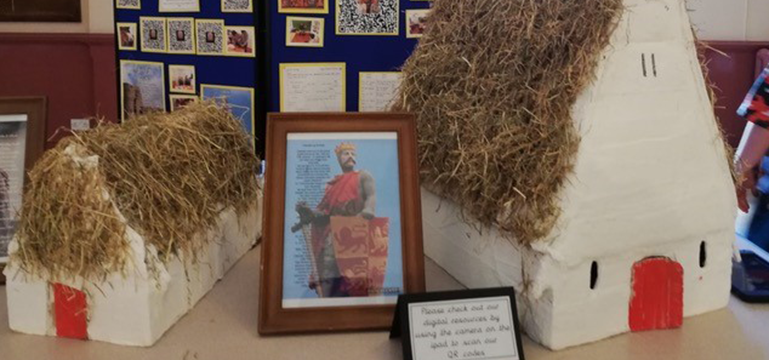
Planned lessons were conducted over a half term and time allocated for learners to carry out several site visits to gather information and create digital resources, such as using QR codes and ICT to develop visitor information fact files for each location.  Learners were challenged to script and create a factual documentary film about their location to focus on historical and literacy based skills.  Planned cross-curricular lessons challenged pupils to apply knowledge and skills in a real life historical setting and allowed them to lead their own learning with greater independence.  The St Fagans’ team were engaged in school visits ‘in costume,’ to support the four purposes and help to build authentic learning experiences.

Year Group:

House:

Theme:

Date/Period in Time

Origin:

Recreated/

Re-erected:

Nursery

Maestir School

Victorians

1894- 1916

Lampeter, Ceredigion

1984

Reception

Bryn Eryr

Iron Age Roundhouse

2300 years ago.

Ogmore Vale

2016

Year 1

Rhyd-y-car Terrace

Industrial Revolution

1805- 1900

Merthyr Tydfil

1987

Year 2

Rhyd-y-car Terrace

Industrial Revolution

1900- 1980

Merthyr Tydfil

1987

Year 3

Toll House

Rebecca Riots

1839-1844

Penparcau Aberystwyth

Built: 1771

Re-erected:1968

Year 4

Gwalia Stores

Retail

1880-1945

Swansea

1991

Year 5

Kennixton Farmhouse and buildings

Nantwallter Cottage

Farming.

Wealth/Poverty

1800

1785

Gower Peninsula

Taliaris, Near Salem Carmerthenshire

1955 and 2012

1993

Year 6

Llys Llywelyn

Age of the Princes

1195-1240

Middle Ages

Anglesey/Gwynedd

2016

Learners were provided opportunities to express their learning innovatively and the school held a celebration event to showcase the pupils’ work and demonstrate their skills development.  At the St Fagans site, the pupils’ historical documentary films were played on an outdoor cinema screen for families and other stakeholders to enjoy.  The pupils were also tasked to organise an exhibition of their work, which was held in the Oakdale Workmen’s Institute at St Fagans. 

Barry Island Primary School continues to work in partnership with the Museum and has produced a blueprint for a scheme of work, which can be shared with other schools as an exemplar model of real-life, authentic contexts for learning to support the requirements of the new curriculum.  The digital resources developed by the learners have also been made available to the Museum, which can be used to enhance the visitor experience.

What impact has this work had on provision and learners’ standards?

The project has had a positive impact on professional development across the teaching and leadership team.  It has focused the team on sustaining the conditions necessary to realise the four purposes for learners.  Detailed analysis of the Professional Standards model and the journey of self-evaluation has developed confidence amongst the staff to take risks and work collaboratively to provide sustained, highly effective blended learning experiences.  Staff have developed their reflective practice effectively to build links between the areas of learning and better facilitate progression of learning.

Learners have been given opportunities to take a more active role in leading their own learning. Lessons provided appropriate challenge to enable learners to develop resilience in solving problems.  There has been significant improvement in applying ‘digital humanities skills’ to gather, analyse, and evaluate evidence and present findings, including producing a bank of digital resources to support the scheme of work.  The celebration event had a significant impact on learner wellbeing, with pupils given opportunities to positively reflect on the high-quality of their products and performances.  The pupils’ pride in their work was clearly evident and the project has had a positive impact on increasing pupils’ engagement in their learning.

Through the assessment of pupils’ work, it was evident that they were able to draw conclusions, such as through the analysis of artefacts, maps, farming techniques and period building designs. Pupils were able to develop their own questions with increasing confidence and seek answers in a real-life context.  Thinking critically about their discoveries, key stage 2 pupils were able to establish informed conclusions and further questions for enquiry.  The impact of the project also enabled pupils to continue to demonstrate improved skills in oracy, reading and writing.  They were able to process historical information in greater depth and also respond accordingly to communicate their understanding.

How have you shared your good practice?

The pupils’ historical documentaries were shared and celebrated at a planned event at St Fagans, attended by families, local dignitaries and representatives of Welsh Government and local consortia.

The Museum hosted an exhibition of the pupils’ work to showcase the literacy and numeracy skills developed and applied through the four purposes and different areas of learning experiences. Models and pupils’ work were presented on display for visitors to the museum.

The scheme of work and supporting digital resources have been made available to the National Museum at St Fagans, who plan to make the package available to other schools who wish to use the project to develop the new curriculum in their setting.

Following the success of the project, the school initiated wider collaboration with a School Improvement Group (SIG) to explore the Mathematics AoLE, again using St Fagans as the stimulus to provide real life authentic contexts.  The collaborative work was shared internally at each of the partner schools as part of professional development and curriculum development staff training. Through evaluation, the SIG teachers found it beneficial to engage with ‘draft curriculum’ elements and to focus on elements of the Four Purposes to enthuse and motivate leaners.  The SIG project resulted in a method for teachers to support each other in effective joint planning whilst enriching opportunities for all learners.

Following the project, pupils were invited to participate in a BBC media event at the museum to share learning experiences and opinions of the coverage of Welsh Culture in the new curriculum. During this event, pupils shared ideas and the success of the project with Welsh Government representatives and experts within the field of humanities, to promote the exciting possibilities to learn about Welsh heritage and culture across Wales.

Improvement Resource Type: Effective Practice


Information about the setting

The setting’s building is on two floors.  The older children use the lower floor and the upper floor is used for babies from birth to two and a half years old.

The setting provides foundation phase early education and is working towards the new curriculum for Wales.

The nursery has strong community links and makes the most of facilities in the local area to enrich the children’s experiences.  For example, visits take place to the town centre and the local park, where use is made of the cycle track.  The setting’s vision for the future is to provide more of these real experiences for children and continue to improve the provision in the outdoor area.  

Context and background to the effective or innovative practice

At the start of the nursery’s improvement journey, its upper floor was an open space.  The resources were mainly plastic and brightly coloured and there was a small fenced area for the youngest babies.  There were no defined areas and, because it was such an open space, toddlers tended to run around rather than settle to activities.

In preparing for the new curriculum, practitioners introduced ‘real life’, practical activities very successfully on the lower floor.  They realised that the toddlers on the upper floor would benefit from this approach too.

Description of nature of strategy or activity

Practitioners looked at the room from the perspective of the babies and toddlers, and began to make changes.  Their first step was to provide moveable wooden structures to divide the area up and replace the carpets with laminate flooring.  Resources were introduced to support open-ended play as well as creating more structured areas that provide specific learning opportunities such as for mark making, using information and communication technology resources, creative play and role-play.  Practitioners replaced the plastic toys with natural resources, and chose neutral colours for the décor and furnishings to create a calm environment.

The next step was to improve the environment for the babies.  The metal fence was removed to create an open play space with rugs and floor cushions, natural resources for play and coracles for the babies to sleep in.  Practitioners adapted the sleep room to become a quiet room by removing the door.  They put a sofa in this area for staff and babies to bottle feed and cuddle up on, creating a home from home feel.  There are lots of natural products here to stimulate sensory skills and give the babies the opportunity to develop an understanding of the real world through play.

The setting displays mirrors and resources at floor level, and practitioners can move the wooden structures to adapt the environment on the upper floor easily to meet the youngest children’s changing needs.

What impact has this work had on provision and children’s standards?

The changes have had a positive impact on children’s learning.  Toddlers choose what they want to do more confidently and are more engaged in activities.  They will often lead an adult by the hand to where they want to play.  The flow and access to different areas allow them to be more independent.  They develop a range of skills effectively, including exploring cause and effect, and using the natural and open-ended resources.

The babies enjoy the large open space.  It enables practitioners to interact with them in a calm, quiet and homely environment.   Babies respond well to the natural resources and engaging activities that practitioners modify to suit their individual needs. 

How have you shared your good practice?

Practitioners host network meetings and training sessions for others in Torfaen and share good practice by encouraging them to tour the setting during these events.

Improvement Resource Type: Effective Practice


Information about the setting

Cylch Meithrin Ynys y Plant, Felinfach is registered to care for 12 children between two and four years old.  It meets in a self-contained cabin on the grounds of Ysgol Gynradd Felinfach, in Ceredigion local authority.  The setting provides education five mornings and five afternoons a week during term time.  During the inspection, 14 of the three-year-old children received funding for early years education.

The setting is a Welsh-medium setting, and many children come from monolingual Welsh households.  The setting is run by two members of staff.  The leader has been in post for three years.

Context and background to the effective or innovative practice

Practitioners provide a wide and exciting range of interesting learning experiences that engage children’s interest successfully.  The leader has a robust vision for children to learn to the best of their ability in a stimulating and motivating environment that is relevant to their community.  As a result, most children make strong progress across all areas of learning.  Practitioners plan skilfully to use the community and visitors to enrich experiences in order to develop extended oral skills and multicultural traditions, in addition to Welshness and heritage.  This has a lively effect on children’s learning, which ensures high standards when getting to know their local area. 

Description of the nature of the strategy or activity

Cylch Meithrin Ynys y Plant, Felinfach is an integral part of the local community, and takes advantage of every opportunity to enrich children’s learning experiences and to develop new skills.  Children are given regular opportunities to visit the shop, garage and local agricultural supplier, where they use money to buy goods for their activities.  For example, they visit the shop to buy ingredients to bake cakes or make food for the birds.  This provides them with an opportunity to learn about the function of money, in addition to developing their numeracy skills by counting.  These beneficial opportunities also promote their literacy skills successfully by speaking confidently and politely with other adults.  Practitioners plan regular visits by people from the community; for example, a farmer brought a piglet to the setting to celebrate the Chinese New Year and promote their understanding of mathematical language as the children measured it.  As a result, children are given excellent opportunities to learn about the circle of life and nature.  These experiences have also had a very positive effect on developing children’s rich and extensive language.

Practitioners ensure very effective experiences for children to develop their spiritual, moral, social and cultural skills by taking advantage of the local area.  They do this by organising a series of visits to the local church, in order for the children to familiarise themselves with the building and learn how to behave in a sacred place.  This is developed further through regular visits by the parish vicar to familiarise the children with traditions such as the Harvest festival, Christmas and Easter.  These opportunities are extended to parents in order for them to familiarise themselves with the wider community.  The setting has a very strong partnership with parents, which has a positive effect on children’s standards.  Parents work successfully with practitioners to contribute to themes regularly.  A good example of this strong partnership is parents’ contribution to the Owain Glyndŵr theme or the Rugby World Cup theme.  This has extended children’s ability to discuss their work and experiences in their homes.  This has added to children’s oral maturity, in addition to developing parents to play an active part in the setting’s life.   

What impact has this work had on provision and learners’ standards?

Practitioners provide a range of rich learning experiences in the community, which engage pupils’ excitement and enthusiasm successfully.  By visiting places of interest and inviting visitors to share their experiences, children are encouraged to respond at length orally very effectively.  They are given very beneficial opportunities to extend their numeracy skills by buying cooking ingredients and using money in real-life situations.

Regular visits to local gardens raise children’s awareness of plants’ life cycle and nature successfully.  This enriches their understanding of their habitat and the world around them exceptionally well, as they notice the flowers during every visit.

How have you shared your good practice?

Good practice is shared in training for non-maintained practitioners and schools in the authority.